VA-eligible borrowers still have a meaningful cost advantage over conventional home loans, but the gap matters most now because mortgage rates remain near 7.32% and affordability is still strained despite a modest pullback from recent highs.
VA Loans vs Conventional Mortgage Costs

That makes the VA-versus-conventional choice less about abstract mortgage theory and more about cash flow, upfront costs and how long a buyer expects to stay in the home. For many veterans and service members, the VA loan remains the cheaper route to ownership because it allows 0% down, charges no private mortgage insurance and often carries lower rates than comparable conventional financing.
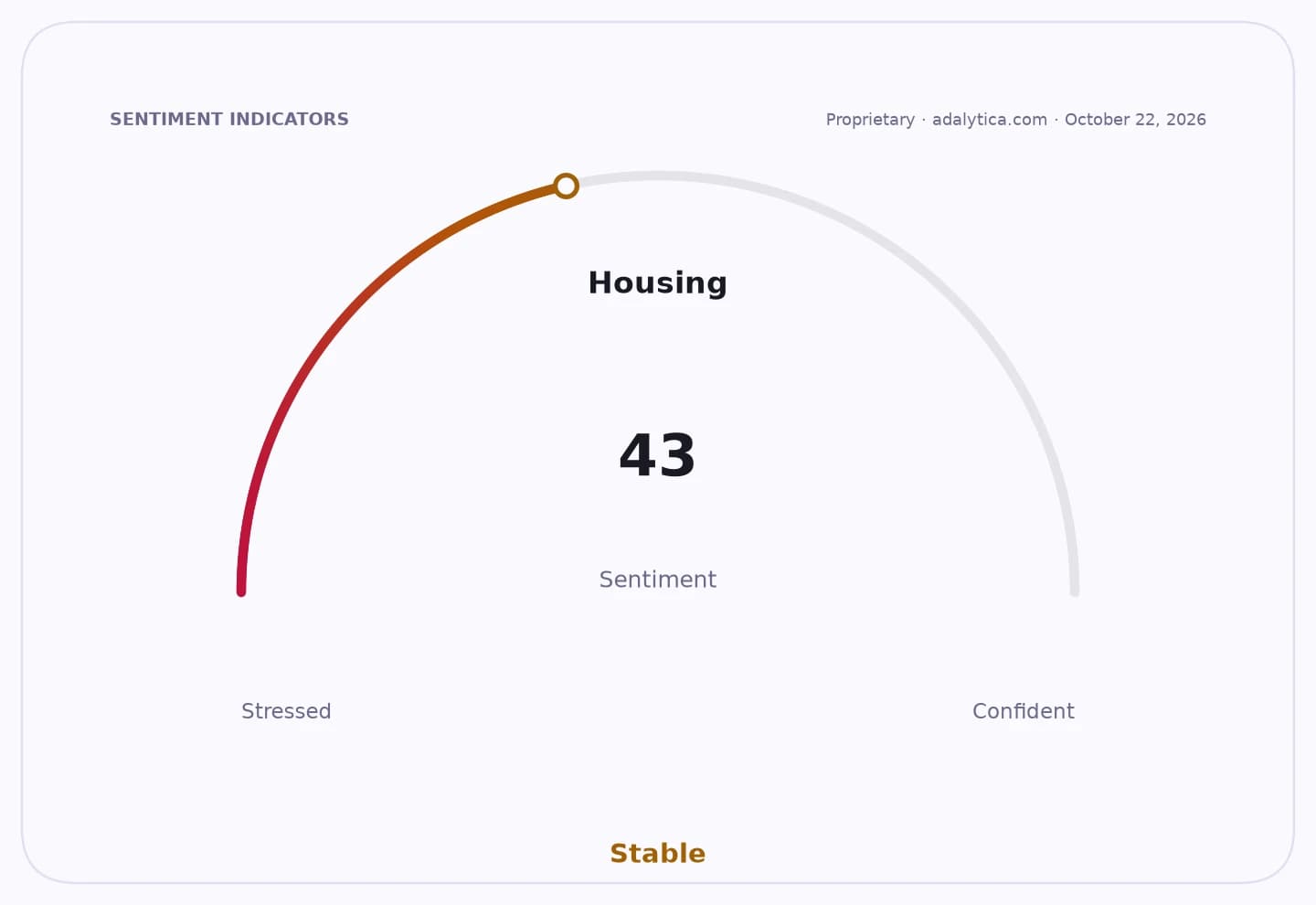
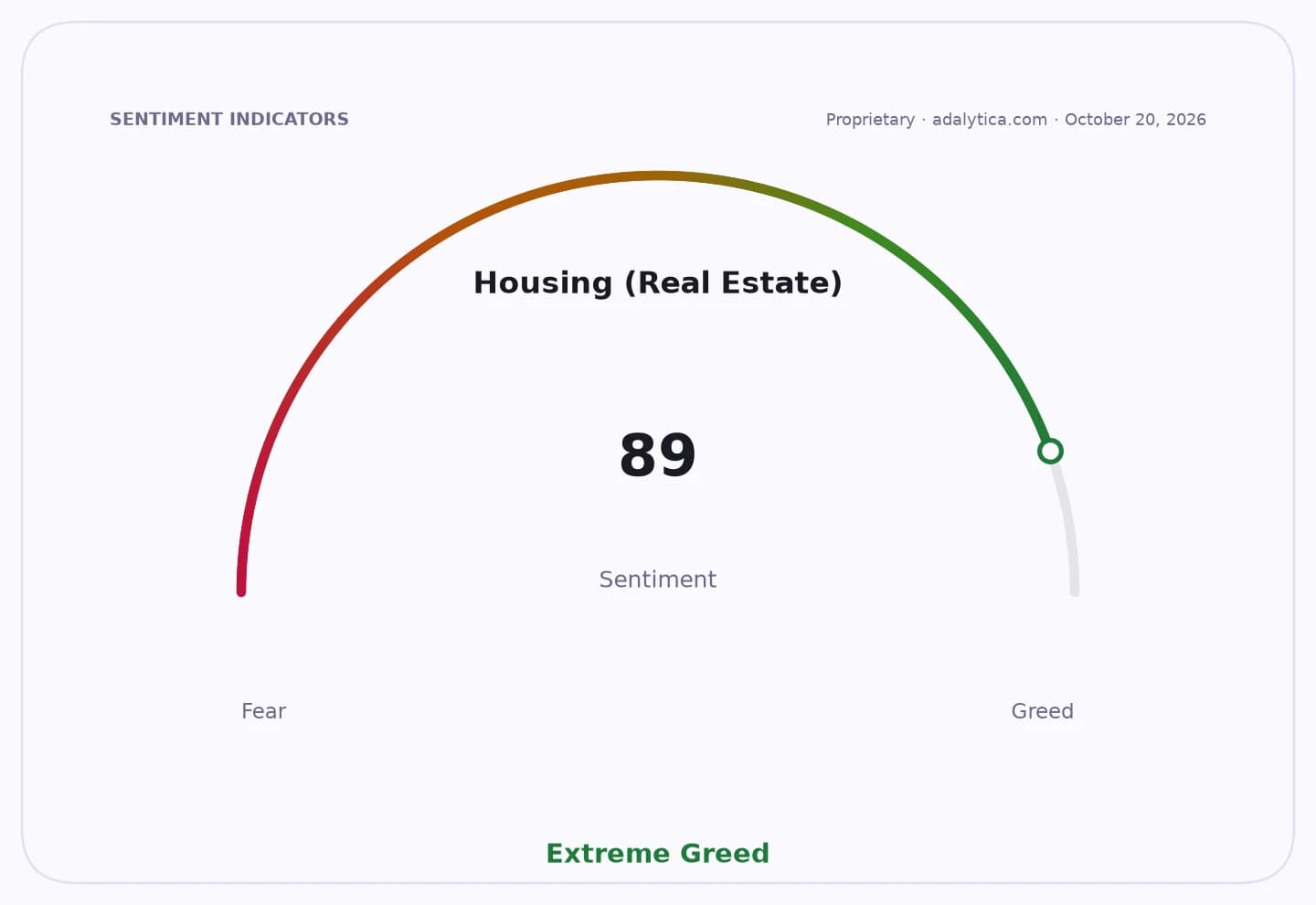
Sentiment IndicatorsⓘProprietary · adalytica.com · October 24, 2026
This is a snapshot — live sentiment, awareness and momentum for 130+ markets update continuously in the dashboard.Open AlphaPulse
The economics are straightforward. On a $450,000 home, a first-time VA borrower putting nothing down would face a one-time funding fee of 2.15%, or $9,675. By contrast, a conventional buyer putting 3% down would still need $13,500 upfront and could also pay PMI of roughly $188 to $563 a month, potentially for years. The article’s example puts a 10-year PMI bill at about $36,000, versus a break-even on the VA funding fee around month 32.
That arithmetic becomes more important in a market where borrowing costs have only recently eased. The average 30-year mortgage rate has fallen to 7.32%, the first decline since late August, but the move has not been enough to revive demand, which has dropped 7%. Housing starts also remain soft, with the latest reading at 1,221, below the recent 2026 peak and consistent with a market still throttled by financing costs.
For investors, the key point is that high rates continue to shape mortgage-product competition and housing affordability. VA loans tend to be most attractive when buyers are short on cash for a down payment, when their credit profile is not pristine, or when preserving liquidity matters more than avoiding an upfront fee. Conventional loans can still win for buyers with 20% down and a FICO score above 740, or for second homes and investment properties, which are outside the VA program.
That split has implications for mortgage lenders and housing platforms. Rocket Cos. has seen its shares bounce around a depressed range, with the stock at $11.73 on Oct. 23, still well below its 50-day and 200-day moving averages, while United Wholesale Mortgage has also weakened sharply, underscoring how rate pressure and affordability constraints continue to squeeze origination volume. The broader message is that mortgage demand is not just a function of rate direction, but of which products remain viable for different borrower profiles.
There are also operational limits that can steer buyers away from VA financing. VA loans require primary occupancy and must meet the program’s minimum property standards, which can complicate purchases of older or distressed homes. Conventional loans are more flexible on property condition and can be used for second homes and investment properties, making them the better fit in some cases even when they cost more.
For sellers, the main takeaway is that a VA offer is not inherently slower or weaker. Closing speed still depends on documentation, appraisal timing and property issues. In a market where buyers remain stretched and lenders compete for a smaller pool of qualified borrowers, well-prepared VA applicants can still be highly competitive.
For most VA-eligible buyers, the advantage remains with the VA loan unless they have a large down payment, excellent credit or a non-primary residence in mind. As rates hover above 7%, the decision is less about brand preference and more about total cost, liquidity and how much homebuyer risk a household can absorb.
| Entity | Gains | Losses |
|---|---|---|
| VA-eligible buyers | ▲Lower upfront costs | ▼Property-condition limits |
| Conventional borrowers with 20% down | ▲Flexibility on property type | ▼Higher financing cost for many buyers |
| Mortgage lenders specializing in VA loans | ▲Stronger relative demand | ▼Slower overall housing demand |
| Sellers with prepared VA buyers | ▲Larger buyer pool | ▼Misperceptions about closing speed |