European stocks are back in demand, and the latest push is telling investors something important: the market is increasingly betting that growth will hold up even with rates still relatively restrictive. That matters because Europe has spent much of the past few years trying to outrun recession fears, sticky inflation and weak industrial demand. When broad Europe exposure rises, it usually means investors are becoming more comfortable owning cyclicals, exporters and banks again — not just hiding in defensive names.
VGK rises to $92.60 as Europe stocks gain
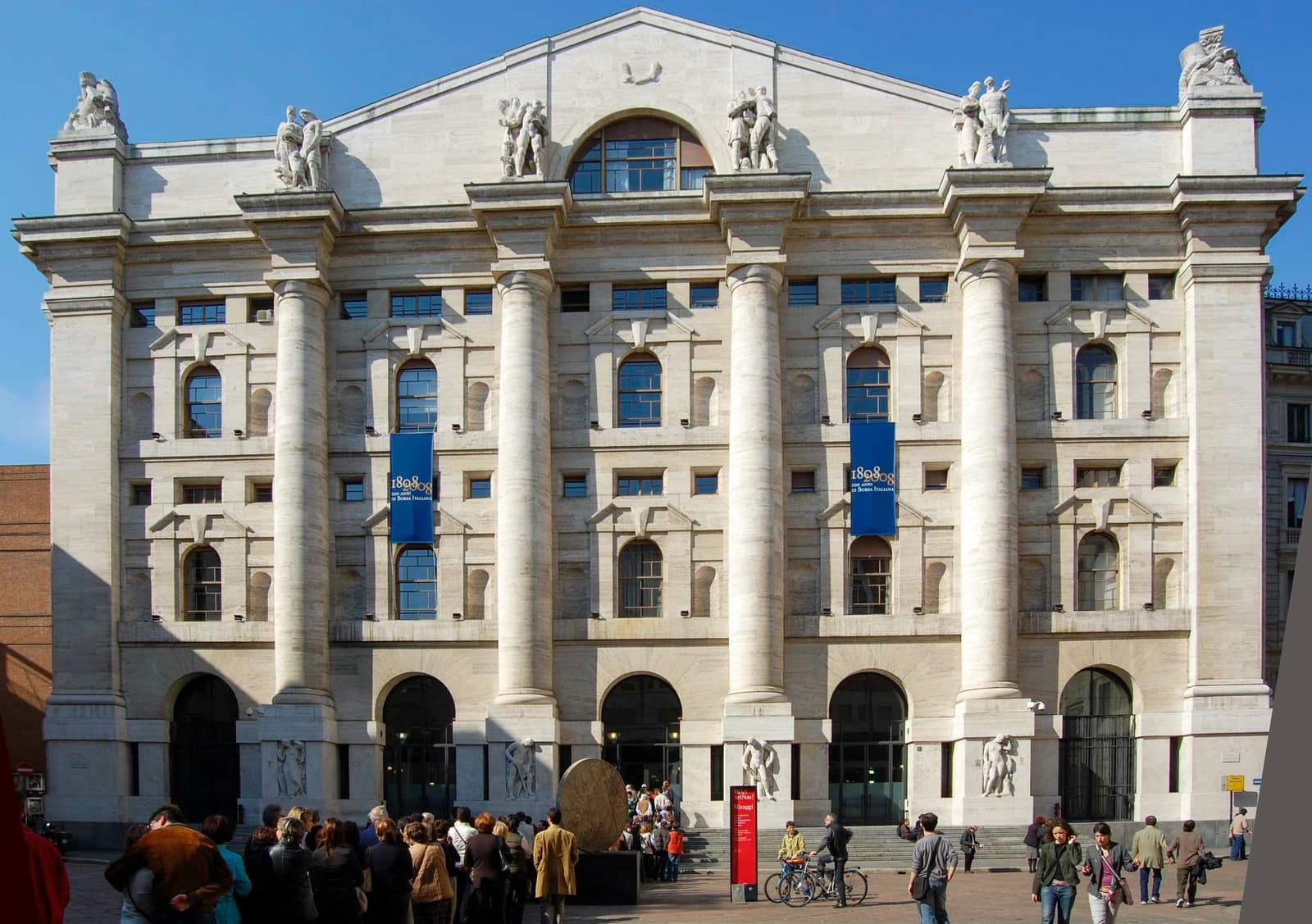
The clearest sign is the rally in Vanguard FTSE Europe ETF, which tracks large European markets including Milan, Paris, Frankfurt and London. VGK closed at $92.60 on Aug. 7, up from $75.78 in late November, and has moved well above both its 50-day and 200-day moving averages. Its relative strength index, at 77.2, shows the ETF is technically overbought after a sharp run, but the bigger message is that money is flowing into Europe after a long period of underownership.
Sentiment IndicatorsⓘProprietary · adalytica.com · August 8, 2026
This is a snapshot — live sentiment, awareness and momentum for 130+ markets update continuously in the dashboard.Open AlphaPulse
That strength has not been isolated to one market. Germany-focused EWG climbed to $44.02, while UK stocks via EWU rose to $48.64. Both are trading above their 50-day and 200-day moving averages, a sign that investors are not just chasing a short-term bounce but are re-rating the region’s equity outlook. In plain English: the biggest European markets are moving together, which usually happens when the macro backdrop, not just single-stock stories, is doing the heavy lifting.
Why does that matter economically? Because Europe is far more sensitive than the U.S. to global trade, manufacturing and financing conditions. A stronger bid for Frankfurt, Paris and London suggests investors are betting that the worst of the growth scare may be behind the region, or at least that the current expansion can endure. That view is reinforced by U.S. rates holding around 4.6% to 4.7% on the 10-year Treasury and unemployment staying low at 4.1%, which supports the idea of a sturdier global economy rather than a hard landing. Inflation is still elevated, but not accelerating in the way that would force a dramatic shift in the market’s risk appetite.
For investors, the move matters because Europe often lags until confidence broadens, then can rally quickly as sentiment turns. Financials, industrials and exporters tend to benefit when the market starts pricing in steadier growth and less economic stress. That is why long-term investors who have stayed underweight Europe may want to pay attention now. The region still offers diversification, cheaper valuations than many U.S. peers and exposure to global industrial recovery themes that do not show up in a domestic-only portfolio.
The caution is that rallies like this can run ahead of fundamentals. VGK’s RSI near 80 and the strong recent move in EWG and EWU suggest some near-term froth. But for patient investors, that is less a reason to fear the trend than to respect it. If Europe’s largest markets are starting to move in sync, the market is telling you that the story is no longer just about avoiding disaster. It is about whether earnings and growth can compound from here. For long-term portfolios, that is worth watching closely.
| Entity | Gains | Losses |
|---|---|---|
| European stocks | ▲Broader risk appetite | ▼Defensive-only positioning |
| Investors in VGK/EWG/EWU | ▲Exposure to a rebound | ▼Those who stayed underweight Europe |
| Cyclicals and exporters | ▲Better growth pricing | ▼Recession hedges |
| Short-term traders | ▲Momentum upside | ▼Mean-reversion bets |




