Vietnam is signaling that its relationship with China is moving beyond diplomacy and into the machinery of governance, with senior Communist Party figures seeking closer cooperation on ideology, cadre training and policy design.
Vietnam and China deepen party-to-party ties
That matters because the relationship between Hanoi and Beijing is not just a foreign-policy issue; it shapes trade, supply chains, investment flows and the political temperature in Southeast Asia. When the two ruling parties tighten their exchanges, investors get a clearer read on how stable the bilateral relationship may be — and how much room there is for pragmatic cooperation even when the wider geopolitical backdrop remains tense.
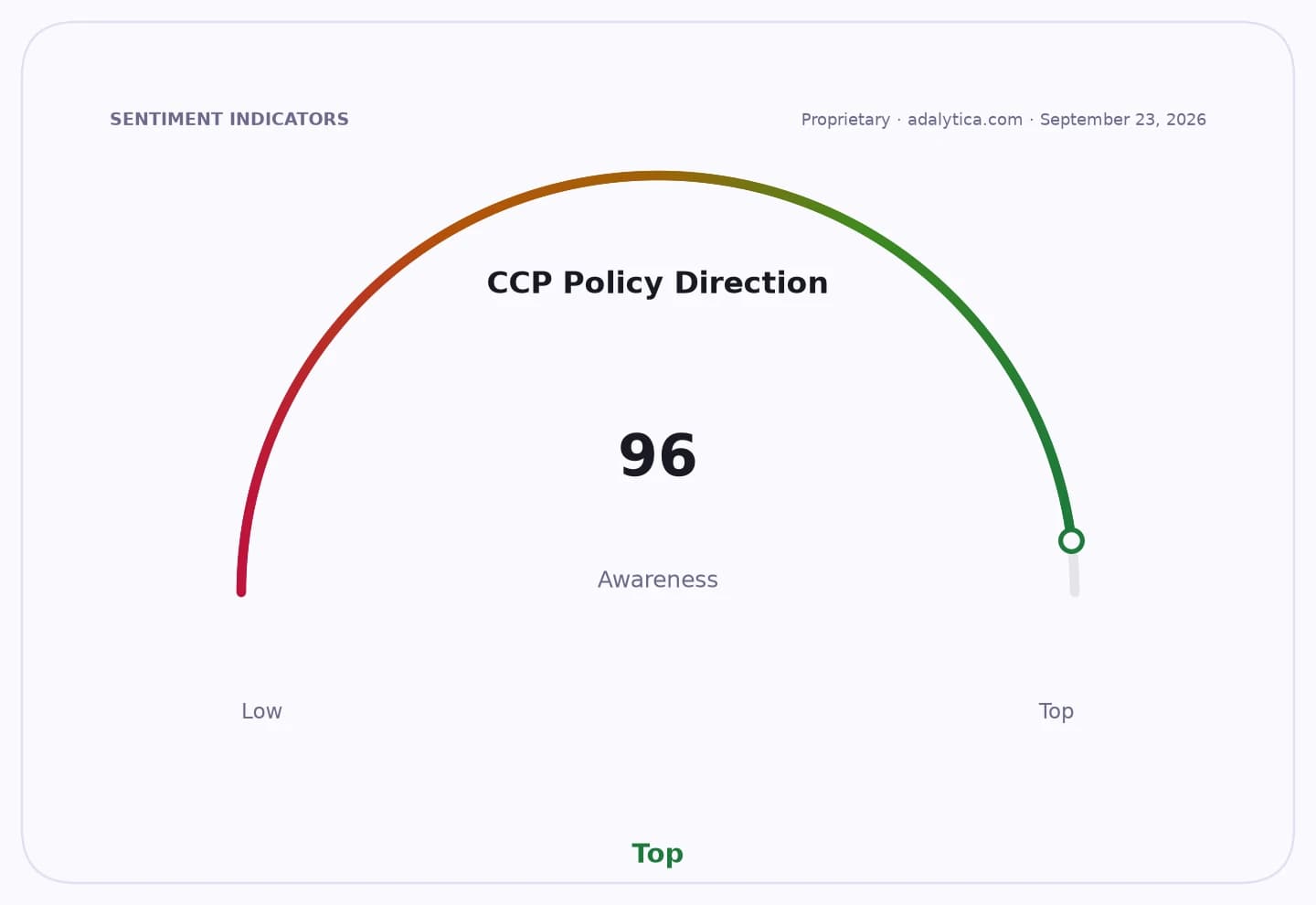
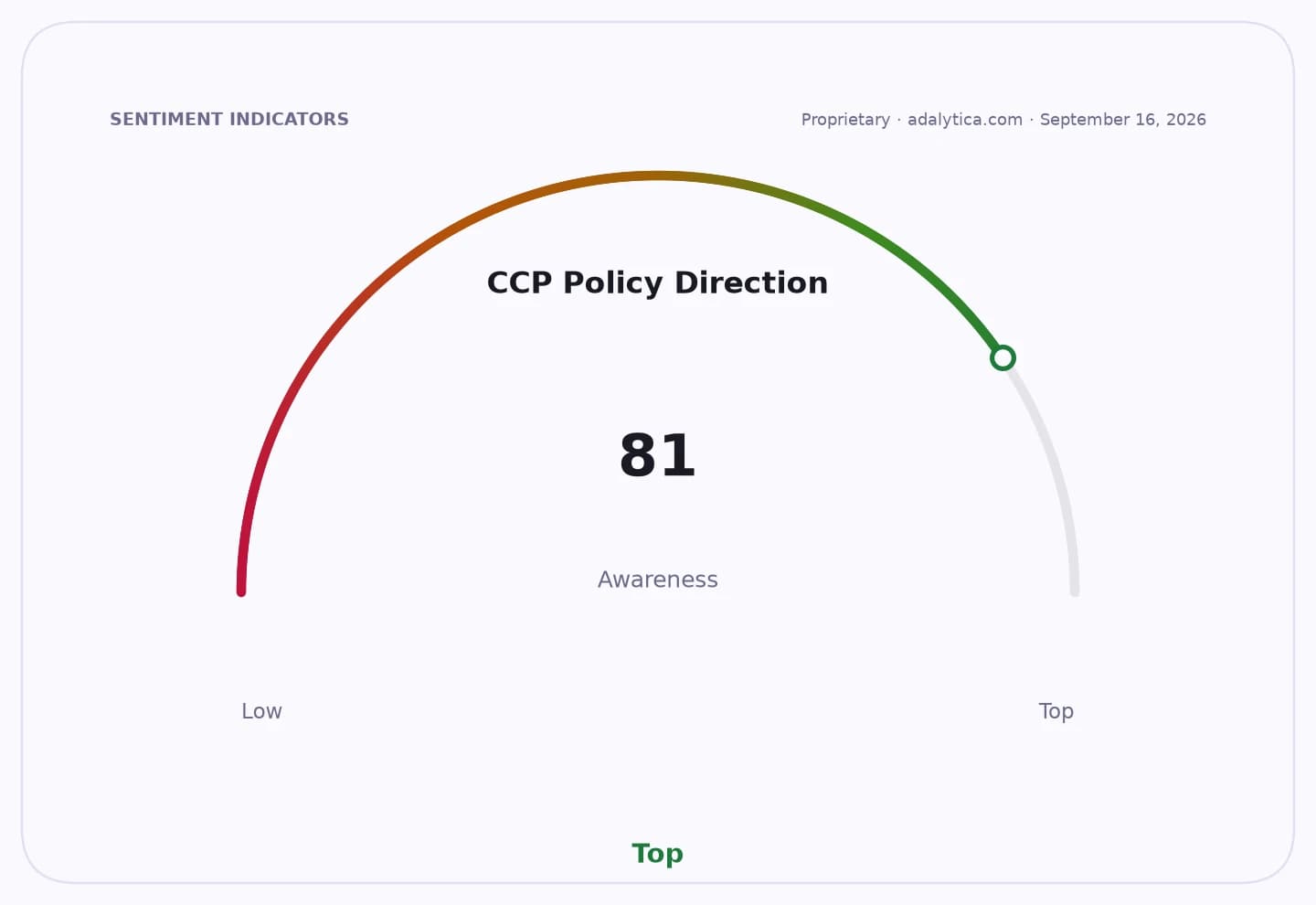
Sentiment IndicatorsⓘProprietary · adalytica.com · September 13, 2026
This is a snapshot — live sentiment, awareness and momentum for 130+ markets update continuously in the dashboard.Open AlphaPulse
The clearest new development is the push to formalize more structured exchanges between the Communist Party of Vietnam and the Chinese Communist Party, including a proposal to explore a memorandum of understanding between Vietnam’s Ho Chi Minh National Academy of Politics and the Yan’an cadre school in Shaanxi. Nguyen Xuan Thang, a top Vietnamese party official, said both sides should expand theoretical research, modern governance, science and technology cooperation and people-to-people exchanges. In plain terms, Hanoi is trying to deepen the institutional ties that help keep a politically sensitive relationship predictable.
For investors, predictability is the prize. Vietnam has become a key manufacturing alternative in Asia, while China remains one of its biggest economic partners and a crucial source of inputs, tourists and infrastructure-linked influence. The more the two sides reinforce party-to-party communication, the better the odds that trade frictions, border issues and strategic mistrust can be managed rather than allowed to spill into business conditions.
The symbolism of the trip was also deliberate. Nguyen’s delegation visited Yan’an, a sacred site in Chinese Communist Party history, and other revolutionary landmarks in Shaanxi. Vietnamese officials described those sites as useful spaces for political education and cadre formation, underscoring that this was not a commercial mission but a strategic one: building common language between the two ruling parties.
China’s Shaanxi party chief, Zhao Yide, said the province has been applying lessons from Xi Jinping’s campaigns for Chinese-style modernization and from the CCP’s emphasis on combining Marxist theory with local practice. That message aligns neatly with Hanoi’s own stress on tying ideology to real-world policymaking. The narrative here is straightforward: both governments want to keep the bilateral relationship anchored in party discipline and political trust, not just in transactional trade.
The broader backdrop makes that effort more important. The Adalytica Global Stability Sentiment gauge remains in fear territory, while China’s policy-direction gauge shows elevated awareness and improving sentiment. In a world where geopolitical risk remains elevated, countries that can preserve working relationships while maintaining strategic autonomy tend to offer investors a better environment for long-term capital allocation.
That does not mean tensions disappear. Vietnam will still balance China ties against its own security concerns and its deepening economic links with the U.S., Japan and other partners. But the latest exchange suggests Hanoi wants the China relationship to remain constructive, institutional and manageable. For long-term investors, that is a reason to watch the bilateral track closely, especially in sectors exposed to cross-border trade, manufacturing supply chains and regional stability.
| Entity | Gains | Losses |
|---|---|---|
| Vietnam Communist Party | ▲Deeper political leverage | ▼Less room for distance |
| China Communist Party | ▲Stronger regional influence | ▼Fewer concessions needed |
| Manufacturers and traders | ▲More policy predictability | ▼Less geopolitical clarity if tensions rise |
| Rival powers | ▲Potentially less leverage | ▼Influence over Hanoi diluted |