Vietnam is lowering retail electricity prices and slashing gasoline consumption taxes through March 2027 in a bid to keep inflation near target, a move that helps households and businesses now but underscores how little room policymakers have as energy shocks continue to dominate the price outlook.
Vietnam Cuts Electricity Prices and Gasoline Taxes
CPI
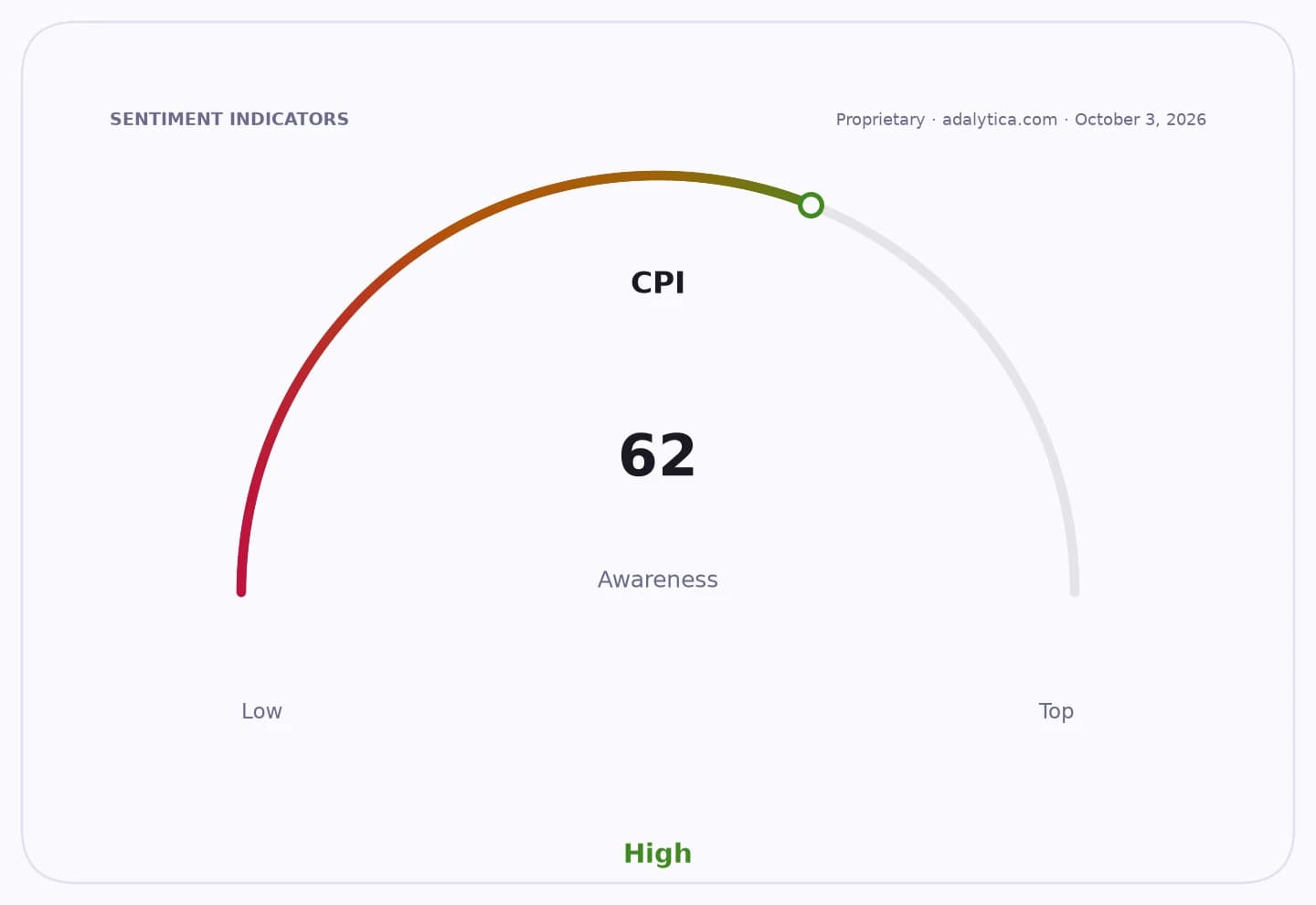
The two measures, effective Nov. 1, come after consumer prices in the first nine months rose 4.52%, essentially at the government’s full-year goal of about 4.5%. That leaves Hanoi trying to protect growth and public sentiment without letting energy costs spill into a broader inflation cycle, a balancing act that matters for monetary policy, corporate margins and fiscal flexibility.
Sentiment Indicators
Retail electricity prices will fall 2% on average to about 2,159.9 dong per kilowatt hour before VAT, while the special consumption tax on gasoline is being cut to 0% from 10% for mineral gasoline and 7% to 8% for biofuel blends. Officials said the changes will run until March 31, 2027, suggesting authorities want a buffer well beyond the immediate year-end period.
Economically, the timing is crucial. The government said inflation pressure has been driven mainly by higher oil prices tied to Middle East conflict and supply disruptions, with Brent and WTI benchmarks having traded sharply higher during the year. In that setting, lowering administered energy costs is one of the few direct tools available to dampen CPI without tightening policy further or widening the budget deficit through broad-based subsidies.
The impact is modest in headline terms, but meaningful at the margin. Nguyen Thu Oanh of the General Statistics Office said household electricity accounts for 4.81% of the CPI basket and had contributed 0.21 percentage point to the 4.52% nine-month increase. VVA valuation chief Nguyen Tien Thoa estimated the 2% electricity cut could shave about 0.066 percentage point off CPI directly, and as much as 0.13 percentage point after second-round effects. Deputy Prime Minister Nguyen Van Thang said the electricity and gasoline moves could create about 0.07 percentage point of extra room to manage inflation.
For businesses, the relief is uneven but real. Thoa said lower power costs could trim production costs by about 0.12% for steelmakers, 0.23% for textiles and 0.3% for cement producers, sectors where energy is a major input and pricing power is limited. That should support margins at the margin, especially for smaller manufacturers already absorbing higher import, labor and financing costs.
The gasoline tax cut is bigger politically than numerically. After the reduction, E10 RON 95-III gasoline fell nearly 1,600 dong to 24,150 dong a liter, though that is still about 4,330 dong, or nearly 22%, above late-February levels when the Middle East conflict began. Vietnam has already spent around 64 trillion dong on fuel-tax and fee relief, according to Thang, and plans another 4 trillion dong for the special consumption tax cut in the final two months of the year. That raises the question of how much more fiscal cushion can be deployed if global energy prices stay elevated.
Investors should read the policy package as a signal that inflation management remains highly active and administrative, not fully market-driven. For local equities, the immediate beneficiaries are energy-intensive industries and consumer-facing businesses with tight margins, while power producers, fuel distributors and the state budget absorb the trade-off. The broader macro effect is to reduce the risk of an inflation overshoot that could force tighter credit conditions or complicate interest-rate policy.
There is also a credibility angle. The government’s inflation forecast for 2026 is still centered around 4.5% to 4.8%, while the central bank’s estimate is 4.5% to 5%, leaving little margin for error. By moving on electricity and gasoline now, authorities are trying to anchor expectations before year-end demand, currency swings and supply-chain disruptions feed into prices. But the longer-term risk is that repeated administered price cuts only delay, rather than eliminate, the pass-through from energy into the broader economy.
The market backdrop reinforces that caution. Energy prices remain volatile, and if crude prices retrace only partially from recent spikes, the government may be forced to choose between preserving inflation credibility and protecting growth. For now, the policy mix buys time. It does not remove the inflation problem.
| Entity | Gains | Losses |
|---|---|---|
| Households | ▲Lower utility and fuel bills | ▼Smaller fiscal buffer |
| Energy-intensive manufacturers | ▲Slightly lower input costs | ▼Limited relief if crude stays high |
| Vietnam government | ▲Near-term CPI control | ▼Tax revenue and policy room |
| Fuel and power-linked businesses | ▲Higher demand stability | ▼Weaker pricing power |