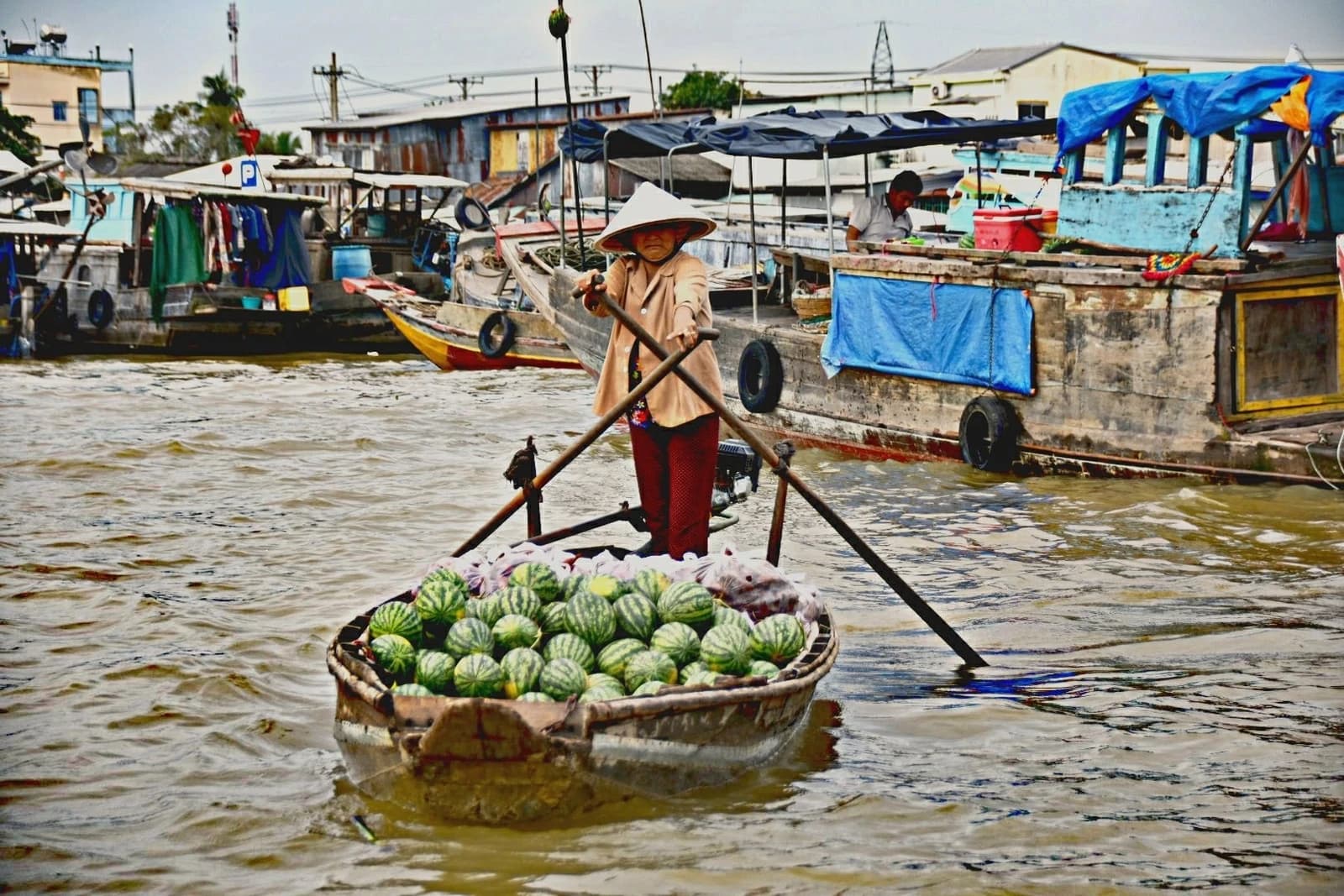
A group of durian farmers in Can Tho is finding that quality, timing and branding can matter more than the going market rate, with fruit selling for 60,000 dong a kilogram — about twice the prevailing price — and still clearing quickly.
Vietnam Durian Premiums Reward Quality
That matters because the story is no longer just about a few farmers earning more. It points to a broader reshaping of Vietnam’s durian market, where buyers are paying up for consistent grade, trusted supply and export-ready fruit even as wider agricultural prices remain uneven. In a crop that has become one of the country’s most valuable farm exports, the widening gap between standard fruit and premium lots is a sign that the market is starting to reward traceability and quality control rather than sheer volume.
For growers, the economics are straightforward. A farm-gate price at 60,000 dong per kilogram, versus roughly half that for ordinary fruit, can sharply improve margins in a crop with high input costs and significant sensitivity to weather, pests and harvesting conditions. For traders and exporters, it suggests that tight supply of top-grade durian is keeping premium channels firm even when average prices soften. That creates a two-tier market: ordinary growers face pressure, while those able to deliver uniform fruit, better post-harvest handling and reliable timing can command a meaningful premium.
The backdrop is important. Vietnam’s fruit sector has been under pressure from volatile commodity pricing more broadly, with cost inflation in fuel and logistics feeding into farm economics and consumer prices. At the same time, demand for tropical fruit remains robust, especially from export markets that are increasingly selective about phytosanitary standards and quality consistency. In that environment, a sold-out premium product is more than a local success; it is evidence that buyers are willing to pay for credibility in supply.
The bullish case is that this premium persists as export demand expands and more farmers upgrade cultivation practices, irrigation, packaging and traceability. That would support rural incomes and strengthen Vietnam’s position in the regional durian trade. The bearish case is that premiums attract rapid supply growth, eventually narrowing the price spread if quality standards are not enforced or if overseas demand cools. Durian’s boom has already shown how quickly farm-gate economics can change when production rises faster than premium demand.
For investors and agribusiness participants, the key takeaway is that the market is increasingly segmenting. The winners are growers and traders who can prove quality and consistency; the losers are those left selling into a commodity-like market where price is dictated by volume and weak differentiation. That dynamic is likely to shape margins across the supply chain, from orchards to exporters to logistics providers, in the months ahead.
| Entity | Gains | Losses |
|---|---|---|
| Premium-quality Can Tho farmers | ▲Higher farm-gate margins | ▼Lower reliance on spot pricing |
| Exporters with traceable supply | ▲Better pricing power | ▼Less access to undifferentiated fruit |
| Ordinary growers | ▲Limited benefit | ▼Weaker selling prices |
| Consumers/buyers | ▲More consistent fruit | ▼Higher purchase prices |