Vietnam’s gold market is being pulled higher by a stronger international bullion backdrop, but the bigger story for buyers is that domestic dealers are no longer moving in lockstep, widening the gap between where gold is bought and where it is sold.
Vietnam Gold Spreads Widen as Bullion Stays Firm
That divergence matters because Vietnam’s gold prices are closely tied to global bullion, the dollar and local supply conditions. When overseas gold firms and the dollar weakens, local dealers usually lift quotes quickly. But the latest pricing shows a more uneven market, with major names such as PNJ, SJC and DOJI all posting new rates while one large dealer is effectively protecting its margin by buying high and selling low, a sign of tighter pricing power in a volatile market.
Sentiment IndicatorsⓘProprietary · adalytica.com · July 27, 2026
This is a snapshot — live sentiment, awareness and momentum for 130+ markets update continuously in the dashboard.Open AlphaPulse
The broader macro backdrop remains supportive for gold. U.S. benchmark oil has recovered from earlier weakness, but bullion is still being underpinned by a powerful mix of elevated uncertainty and softer U.S. dollar signals. Gold futures are trading around $4,090 an ounce, with the 50-day moving average above the 200-day line, while RSI readings in the mid-40s and a still-negative MACD suggest the metal has rebounded but is not yet in a clean momentum breakout. GLD, the largest gold ETF, is also holding above its long-term average after a sharp spring correction, reinforcing that investors are still treating bullion as a store of value even after a pullback.
For Vietnamese buyers, the key issue is not just the direction of the global price, but the spread between retail sellers and local buyback levels. A dealer that sells low and buys high is effectively compressing its retail premium to defend turnover or market share, but that can also signal aggressive competition in a market where customers are price-sensitive and quick to switch between brands. For investors and traders, those spreads matter because they determine whether rising world prices are being passed through fully to domestic quotes or partially absorbed by dealers.
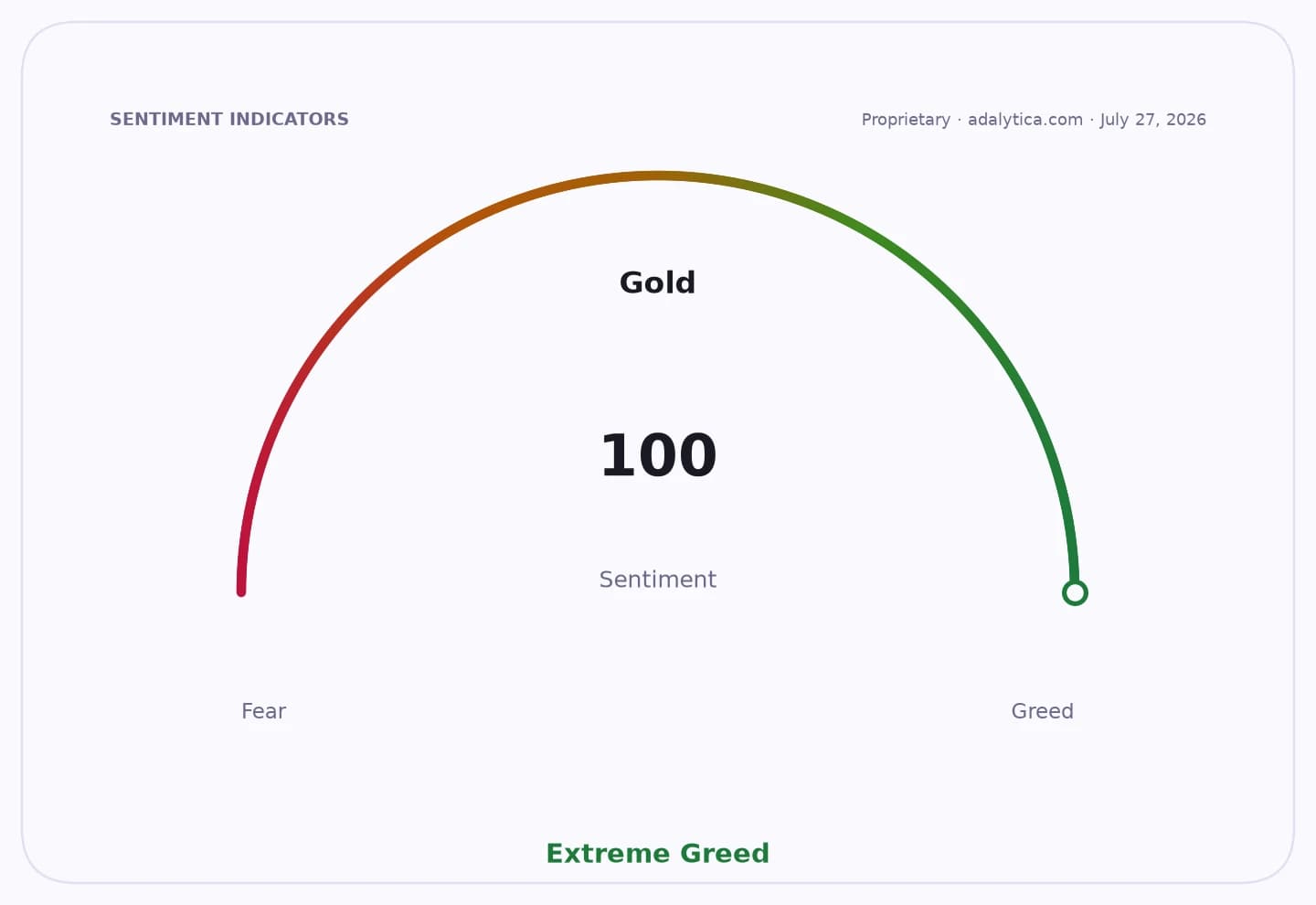
Gold’s appeal is also being reinforced by a fragile macro environment. U.S. 10-year Treasury yields are holding around 4.7%, a level that would normally weigh on non-yielding assets, yet bullion remains resilient. That suggests the market is still pricing in a premium for safety, portfolio diversification and potential currency weakness. Adalytica’s Gold Fear & Greed Index is at 100, or “Extreme Greed,” highlighting how stretched near-term positioning may be even as the broader trend stays constructive.
That mix leaves the market in an important tension. The bullish case is that global uncertainty, softer dollar signals and persistent retail demand keep Vietnamese gold prices elevated. The bearish case is that extreme sentiment and dealer competition could cap further upside in domestic quotes, especially if world prices stall or if local premiums narrow. For now, the main message is that Vietnam’s gold market remains firm, but the pricing structure itself is becoming more important than the headline level.
Investors should watch whether SJC, PNJ and DOJI keep synchronizing their quotes or whether the spread logic deepens further. If global bullion extends its rally, domestic prices are likely to follow. If not, the dealers with the narrowest margins may be forced to choose between market share and pricing discipline.
| Entity | Gains | Losses |
|---|---|---|
| Gold buyers in Vietnam | ▲Better comparison shopping | ▼Wider dealer spreads |
| Large dealers with pricing flexibility | ▲Higher trading volume | ▼Margin pressure |
| Bullion bulls | ▲Safe-haven demand | ▼Overbought risk |
| Dollar bulls | ▲Higher-rate support | ▼Weaker currency sentiment |