Vietnam’s demand that China stop work on a disputed reef puts a fresh political risk premium back on the South China Sea, where Beijing’s island-building campaign continues to collide with rival claims and raise the odds of a maritime crisis that could ripple through trade, defense planning and regional investment.
Vietnam Protests China Reef Work in South China Sea
Hanoi’s protest matters because this is not just a bilateral spat over a reef. It is part of a wider contest over control of a sea lane that carries a large share of global commerce and sits at the center of U.S.-China strategic rivalry. Each new construction project can harden facts on the water, strengthen China’s military reach and shrink the room for compromise with Southeast Asian claimants.
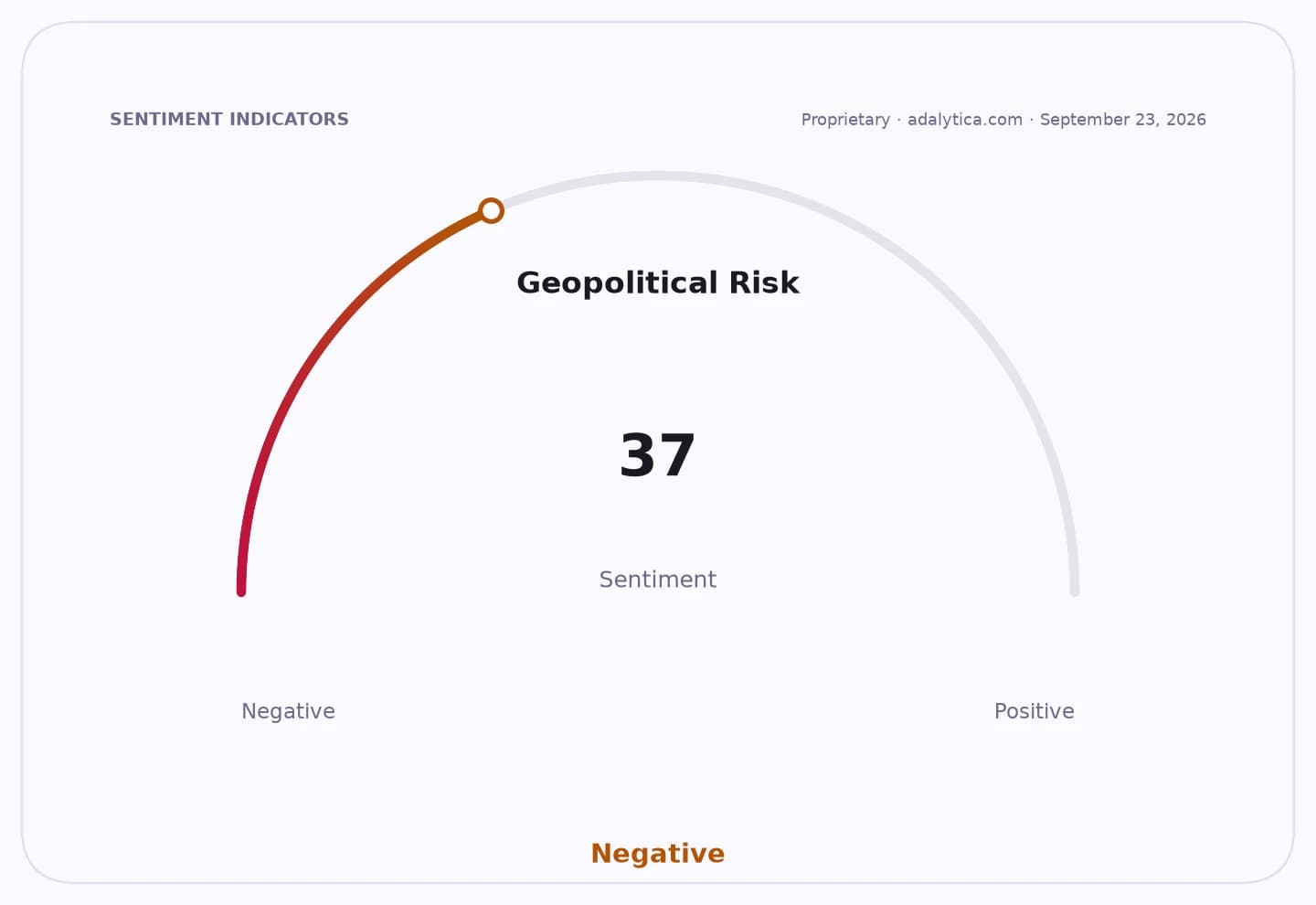
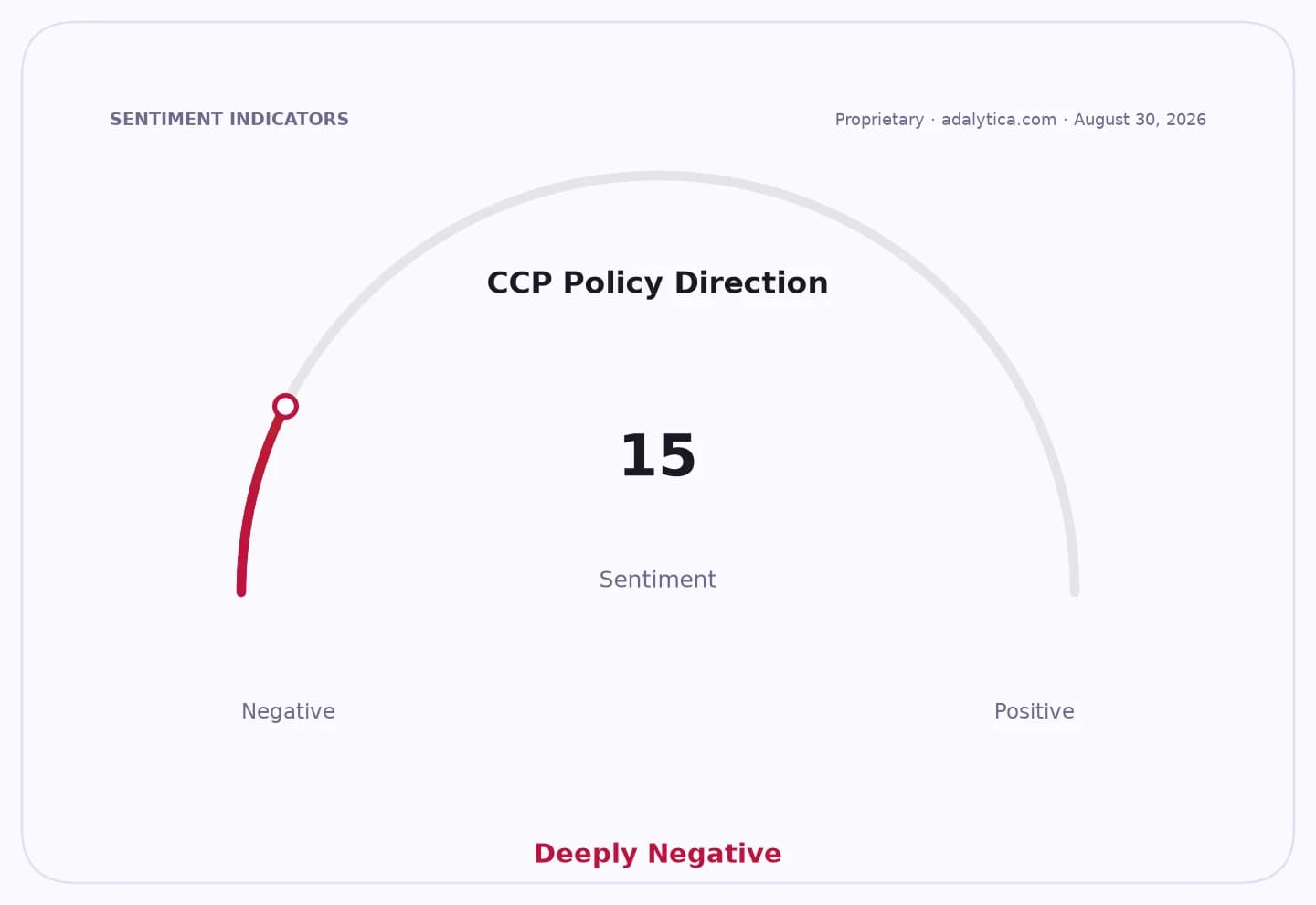
Sentiment IndicatorsⓘProprietary · adalytica.com · August 30, 2026
This is a snapshot — live sentiment, awareness and momentum for 130+ markets update continuously in the dashboard.Open AlphaPulse
For investors, the immediate impact is less about direct market exposure than about tail risk. South China Sea tensions can affect shipping insurance, energy exploration, defense spending and the valuation of regional assets when diplomatic friction turns into sanctions talk, military incidents or supply-chain disruption. The region’s equity markets have generally stayed resilient, but the latest escalation is another reminder that geopolitical risk is becoming a structural input rather than a one-off shock.
That backdrop helps explain why China-related assets have been volatile even as broader risk appetite has improved. The iShares MSCI Hong Kong ETF, EWH, recently traded around $22.94, holding above its 50-day moving average at $22.18, while the iShares MSCI Singapore ETF, EWS, changed hands near $33.93, well above its 50-day average of $31.99. The iShares China Large-Cap ETF, FXI, was around $35.51, still below its 200-day moving average of $36.57. Those levels suggest investors are not yet pricing in a major regional shock, but neither are they ignoring the possibility of renewed friction.
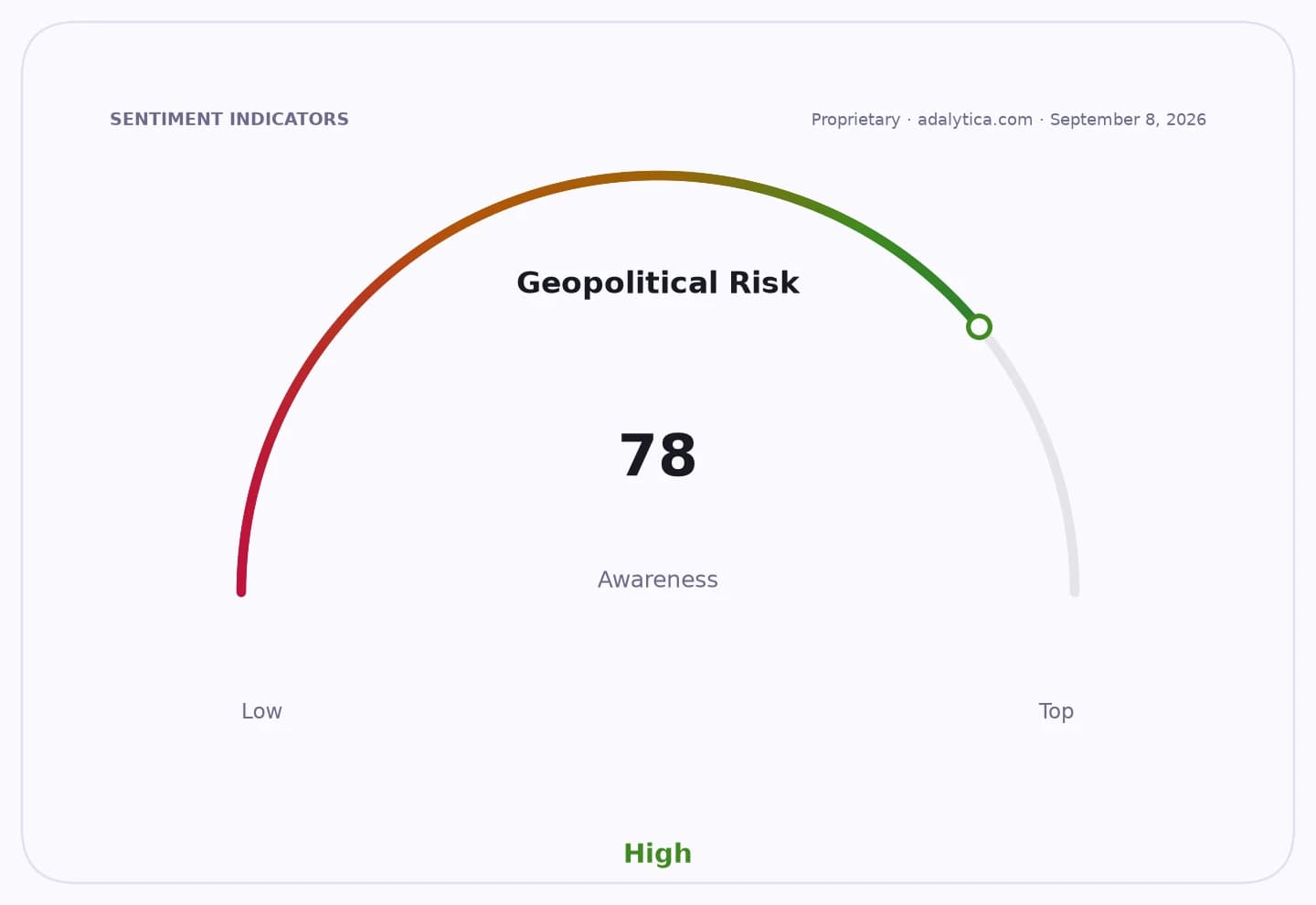
Geopolitical Risk — 30-day sentimentadalytica.com
Explore this data interactively — full history, time series and cross-market comparisons.Open AlphaPulse
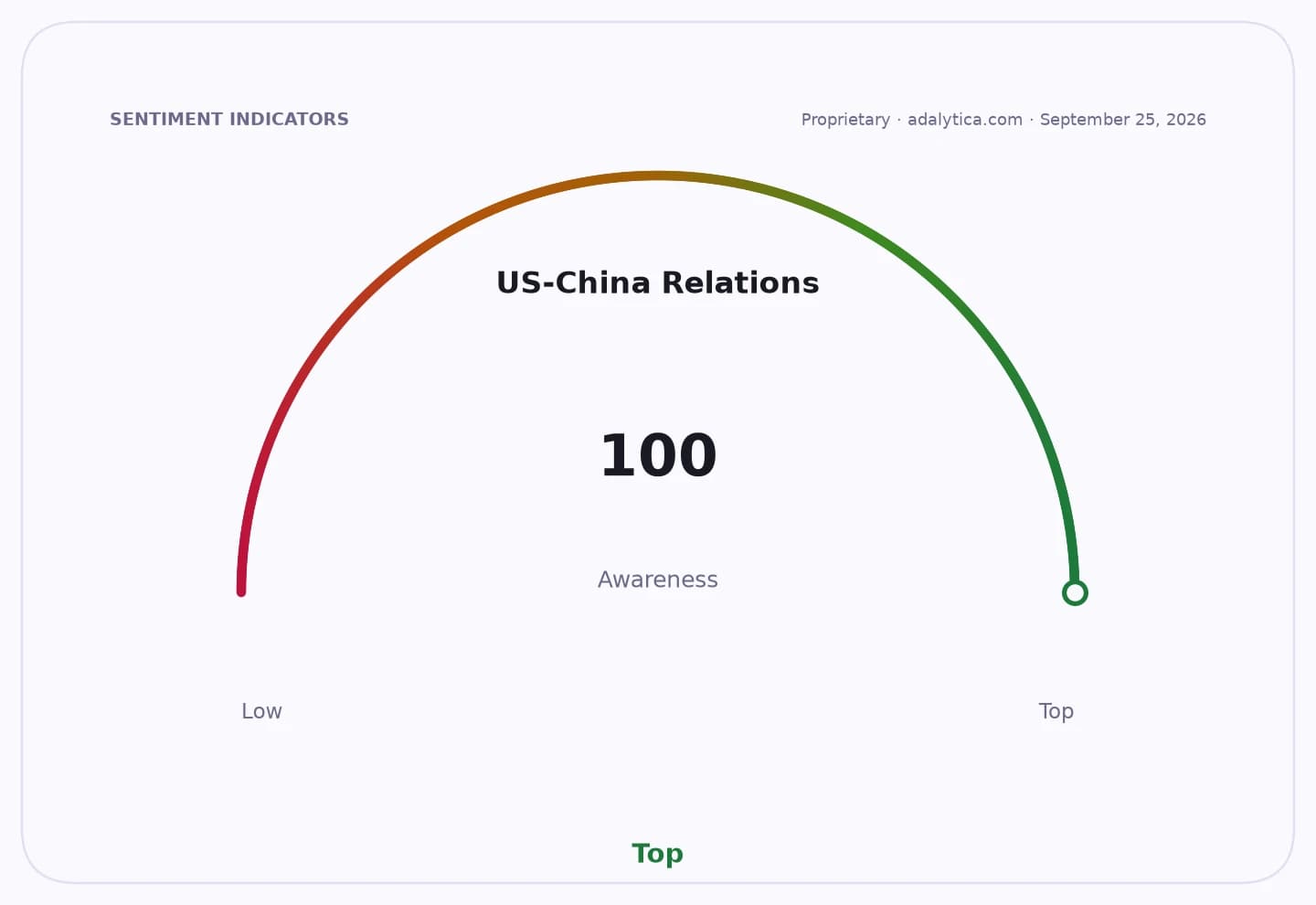
The macro message is that geopolitical stress is arriving at a time when global stability remains fragile. Adalytica’s Global Stability Sentiment gauge showed “Extreme Greed” at 89, even as awareness remained in “Fear” territory, a sign that markets are comfortable taking risk even as the underlying security environment worsens. By contrast, Adalytica’s China CCP Policy Direction Sentiment was in “Extreme Fear,” underscoring how sensitive investors remain to any move that could trigger policy backlash or diplomatic retaliation.
China’s reef work also reinforces a familiar pattern: infrastructure on disputed features is usually presented as defensive or administrative, but it can quickly become a forward military outpost. That is why Vietnam’s response matters beyond symbolism. Hanoi is signaling that it will resist incremental territorial gains rather than accept them as faits accomplis, and that stance raises the possibility of more coast guard encounters, legal complaints and pressure on ASEAN diplomacy.
For now, the bull case for markets is that these disputes remain contained, with both sides preferring coercion below the threshold of open conflict. The bear case is that repeated construction, patrols and counter-moves gradually erode deterrence, leaving a miscalculation or accident more likely. Investors should watch for any response from Manila, Washington or ASEAN, as well as whether the issue spreads from diplomatic protest into a broader challenge to shipping, energy and regional risk assets.
| Entity | Gains | Losses |
|---|---|---|
| China | ▲Territorial control | ▼Diplomatic trust |
| Vietnam | ▲Claims legitimacy | ▼Short-term leverage |
| Regional exporters | ▲Stable shipping | ▼Higher risk premium |
| Defense contractors | ▲More demand | ▼Peace dividend |