Visa is trying to make AI shopping safe before agentic commerce becomes a mass-market habit, and Poland has become the company’s live test case.
Visa tests AI shopping payments in Poland

That matters because the biggest barrier to AI-driven purchasing is not whether software can find the right product, but whether consumers, banks and merchants will trust an autonomous system to initiate a payment without opening the door to fraud, data theft or accidental overspending. Visa’s pilot in Poland shows the card network is moving to own the security layer of that next-generation checkout flow, positioning itself as the toll road for a market that could eventually sit between shoppers and merchants across Europe.
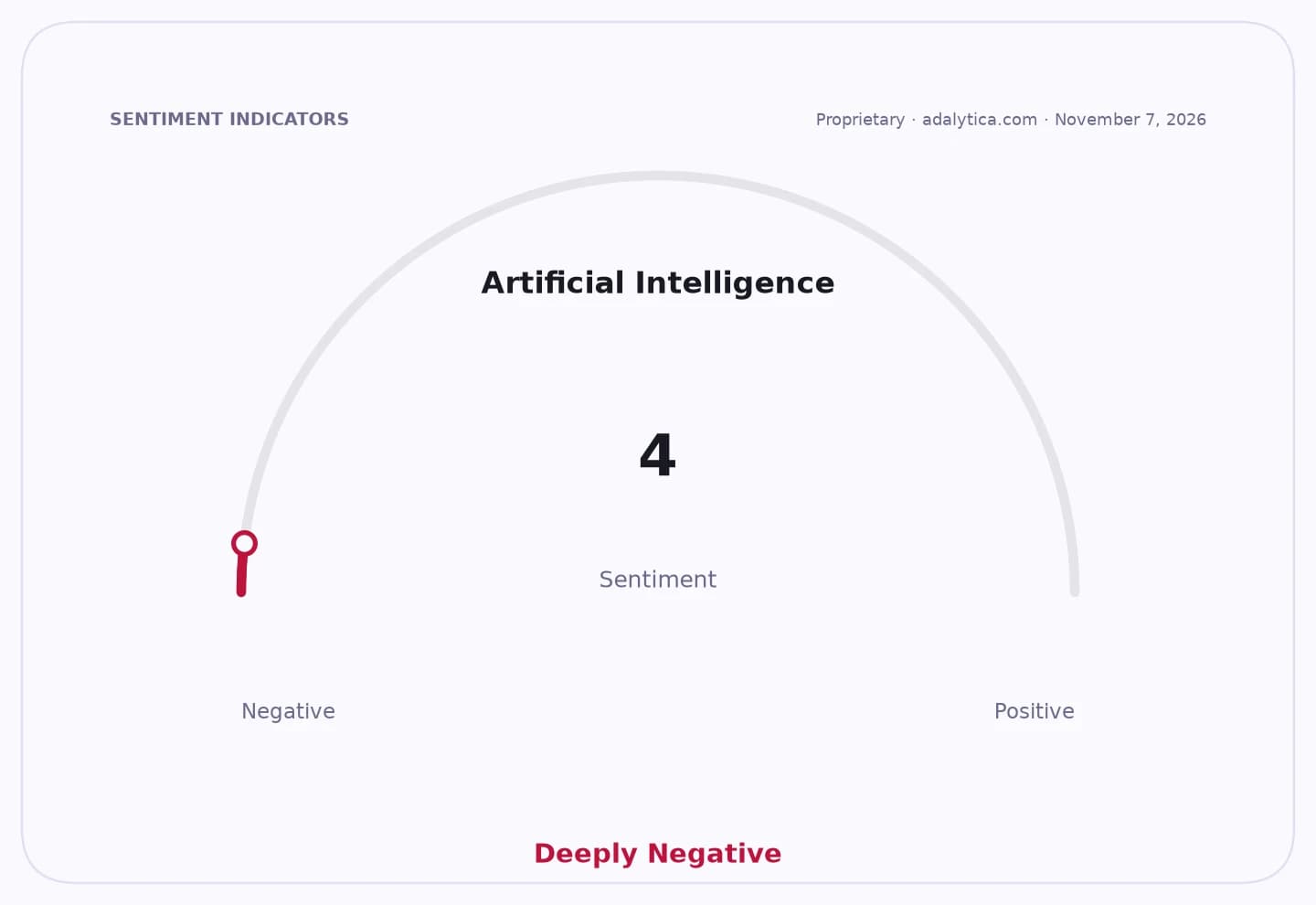
Sentiment Indicators
In the pilot, AI agents browsed products, compared options and started purchases inside existing e-commerce infrastructure, while the cardholder remained in control. Each transaction still required customer approval, with biometric verification and Visa Payment Passkeys used to confirm intent under Europe’s strong customer authentication rules. In other words, Visa is not trying to replace the buyer — it is trying to make the agent a safe extension of the buyer.
That architecture is commercially important. If agentic shopping takes off, the winners will be the firms that can authenticate identity, prove intent and settle the transaction without friction. Visa’s value proposition is that merchants and banks can build their own AI shopping experiences, while Visa handles the transaction layer and the security rails underneath. That keeps the network embedded in the most valuable part of the flow even if the user interface shifts away from traditional checkout pages and toward AI assistants.
The company is not alone in seeing the opportunity. Polish banks and fintechs including PKO BP, Credit Agricole, mBank, Bank Millennium, Nest Bank and PayPo participated, alongside payments players Autopay, IdoSell, PayU and Przelewy24, and merchants such as Empik, MegaDron and Tortli. Visa said the trial was conducted in real sales conditions, not just in a lab, which is the more meaningful signal for investors: this is moving from concept to infrastructure.
Consumer demand may be there sooner than many expect. Visa said as many as 5.7 million people in Poland could be interested in shopping with AI agents, with 3.5 million viewed as early adopters. More than half of respondents said they would consider using an agent for electronics purchases, while nearly half liked the idea of tailored recommendations. Travel, where product comparison is complex, also stood out. The economics are straightforward: AI agents could lift conversion rates, increase basket sizes and reduce friction in high-consideration categories.
But the trust hurdle is still real, and that is precisely why Visa’s role could become more valuable. Sixty-two percent of surveyed consumers worried an agent might buy without consent, while 57% cited risks around theft of personal and payment data. Sellers, meanwhile, like the efficiency gains but worry about competition, customer relationships and liability if something goes wrong. Those are not side issues — they are the commercial bottlenecks that will determine how quickly agentic commerce scales.
For investors, the key takeaway is that payments networks are likely to be indispensable in the AI commerce stack. The market often focuses on the flashy consumer layer, but the durable monetization may sit with the firms that secure identity, authenticate intent and make transactions trustworthy at scale. Visa’s push in Poland suggests it wants to be early in that race.
Visa’s stock has been trading well above its 200-day moving average, but the bigger story is strategic rather than technical: the company is extending its franchise into AI-mediated commerce just as merchants and banks start preparing for it. If agentic shopping becomes a meaningful share of e-commerce, the companies that solve security and authorization first will capture the most persistent value.
The next catalyst is broader deployment across European issuers and merchants. If Visa can turn this pilot into a repeatable framework, it could become the default payments layer for agentic shopping — and that is the kind of platform expansion investors should want to own early.
| Entity | Gains | Losses |
|---|---|---|
| Visa | ▲New payment rails in AI commerce | ▼Checkout disintermediation risk |
| Banks and fintechs | ▲Safer transaction controls | ▼Higher integration burden |
| Merchants | ▲Higher conversion and automation | ▼Less direct customer control |
| Consumers skeptical of AI shopping | ▲More protection and consent checks | ▼Slower, less frictionless buying |