Saudi Arabia’s push to build its own payment infrastructure is adding a new competitive front for Visa and Mastercard at a time when card networks are already facing slower, more contested growth in parts of the global payments market.
Visa and Mastercard face Saudi payment push
The latest example is Barq’s long-term partnership with Riyadh Air to develop an integrated payment platform for the new carrier’s commercial operations. That may sound like a narrow airline technology deal, but it reflects a broader shift in the Gulf: governments and local financial players are trying to keep more transaction flow, data and fee revenue inside domestic ecosystems rather than routing everything through the incumbent global card rails.
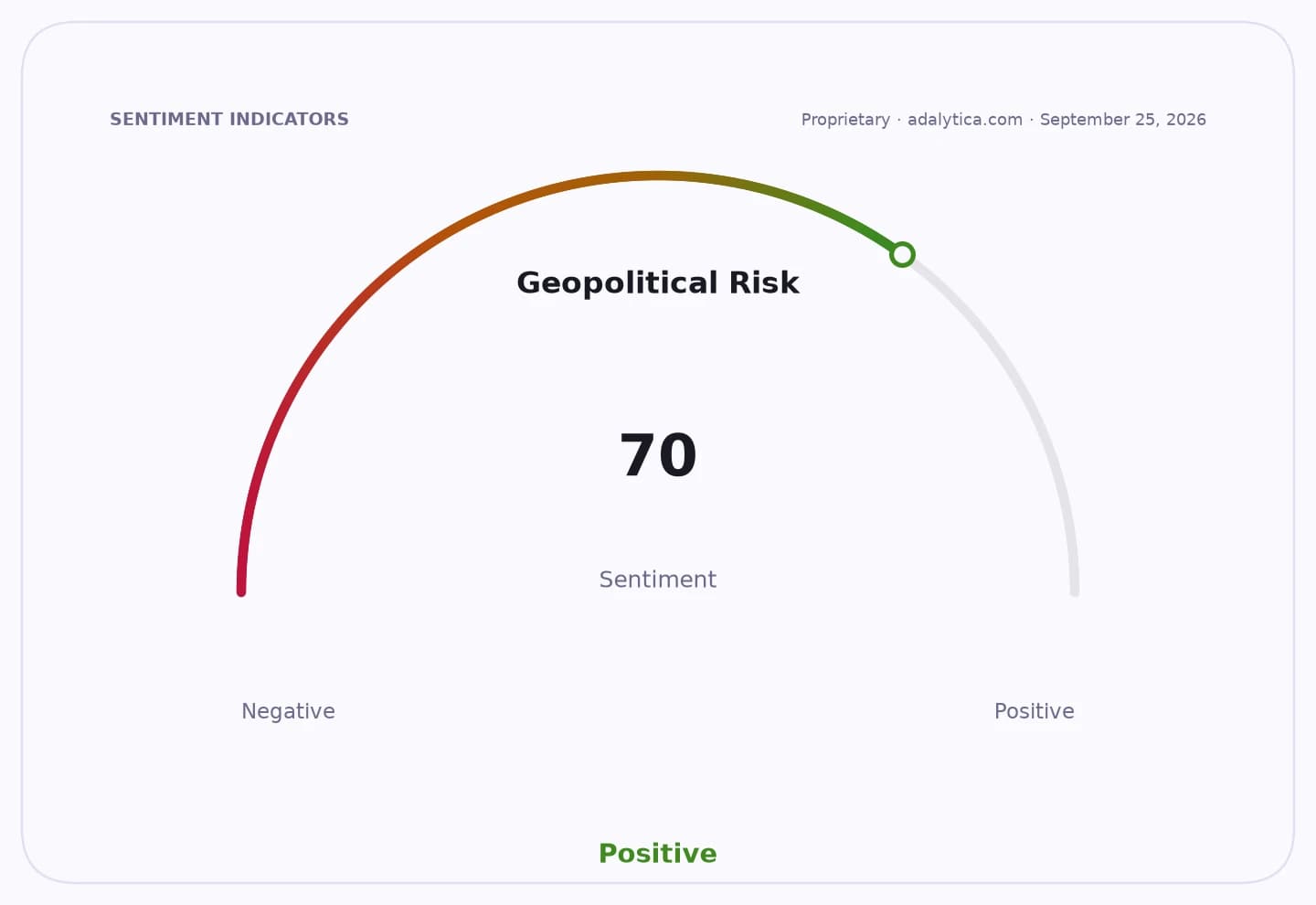
Sentiment IndicatorsⓘProprietary · adalytica.com · August 17, 2026
This is a snapshot — live sentiment, awareness and momentum for 130+ markets update continuously in the dashboard.Open AlphaPulse
For investors, the significance is less about one airline and more about what such partnerships imply for the network economics of the card industry. Visa and Mastercard depend on scale, merchant acceptance and recurring transaction growth. Any move by large, state-backed or strategically important customers toward local payment systems can chip away at that scale at the margin, especially in markets where authorities want more payment sovereignty and lower reliance on foreign networks.
That does not mean the incumbents are suddenly losing the region. Visa and Mastercard still sit at the center of global consumer spending and cross-border commerce, and their recent share performance shows the market has not priced in a structural collapse. Visa closed at $361.82 on Aug. 17, above its 50-day average of $348.72 and 200-day average of $330.06, while Mastercard ended at $565.59, also above both moving averages. But both stocks have cooled from recent highs, with Visa off from its Aug. 13 peak of $365.45 and Mastercard down from $569.29, suggesting investors are watching for any signs that growth in international markets may become more competitive.
The Saudi development fits a wider pattern in payments. Across airlines, banks and consumer platforms, companies are increasingly building or buying their own payment layers to control costs, improve customer experience and reduce dependence on third-party networks. In practice, that can mean domestic wallets, account-to-account payments, tokenized checkout systems or partnerships with local fintechs that keep transactions away from traditional card rails.
That pressure matters economically because card networks are highly sensitive to transaction volumes and take rates. Even when a local solution does not displace Visa or Mastercard outright, it can divert a portion of spending into cheaper alternatives, especially for travel, government services and higher-volume merchants. Over time, that can weigh on cross-border fee growth and reduce the pricing power that has helped make the two companies among the most valuable franchises in financial services.
The risk is not limited to the Gulf. The same theme is showing up in Europe, Latin America and parts of Asia, where regulators and national champions increasingly favor domestic payment systems. For Visa and Mastercard, the bull case remains that global commerce keeps expanding and consumers still prefer the convenience and protection of card networks. The bear case is that more of the world is moving toward a mixed payments landscape, where local rails, bank transfers and wallets capture a growing share of everyday transactions while the global networks are left with slower, more mature categories.
That makes Saudi Arabia an important market to watch. Riyadh Air is not yet a mature airline franchise, but it is being built as part of the kingdom’s wider push to localize strategic infrastructure. If Barq’s model proves successful, it could become a template for other large domestic operators, reinforcing the idea that the most important competition for Visa and Mastercard may no longer come only from other global payments firms, but from countries seeking to own the rails themselves.
| Entity | Gains | Losses |
|---|---|---|
| Barq / Riyadh Air | ▲Local control, lower payment dependence | ▼Reliance on global card rails |
| Visa / Mastercard | ▲Continued network relevance | ▼Some transaction share |
| Saudi policymakers | ▲Payment sovereignty | ▼Less direct access to global systems |
| Merchants / airlines | ▲Potential lower costs | ▼Transition and integration risk |