Visa is widening the reach of stablecoins on its Visa Direct network through a new collaboration with zerohash, a move that could make digital dollars more useful for everyday money movement and reinforce Visa’s role in the next phase of payments.
Visa Adds Stablecoin Support on Visa Direct
That matters because the payments industry is no longer just about cards. It is becoming a contest over who controls the plumbing for instant, low-cost transfers across borders and between wallets, bank accounts and fintech apps. By adding stablecoin capabilities to Visa Direct, Visa is trying to ensure that if money starts moving more like software, its network still sits at the center of the flow.
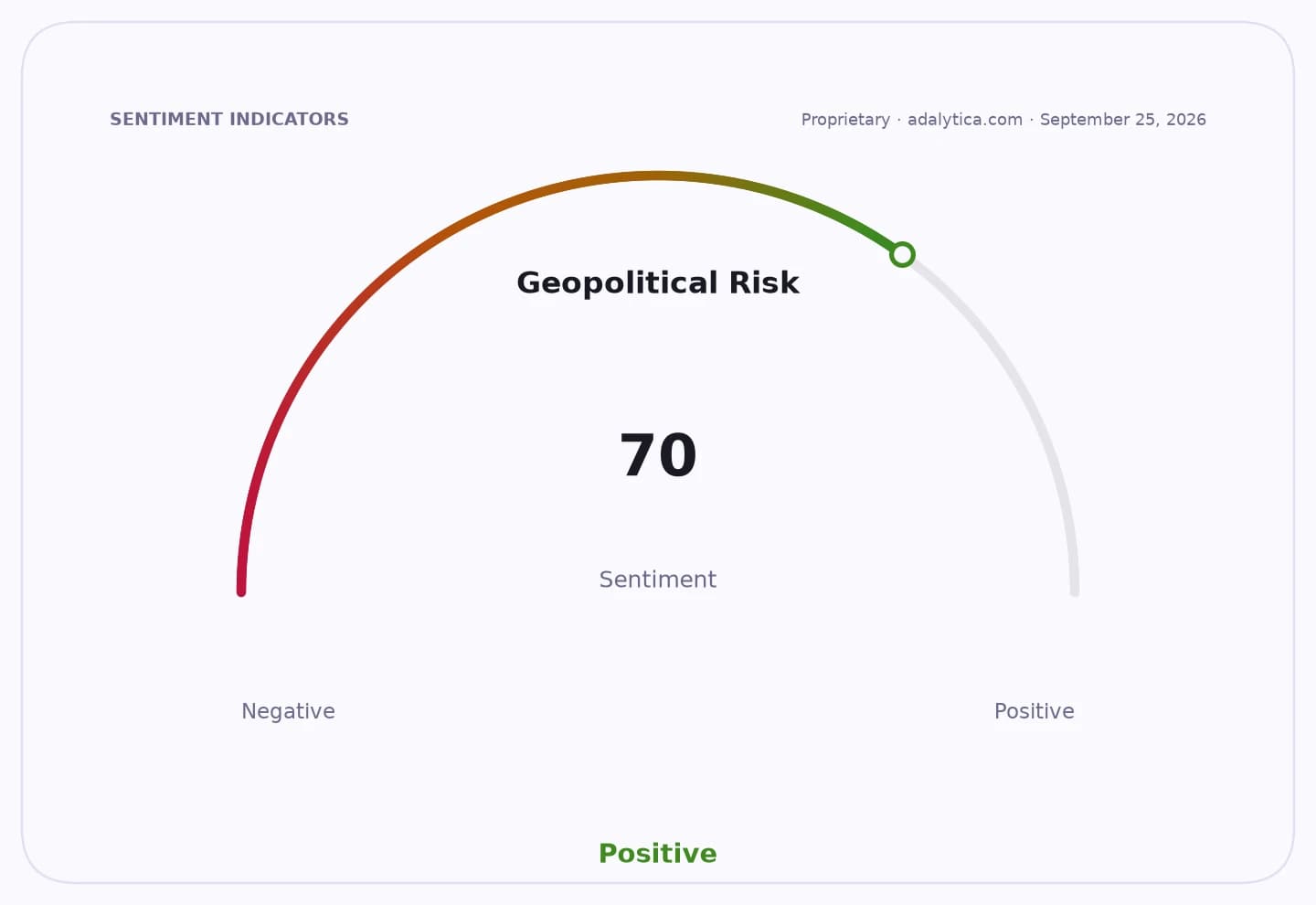
Sentiment IndicatorsⓘProprietary · adalytica.com · August 5, 2026
This is a snapshot — live sentiment, awareness and momentum for 130+ markets update continuously in the dashboard.Open AlphaPulse
For investors, the key question is not whether stablecoins remain a niche crypto tool. It is whether regulated digital dollars become a scaling technology for remittances, payouts and business-to-business transfers. If that happens, the winners are likely to be the companies that can connect old and new rails without sacrificing trust, compliance or speed. Visa is clearly betting that its brand, its compliance muscle and its distribution to banks and fintechs will matter more, not less, in that world.
The stock market seems to agree that Visa remains one of the most durable compounders in financials. Visa shares have climbed to around $371, well above both the 50-day moving average near $343 and the 200-day average near $330, a sign investors continue to pay for the company’s earnings power and moat even as the broader market leans toward risk. Conventional technical indicators also show the stock is not stretched in the way it was earlier in the summer, with RSI readings in the mid-50s suggesting momentum is steady rather than euphoric.
The bigger story is strategic. Stablecoins, once dismissed as crypto plumbing, are increasingly being treated as a serious settlement layer. That creates a real economic opportunity: lower frictions in cross-border payments, faster payouts for workers and merchants, and potentially lower operating costs for companies that move large volumes of money. It also raises competitive pressure on traditional payment processors, fintech firms and banks that make money from legacy transfer systems and foreign-exchange spreads.
Visa is hardly alone in chasing that opportunity, and that is part of why this development matters. PayPal has already pushed into stablecoins with PYUSD, while Mastercard has also been leaning into digital-asset infrastructure. But Visa’s edge has always been its network effect. If stablecoin payments become normalized, the company does not need to own the token to benefit; it needs to remain the trusted bridge between issuers, wallets, merchants and recipients.
There are still obvious risks. Stablecoin rules are evolving, and regulators will not let the market scale without tighter oversight on reserves, anti-money-laundering controls and consumer protection. Adoption also depends on whether merchants and payment users actually see enough value to shift behavior. Yet for long-term investors, the importance of this announcement is that Visa is adapting early, not waiting to be disintermediated.
In other words, this is less about crypto hype than about infrastructure. If digital dollars keep moving into mainstream payments, Visa wants to be the network that makes them usable at global scale. That is exactly the kind of move that can protect a wide moat for years, and it is worth keeping on your watchlist if you are investing for the next decade, not the next quarter.
| Entity | Gains | Losses |
|---|---|---|
| Visa | ▲More payment flow relevance | ▼Legacy-only rails |
| zerohash | ▲Broader distribution | ▼Standalone niche status |
| PayPal, Mastercard | ▲Validated stablecoin thesis | ▼First-mover pressure |
| Banks and remittance firms | ▲Faster settlement tools | ▼FX and transfer fees |