Real estate investors are getting a much clearer split between opportunity and risk as U.S. borrowing costs stay elevated, housing demand stays uneven and listed property funds keep holding above long-term trend lines.
VNQ at 98.71 as REIT ETFs Hold Above Averages

That matters because real estate is one of the most interest-rate-sensitive corners of the market. When the 10-year Treasury yield sits near 4.6% to 4.7%, as it does now, financing stays expensive for landlords, cap rates tend to stay pressured and the margin for error narrows for property owners that need to refinance debt or buy assets aggressively. For investors choosing between REITs, individual property names and broad realty index funds, the key question is no longer just where income is highest. It is where cash flow can keep compounding after debt costs, valuation and asset quality are accounted for.
Sentiment IndicatorsⓘProprietary · adalytica.com · August 7, 2026
This is a snapshot — live sentiment, awareness and momentum for 130+ markets update continuously in the dashboard.Open AlphaPulse
The good news for long-term buyers is that the sector is not breaking down. VNQ, the Vanguard Real Estate ETF, was recently at 98.71, above both its 50-day moving average of 97.51 and its 200-day average of 92.01. IYR, another broad real estate fund, traded at 104.96, also above its 50-day and 200-day averages. SCHH, the Schwab U.S. REIT ETF, held at 24.16, likewise above both moving averages. That kind of price structure suggests investors are still willing to pay for real estate exposure even with rates high and growth selective.
But the better-looking chart does not mean the sector is equally attractive everywhere. Broad realty funds are benefiting from diversification across industrial, data center, cell tower, apartment, retail and specialty REITs. That lowers company-specific risk and makes them the cleanest way for most investors to own the asset class over a three- to 10-year horizon. If you want real estate exposure without having to predict which property niche wins, the index-fund route still looks the most resilient.
Individual REITs can still be compelling, but they demand more patience and more underwriting. Some names have the advantage of recurring rent growth and stronger occupancy, as recent filings from large landlords show. Others are more exposed to leverage, refinancing needs or weak property cycles. That is why the spread between “good REIT” and “bad REIT” is wider than the spread between one broad fund and another. Investors who buy single property stocks need confidence in balance-sheet strength, lease duration and asset quality, not just yield.
The housing market adds another layer of complexity. U.S. housing starts were forecast around 1.33 million after a recent drop, while inflation remains well above the Federal Reserve’s old comfort zone even after cooling from the sharp surge of the past few years. In plain English, affordability is still stretched, which limits how fast homebuilders can grow and keeps pressure on parts of the residential property chain. That is not necessarily bad for rental REITs, which can benefit when would-be buyers stay renters longer. But it does mean not every real estate subsector enjoys the same tailwind.
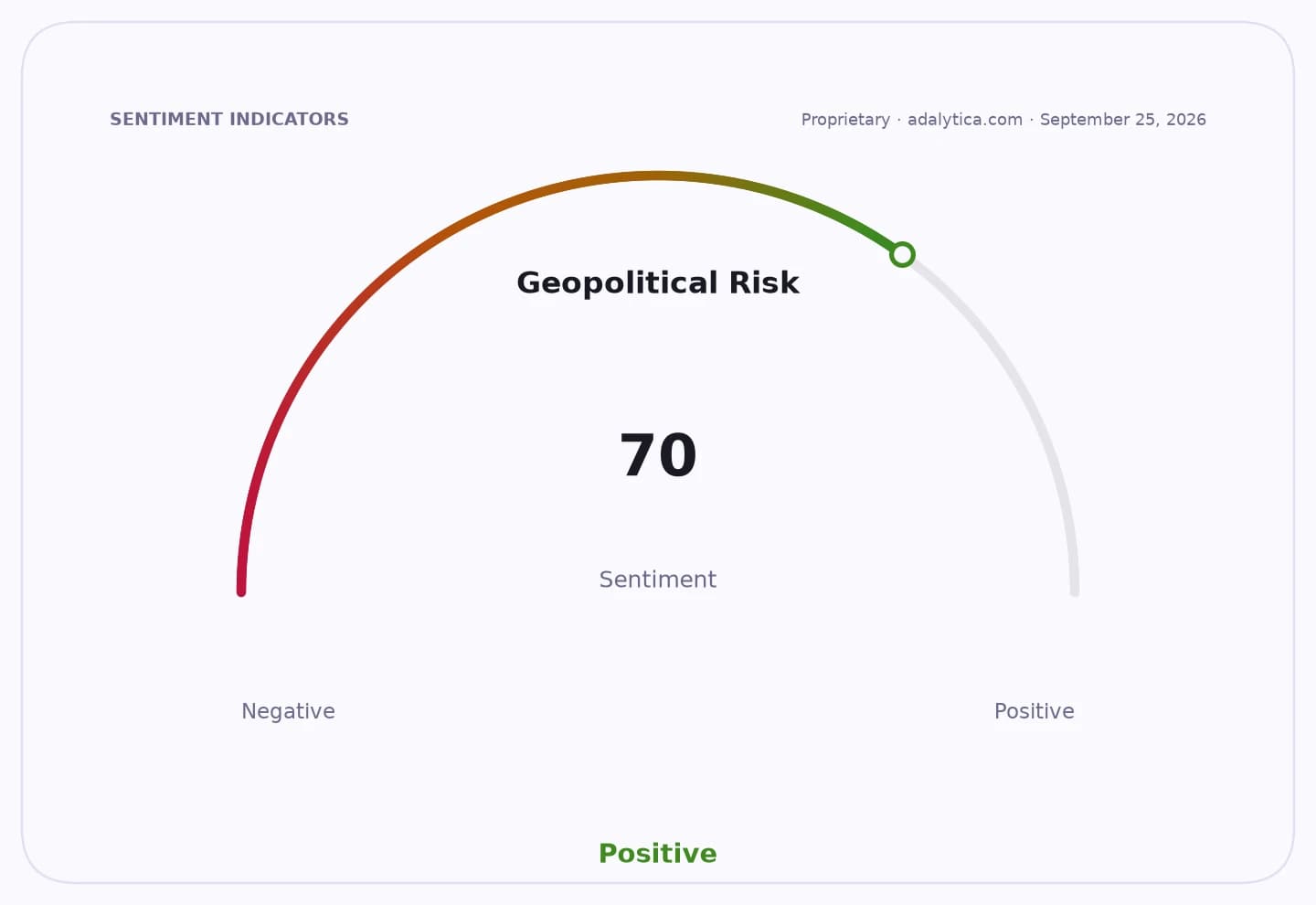
Investor sentiment is also telling a cautious but constructive story. Adalytica’s snapshot for VNQ shows commercial REIT sentiment at 67, or neutral, after a strong 30-day rise. By contrast, the S&P 500 is showing extreme greed. That gap matters: real estate is not being chased the way big-tech stocks are, which can be healthy for long-term investors who prefer cash flow and modest valuations over momentum.
The biggest risk remains the same one that has challenged real estate investors for more than two years: rates can stay higher for longer than markets expect. If Treasury yields remain around current levels, REITs with heavy debt loads or short lease structures may struggle to outgrow financing costs. Property stocks tied to office or highly cyclical assets remain especially vulnerable. Broad index funds and higher-quality REITs are better positioned because they spread that risk and usually tilt toward stronger operators.
For investors asking where it is most profitable to invest, the answer is usually broad realty funds first, select REITs second and single-property names only for those willing to do the work. For where it is most risky, the answer is easy: leveraged property stocks with weak cash flow and refinancing needs.
Real estate will probably not be the hottest trade in 2026, but that is exactly why it can still be a good long-term allocation. If you want a durable income stream and a hedge against eventual rate cuts, the sector deserves a place on your watchlist. If you want the simplest way to own it, diversified REIT ETFs still look like the smartest starting point for patient investors.
| Entity | Gains | Losses |
|---|---|---|
| Broad REIT ETFs | ▲Diversification, steadier income | ▼Concentrated stock risk |
| Select high-quality REITs | ▲Lease growth, durable cash flow | ▼Refinancing pressure |
| Leveraged property stocks | ▲Asset rebounds in strong niches | ▼Higher financing costs |
| Cash-rich investors | ▲Better entry points over time | ▼Less upside if rates fall fast |