World stocks are under renewed crash talk as tariff fears, tech selling and a sharp jump in global risk aversion hit major markets, but the actual price action still looks more like an abrupt volatility reset than a full-blown systemic break.
Volatility Reset, Not a Full Market Crash
That distinction matters for investors because panic can spread quickly when growth-sensitive sectors, banks and high-valuation tech all sell off at once, yet the big benchmark data so far show stress rather than collapse. Germany’s DAX closed at 25,155.41 on July 22, still well above its 50-day moving average of 24,912.29 and its 200-day average of 24,362.72, while the S&P 500 ended at 7,498.96, also above both key trend gauges. The VIX, meanwhile, eased to 16.64 from 18.65 earlier in the week, indicating fear is elevated but not yet at crisis levels.
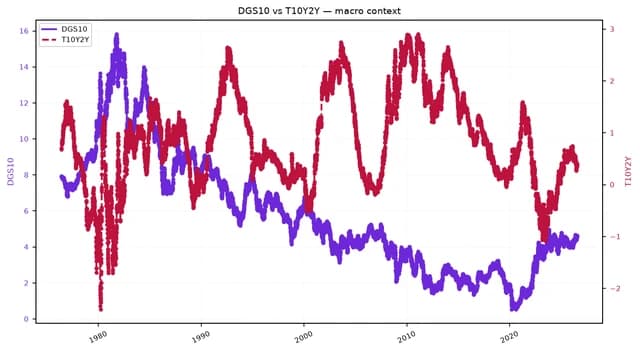
The market backdrop has turned more fragile because macro signals are conflicting. The U.S. 10-year Treasury yield sits around 4.637%, close to the highest levels in the data set and still implying restrictive financial conditions, while the 10-year/2-year curve remains modestly positive at 0.35 percentage point, a sign the market is no longer pricing an immediate recessionary break. The U.S. recession indicator is also at zero, suggesting the latest equity slide is being driven more by valuation, policy and positioning shocks than by a confirmed economic contraction.
That is consistent with the pattern in global equities this week. The broad selloff cited in market reports has hit India, South Korea and Wall Street, with banks and pharma shares under pressure and major U.S. tech names leading losses after a dramatic repricing in momentum stocks. In Europe, the DAX has come off recent highs but has not yet broken its intermediate uptrend, which argues against the kind of indiscriminate liquidation associated with a true market crash.
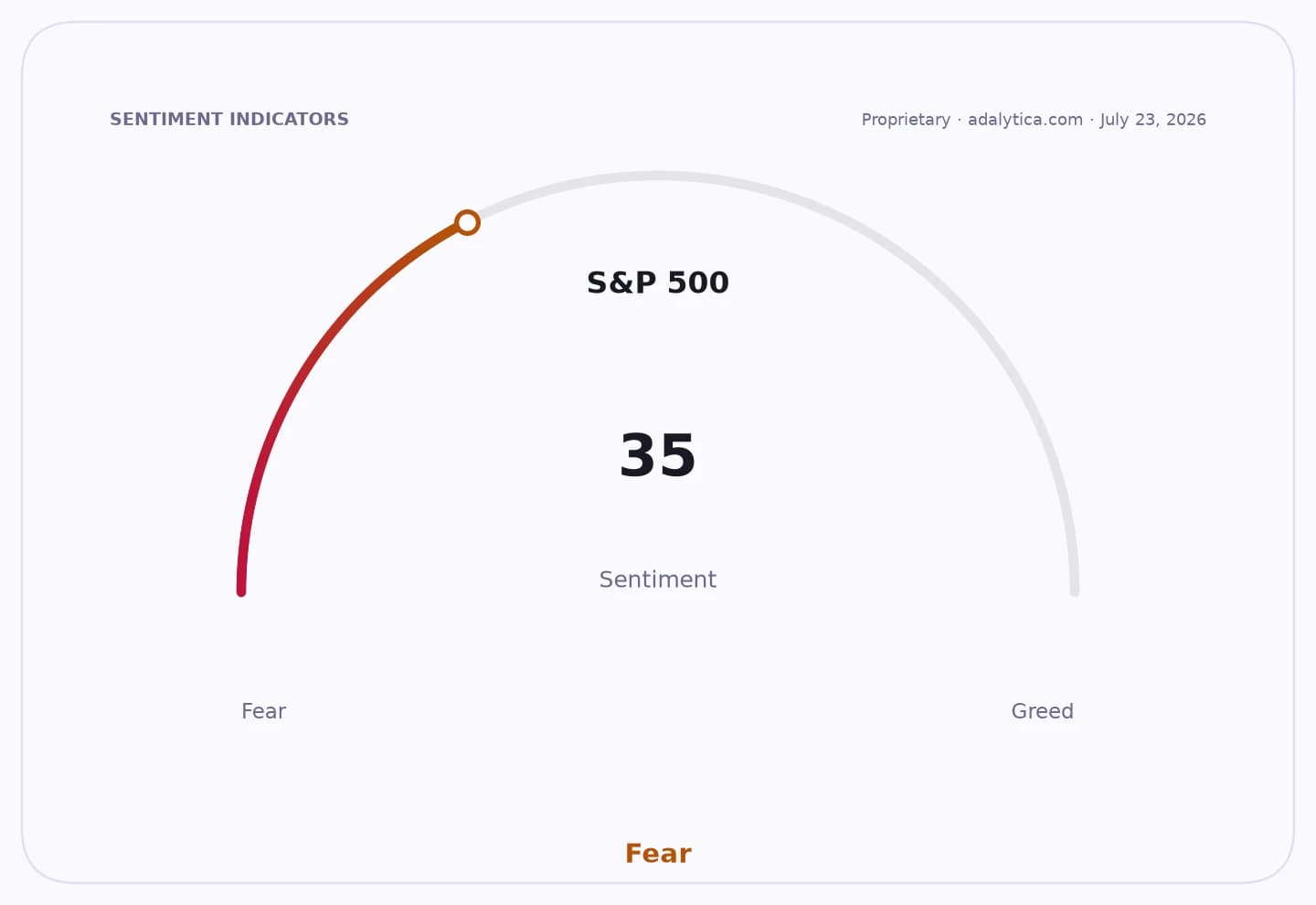
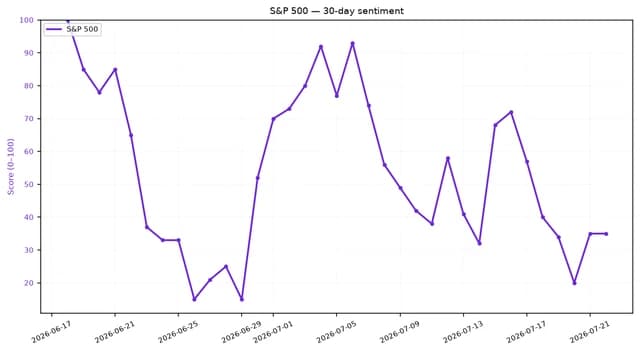
Still, investors are treating the move as a warning that the market’s cushion has thinned. Adalytica’s Global Stability Sentiment gauge is at 4, or “Extreme Fear,” while its awareness reading is 86, “Extreme Greed,” a combination that points to a jump in geopolitical stress and crowding in risk assets. Adalytica’s S&P 500 trade signals are neutral, but the 7-day change in awareness and sentiment has deteriorated, underscoring how fast confidence has faded.
For now, the key question is whether this is a sharp correction within an extended bull trend or the start of a deeper unwind. Investors will be watching the next move in Treasury yields, tariff headlines, and whether volatility spreads beyond megacap tech into banks, industrials and export-heavy European shares. A decisive break below major moving averages would make the crash narrative harder to dismiss; holding above them would suggest this is still a disorderly but contained reset.
| Entity | Gains | Losses |
|---|---|---|
| Volatility traders | ▲Higher options demand | ▼Risk-on investors |
| Defensive sectors | ▲Relative inflows | ▼Banks and cyclical stocks |
| Exporters with pricing power | ▲Better hedge value | ▼Importers facing tariff costs |
| Cash holders | ▲More entry points | ▼Momentum longs |