Walmart de México y Centroamérica has lost more than 12% of its market value since Cristian Barrientos was named chief executive, a steep pullback that reflects investor concern that the region’s largest retailer is entering a slower-growth phase just as it keeps spending heavily on expansion.
Walmart de México shares fall on slower sales growth

The stock has fallen from 53.16 pesos to 46.76 pesos on the Bolsa Mexicana de Valores since Barrientos was announced as CEO in early October 2025, even as the company continues to add stores and allocate more capital to new units. For investors, the decline matters because Walmart México is a barometer for consumer demand in the country and a key defensive holding in a market where retail earnings are closely tied to household spending.
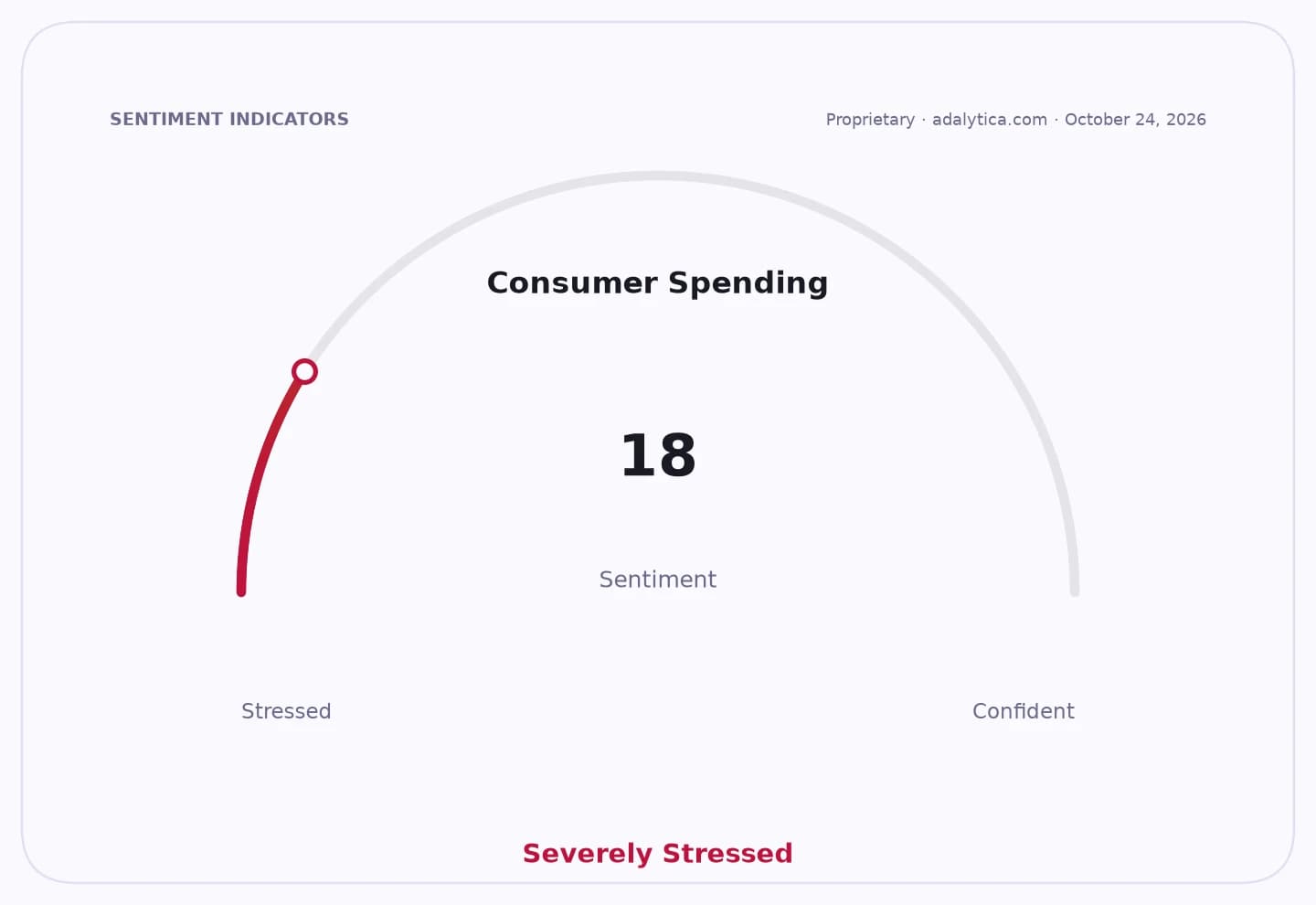
Sentiment Indicators
Consumer Spending
The pressure comes from a softer operating backdrop. Same-store sales rose 1.8% in the second quarter, down from 3.1% in the first three months of the year, while net sales increased 3.1% to 209.188 billion pesos, slowing from 4.4% in the prior quarter. That deceleration suggests consumers are becoming more cautious, limiting the pace at which Walmart can translate traffic and basket growth into higher revenue.
Yet Barrientos is not slowing the rollout. Walmart opened 21 stores in Mexico in the April-June quarter, bringing its total to 3,351 units, and plans 43 billion pesos of capital spending in 2026 across Mexico and Central America, up 10% from a year earlier. About 26% of that budget will go to new stores and clubs, in line with a plan to add more than 1,500 units between 2025 and 2029. The strategy points to management confidence in long-term market share gains, even if near-term earnings growth is under pressure.

The market reaction also fits a broader pattern in consumer stocks: when sales growth slows, expansion spending can look less like growth investment and more like margin drag. That tension is likely to stay central to the investment case. Bulls can argue Walmart’s scale, store density and defensive positioning should support earnings through a softer consumer cycle. Bears will focus on the risk that heavier capex and slower comp growth compress returns before new stores fully mature.
Technical indicators reinforce the cautious tone. Walmart de México’s shares have traded below their 200-day moving average, a conventional sign of a weaker trend, even after a recent rebound from summer lows. The recovery in the past few sessions suggests some bargain hunting, but the stock still needs clearer evidence that sales momentum is stabilizing.
For investors, the key question is whether Barrientos can sustain expansion without sacrificing profitability. The next few quarters will show whether slower consumer demand is temporary or the start of a more persistent deceleration that forces a reset in expectations for Mexico’s biggest retailer.
| Entity | Gains | Losses |
|---|---|---|
| Walmart México management | ▲Long-term footprint growth | ▼Near-term margin pressure |
| Consumers | ▲Wider store access | ▼Less promotional room if costs rise |
| Long-term shareholders | ▲Potential market share gains | ▼Slower earnings growth |
| Short-term traders | ▲Volatility opportunities | ▼Trend-following downside risk |