American households are still paying a persistent inflation penalty, and the latest pressure point is the back-to-school bill, which is now topping $800 per family in some states and tightening already stretched budgets.
Walmart, retail ETF pressure as back-to-school costs top $800
That matters because this is not a one-off seasonal nuisance. It is evidence that the cost of living remains elevated even after the headline inflation rate has cooled from its peak. The Consumer Price Index has climbed to 332.4 from 237.3 in early 2016, a rise of roughly 40%, while the labor market remains relatively firm with unemployment at 4.1% in July. For investors, that combination is critical: wage income is holding up, but households are still being forced to allocate a larger share of paychecks to necessities, leaving less room for discretionary spending.
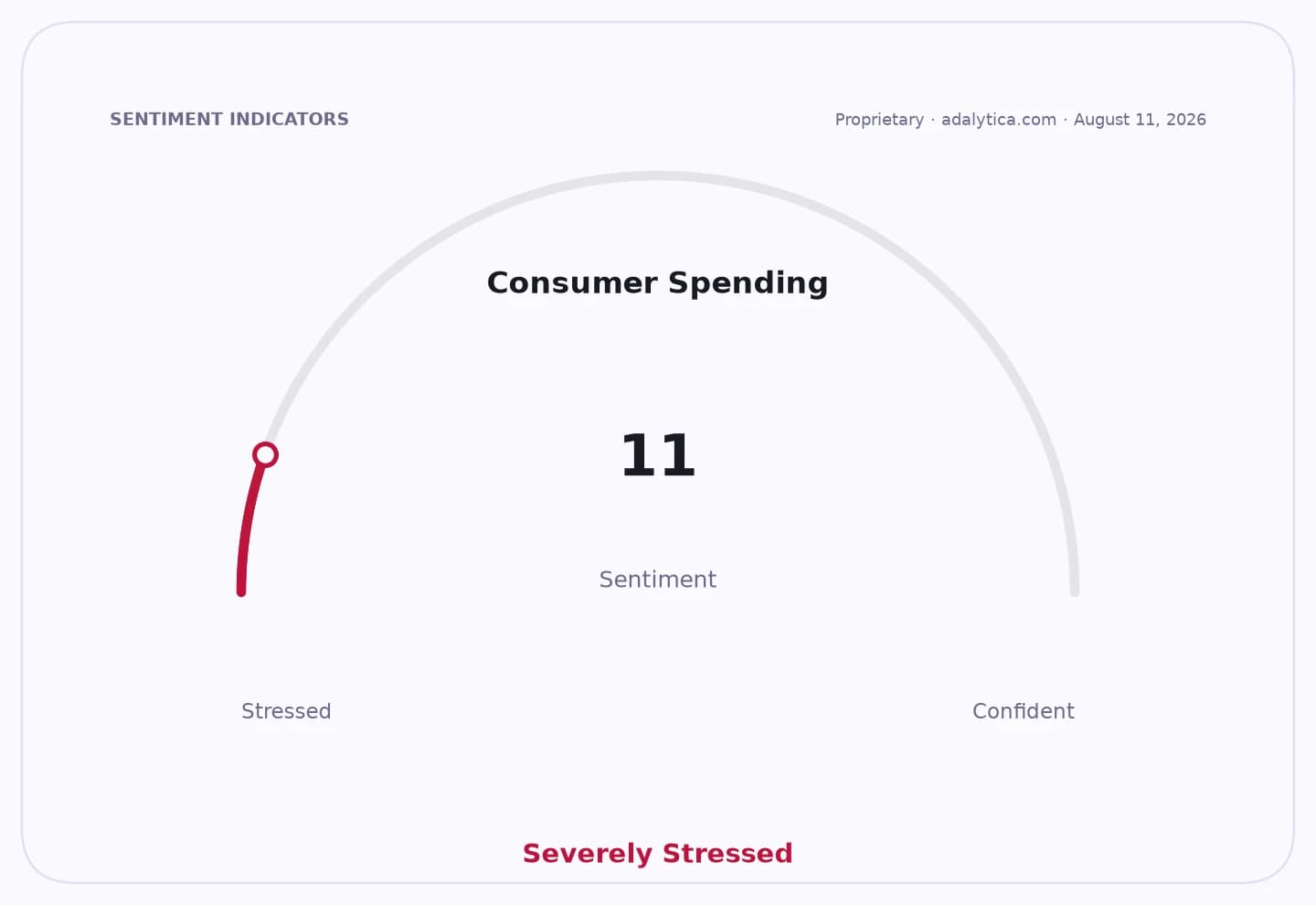
Sentiment IndicatorsⓘProprietary · adalytica.com · August 11, 2026
This is a snapshot — live sentiment, awareness and momentum for 130+ markets update continuously in the dashboard.Open AlphaPulse
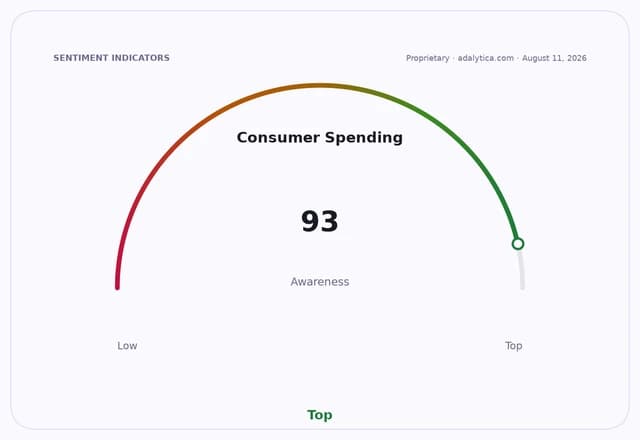
The strain is showing up where it usually does first — in the consumer-facing parts of the market. Consumer sentiment tied to spending has collapsed to 11, or “Extreme Fear,” in Adalytica’s Consumer Spending Sentiment gauge, even as awareness of the issue remains unusually high. That split suggests households know prices are still biting, but they are becoming far more cautious about what they buy and when they buy it. For retailers, that means promotions may have to do more work to pull demand forward, and for investors it means margin risk is shifting from headline inflation to trade-down behavior.
The market is already picking up on that pressure. The SPDR S&P Retail ETF, XRT, has been volatile and sits below its 200-day moving average, a sign that investors are still skeptical of the broader retail complex. By contrast, defensive names have held up better: Walmart has outperformed over the past year and remains better positioned to capture consumers trading down, while the consumer-discretionary ETF, XLY, is recovering but still reflects a more selective appetite for spending. That gap is the investable story: not all consumer stocks are equally exposed to household stress.
CPIAUCSL vs RSXFS — macro contextadalytica.com
Explore this data interactively — full history, time series and cross-market comparisons.Open AlphaPulse
The second-order effect is where the opportunity lies. When families are forced to absorb an $800-plus seasonal expense in a short window, they cut back somewhere else — restaurants, apparel, home goods and nonessential services are the most vulnerable. Discounters, value-oriented grocers, off-price chains and necessity retailers can gain share, while premium brands and discretionary spenders face a tougher setup into the second half of the year. If inflation stays sticky enough to keep budgets tight, the market underestimates how long this “value rotation” can last.
My view is that investors should treat this as a consumer selection market, not a consumer recovery story. Favor the toll roads of household spending — Walmart, dollar stores, discount retailers and staple names — and be wary of discretionary names that depend on a clean return of spending power. If back-to-school pressure is any guide, the consumer is not broken, but it is tired, and that is enough to keep the winners and losers diverging sharply.
| Entity | Gains | Losses |
|---|---|---|
| Walmart (WMT) | ▲Trade-down traffic | ▼Less affluent margin |
| Consumer staples/discounters | ▲Budget-conscious demand | ▼Premium pricing power |
| XRT retail ETF | ▲Selective rebound potential | ▼Weak broad retail breadth |
| Discretionary retailers (XLY) | ▲Promotional volume | ▼Higher budget squeeze |