Low-income consumers are still stretching every dollar, and that matters because it is shaping who wins and who loses in U.S. retail.
Low-Income Pressure Favors Walmart Over Target

That pressure is most visible in the split between companies built for value shoppers and those that depend more on discretionary spending. General merchandise chains like Target are still trying to stabilize demand, while Walmart and extreme-value players such as dollar stores remain positioned to capture a larger share of budget-conscious spending. For investors, that makes low income not just a social issue but a profit driver: when households have less room in their budgets, traffic shifts toward the retailers that offer staples, convenience and the cheapest ticket prices.
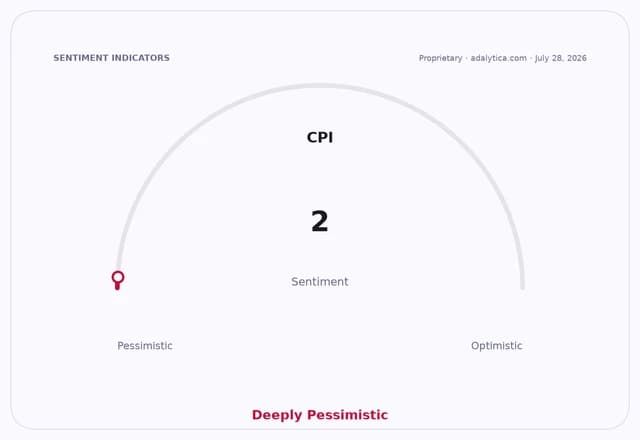
Sentiment IndicatorsⓘProprietary · adalytica.com · July 28, 2026
This is a snapshot — live sentiment, awareness and momentum for 130+ markets update continuously in the dashboard.Open AlphaPulse

The macro backdrop helps explain why. Consumer prices remain elevated in absolute terms even after easing from the inflation surge, with the CPI forecast edging to 335.512 in July from 332.568 in June. Unemployment, meanwhile, is expected to hold near 4.18%, which says the labor market is still healthy enough to avoid a recession, but not strong enough to erase pressure on lower-income households. In other words, the economy is not breaking, but it is still not giving the most vulnerable consumers much breathing room.
That combination tends to reward retailers with scale and pricing power. Walmart has built an ecosystem around groceries, essentials and digital convenience, and its stock has reflected that resilience, recently trading above both its 50-day and 200-day moving averages. Target, by contrast, has been more volatile, even after a sharp rebound in its shares; the stock still sits in a stock-picker’s zone, where investors are paying for a turnaround rather than a clean secular tailwind. For long-term investors, that distinction matters more than any single quarterly print. In a low-income environment, the best businesses are often the ones that can keep share gains without leaning on deep promotions.
CPIAUCSL vs UNRATE — macro contextadalytica.com
Explore this data interactively — full history, time series and cross-market comparisons.Open AlphaPulse
The latest CPI and wage backdrop also argue that this is not a short-lived theme. Consumer spending excluding food and energy continues to rise in nominal terms, but the burden of inflation means households at the bottom end of the income spectrum have less flexibility to trade up. That favors companies with everyday-low-price positioning, broad assortment and supply-chain scale. It also helps explain why dollar stores and warehouse clubs continue to command attention from investors looking for durable demand rather than cyclical upside.
For shareholders, the lesson is simple: low-income consumers may be under pressure, but that pressure can create long runways for the right retailers. Walmart looks like the clearest beneficiary, while Target needs better execution to prove it can win in the same environment. If you’re investing for the next three to 10 years, this is a reminder to favor businesses that serve necessity over novelty and can compound even when the consumer is squeezed. Worth watching, and for patient investors, worth keeping on the list.
| Entity | Gains | Losses |
|---|---|---|
| Walmart | ▲More budget traffic | ▼Less room for error |
| Target | ▲Turnaround optionality | ▼Discretionary weakness |
| Dollar stores | ▲Trade-down demand | ▼Margin pressure |
| Low-income households | ▲Access to cheaper essentials | ▼Limited spending power |