Walmart is leaning harder into warehouse automation as the holiday season approaches, a move that could help the world’s biggest retailer protect margins, speed up deliveries and keep shelves stocked while consumer demand remains sturdy.
Walmart leans into warehouse automation before holidays

For investors, that matters because automation is no longer just a back-office upgrade at Walmart. It is becoming part of the company’s long-term playbook for defending its low-cost advantage against Amazon and other rivals that are also pouring money into fulfillment. In a retail world where labor is expensive, inventory mistakes are costly and shoppers expect faster shipping than ever, robots can turn a good quarter into a durable competitive edge.
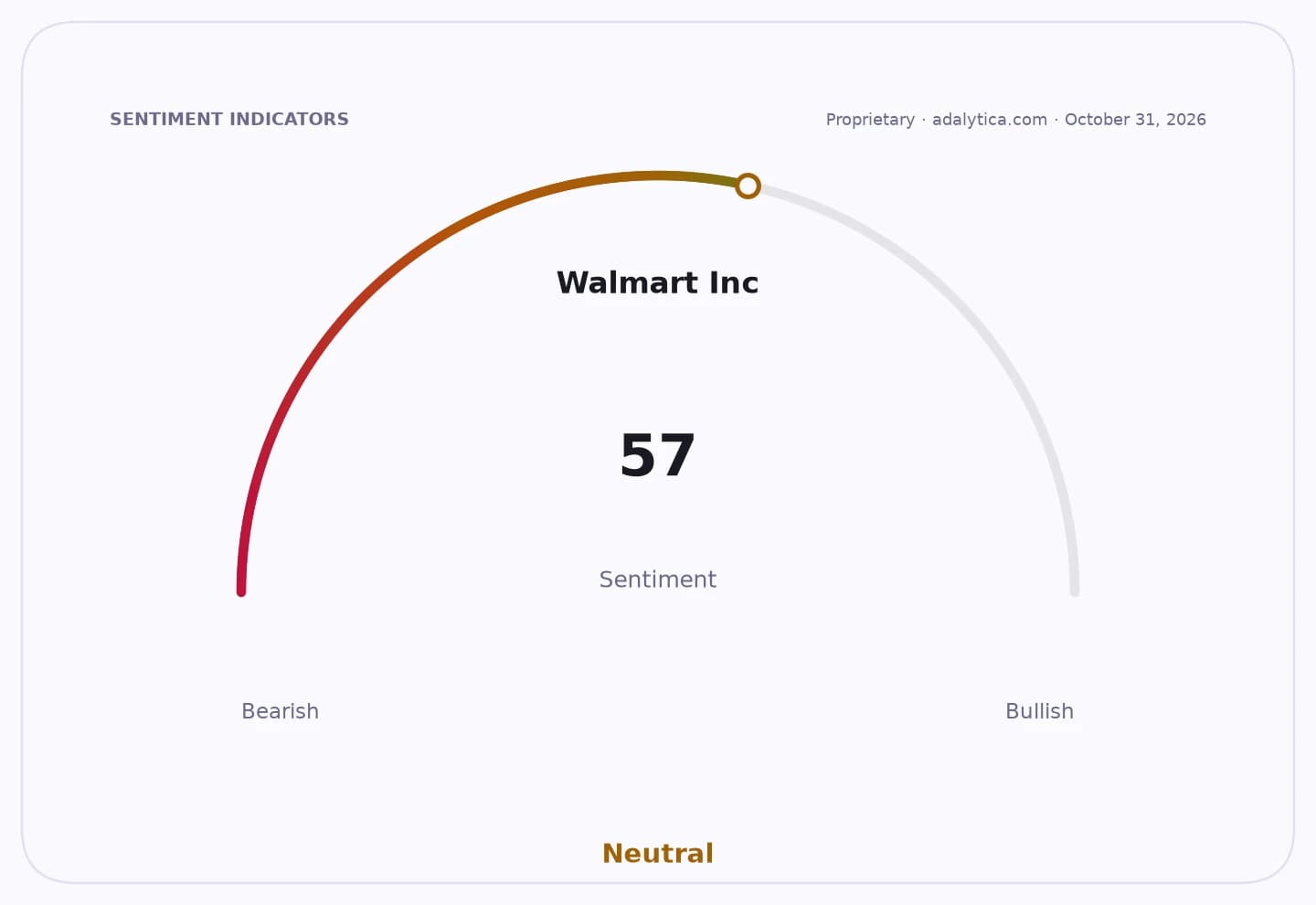
Sentiment Indicators
The timing is smart. Walmart’s stock has been on a strong run, with shares recently trading at 127.69, well above both its 50-day moving average of 110.71 and its 200-day moving average of 118.19. The stock’s RSI reading of 83.6 suggests it is stretched in the short term, but the broader message is still constructive: investors are rewarding a business that keeps finding ways to grow without giving away profitability.
That’s especially relevant heading into the holidays, when fulfillment pressure rises and any hiccup in warehouse flow can ripple through same-day delivery, pickup and e-commerce orders. Walmart’s recent sales momentum shows it has the scale to absorb those costs, but scale alone is not enough. The retailer needs technology that can lower unit costs as volumes rise, and warehouse robots are one of the cleanest ways to do that.
The broader retail backdrop also favors companies that can automate. Consumer spending sentiment on Adalytica’s gauge sits at 82, in “Greed” territory, suggesting shoppers are still spending even if they are increasingly selective. That creates an opening for Walmart, which has long thrived when households trade down to value. If robots help the company fulfill more orders faster and more cheaply, Walmart can extend that value proposition without sacrificing earnings quality.
Amazon remains the obvious comparison. The online giant is also heavily invested in fulfillment and logistics, and its stock has been volatile despite a much larger e-commerce footprint. Walmart’s edge is that it combines stores, supply chain and digital fulfillment in a way that can use automation across the network, not just inside pure warehouses. That makes the payoff potentially broader and more durable than a one-off efficiency project.
The key risk is that automation takes capital and time. Robots do not instantly fix labor shortages, shipping bottlenecks or consumer softness, and any short-term slowdown in execution could weigh on sentiment. But over a three- to five-year horizon, investors should focus less on the cost of the robots and more on what they do to free up cash flow, protect margins and deepen Walmart’s moat.
For long-term investors, the message is straightforward: Walmart is using technology to make its scale even more powerful. That is exactly the kind of move that can compound quietly for years, and it is worth keeping on the watchlist if you want a resilient retailer built for the next era of retail.
| Entity | Gains | Losses |
|---|---|---|
| Walmart | ▲Lower fulfillment costs | ▼Upfront automation spending |
| Amazon | ▲E-commerce efficiency pressure | ▼Relative Walmart supply-chain edge |
| Holiday shoppers | ▲Faster delivery, fewer stockouts | ▼Less room for price discounts if costs rise |
| Warehouse labor | ▲Safer, steadier workflows | ▼Fewer routine jobs |