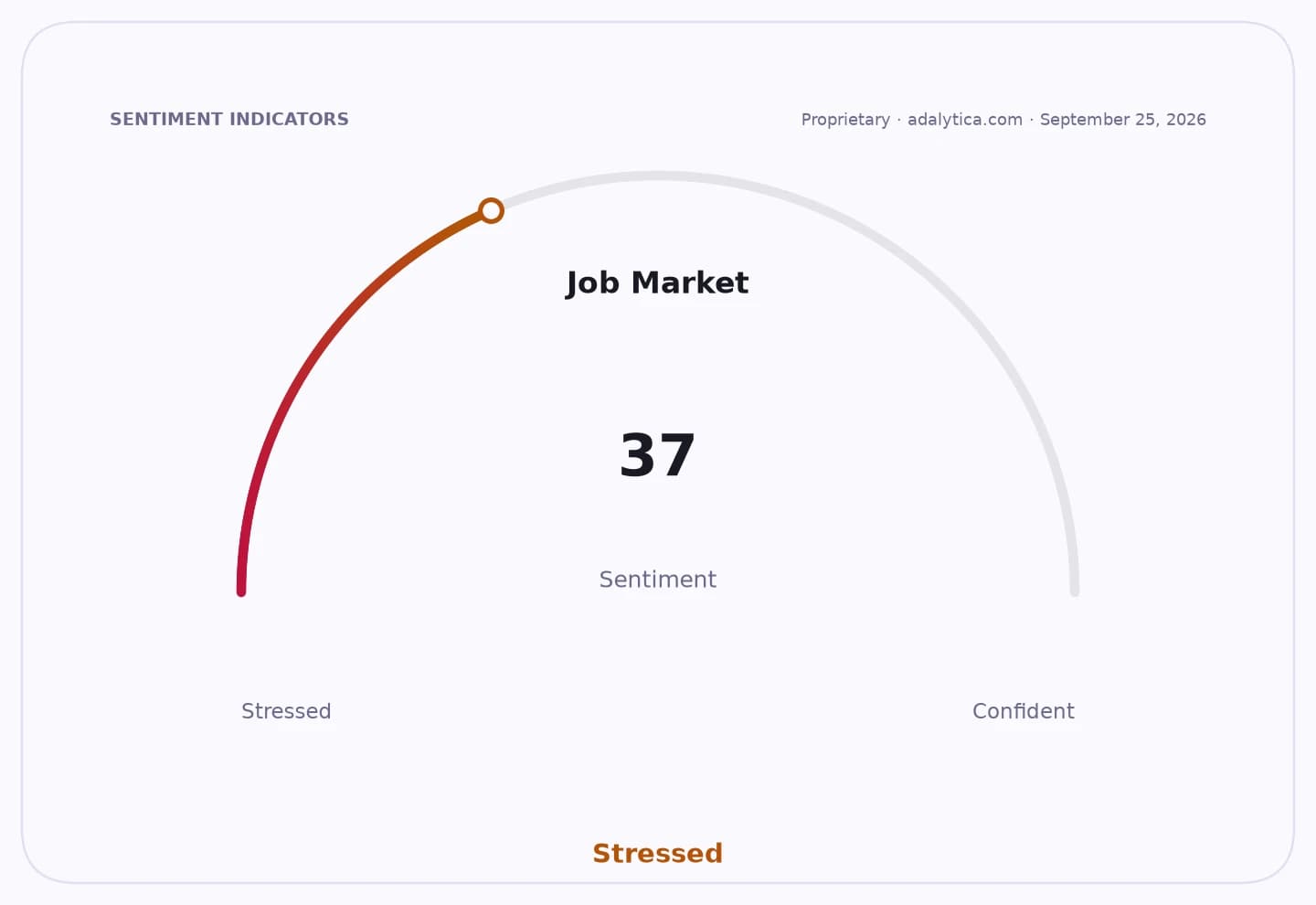
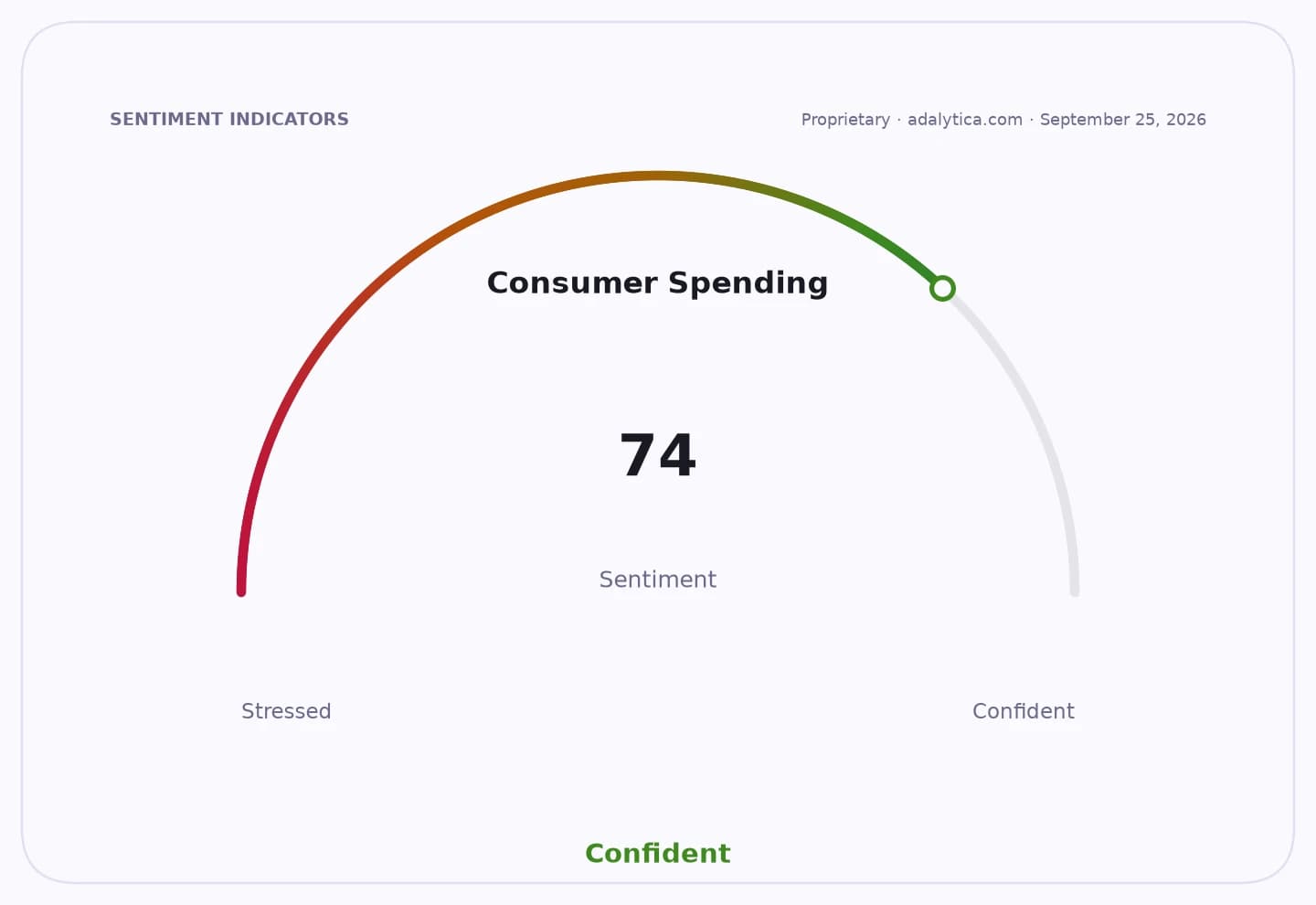
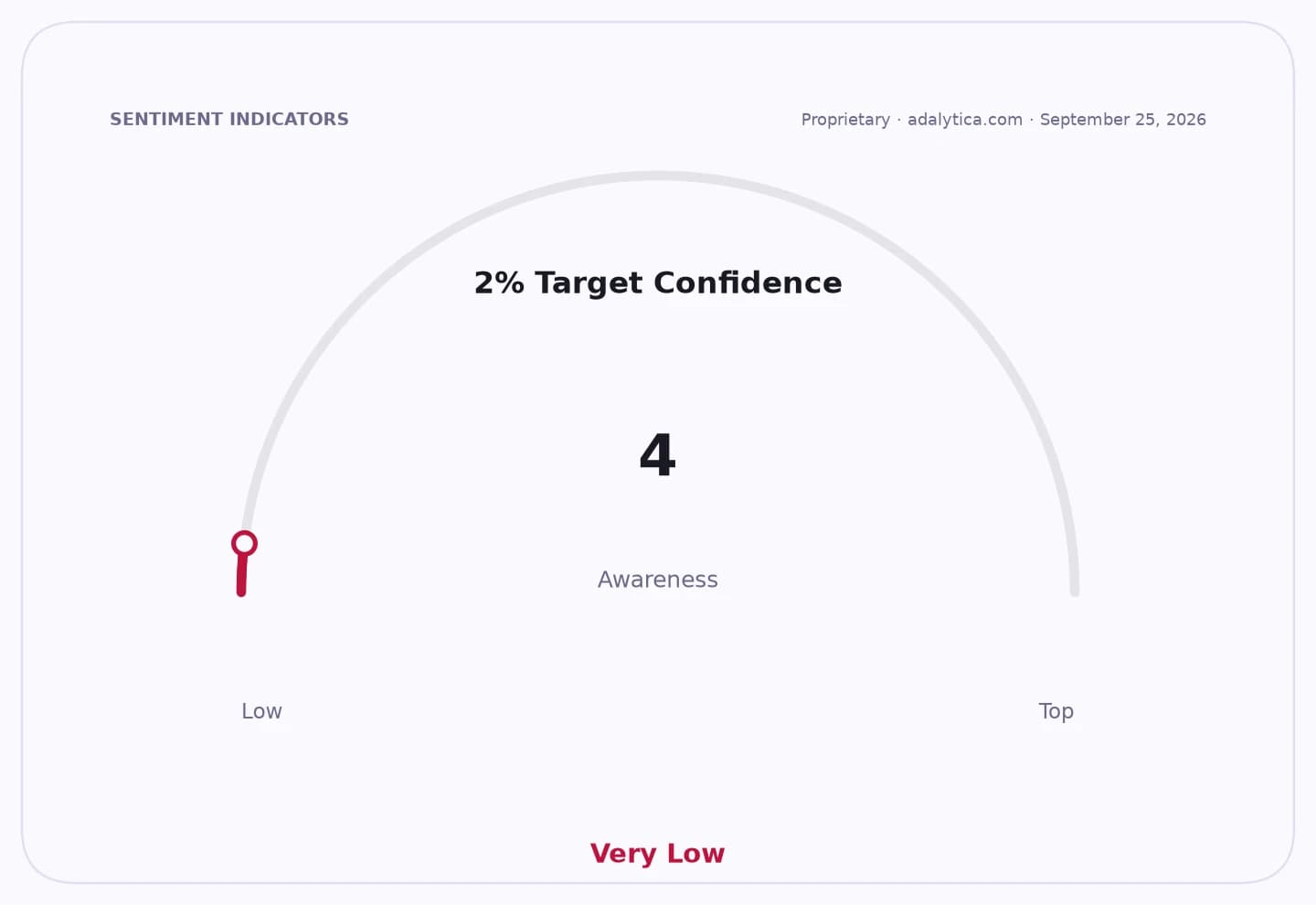
Lower food prices are starting to do what policymakers wanted: ease pressure on households without choking off demand, and that is the real significance for investors. The latest inflation data show consumer prices essentially flat in June after a modest 0.47% rise in May, while producer prices also slipped 1.26% in June, pointing to a broader cooling in the pipeline as supermarket price cuts and food-industry promotions filter through the economy.
Walmart and XLP gain as food prices cool in June
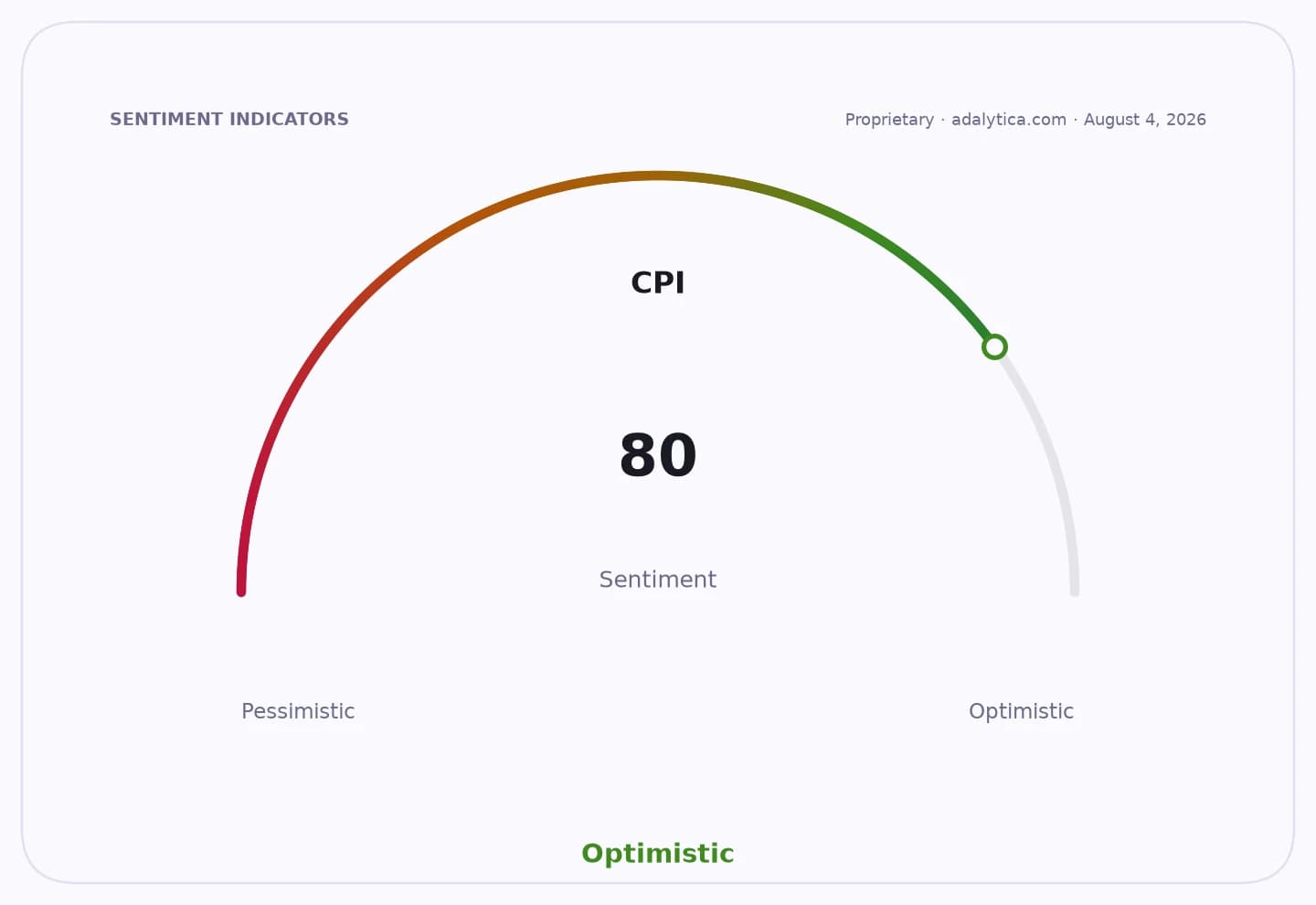
That matters because food is one of the fastest ways inflation reaches consumers and one of the most politically sensitive. When grocery chains and suppliers lean into discounts, the benefit is immediate for shoppers, but the burden shifts onto margins for retailers and branded food companies. The message from the data is that the price war is working — and for now, it is helping contain headline inflation rather than reigniting it.
Sentiment IndicatorsⓘProprietary · adalytica.com · August 4, 2026
This is a snapshot — live sentiment, awareness and momentum for 130+ markets update continuously in the dashboard.Open AlphaPulse
The trade-off is uneven. Retailers with scale and procurement power can absorb selective price cuts and still defend traffic, while smaller rivals and higher-cost suppliers face more strain. Walmart, with its deep supplier relationships and everyday-low-price model, is positioned to turn lower shelf prices into share gains. The same is true for broad consumer staples exposure through XLP, which has held up as a defensive trade and now sits above its 200-day moving average, even as the 50-day average has flattened and momentum has cooled from earlier extremes.
Costco is a more nuanced winner. The warehouse model thrives when consumers trade down, but the stock’s recent volatility shows the market is already wrestling with how much pricing power it can preserve if deflation in food categories persists. Food makers, by contrast, are the ones most at risk of seeing revenue growth slow as volume gains fail to fully offset price cuts.
The macro backdrop reinforces the thesis. U.S. consumer prices remain far above pre-pandemic levels — the CPI was 332.6 in June versus 237.3 at the start of 2016 — but the short-term direction is what matters for central banks and rate-sensitive assets. If food disinflation lasts, it can give policymakers room to stay patient and supports the case for a softer landing. It also helps explain why defensive consumer stocks have stayed bid: investors are paying for earnings resilience at a time when inflation is no longer running away.
For investors, the key is not to chase the headline that prices are falling. It is to own the businesses that can use lower prices as a competitive weapon. Walmart remains the cleanest expression of that theme, while XLP offers a diversified way to play defensive consumption without taking full commodity risk. The next catalyst is whether this price discipline proves temporary promotion or a more durable reset in grocery inflation — and if it is the latter, the beneficiaries will be the retailers with scale, not the suppliers with the weakest pricing power.
| Entity | Gains | Losses |
|---|---|---|
| Walmart | ▲Traffic and share gains | ▼Margin pressure from cuts |
| XLP | ▲Defensive inflows | ▼Slower pricing growth |
| Costco | ▲Trade-down demand | ▼Less pricing power |
| Food makers | ▲Volume stability | ▼Lower shelf prices |