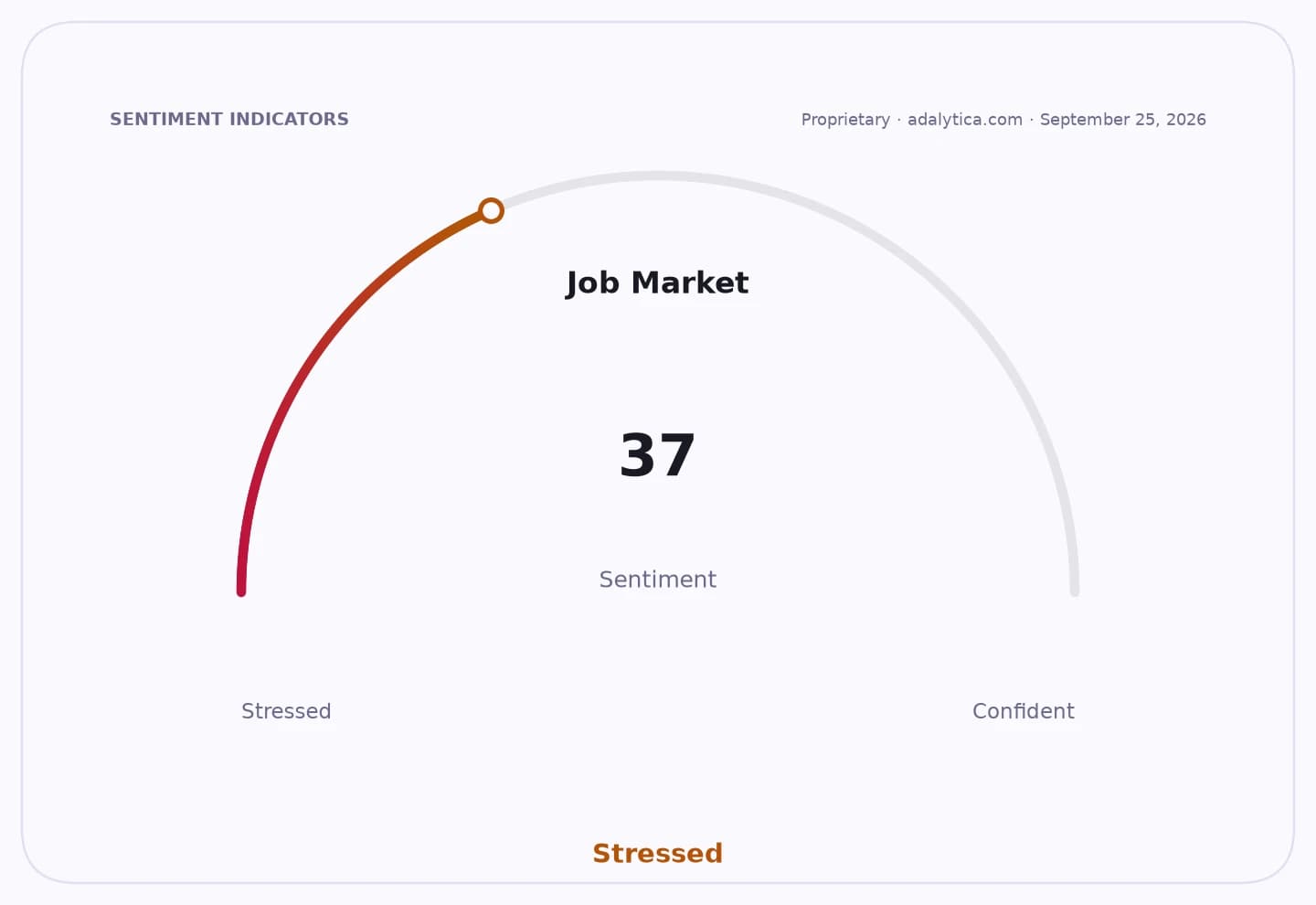
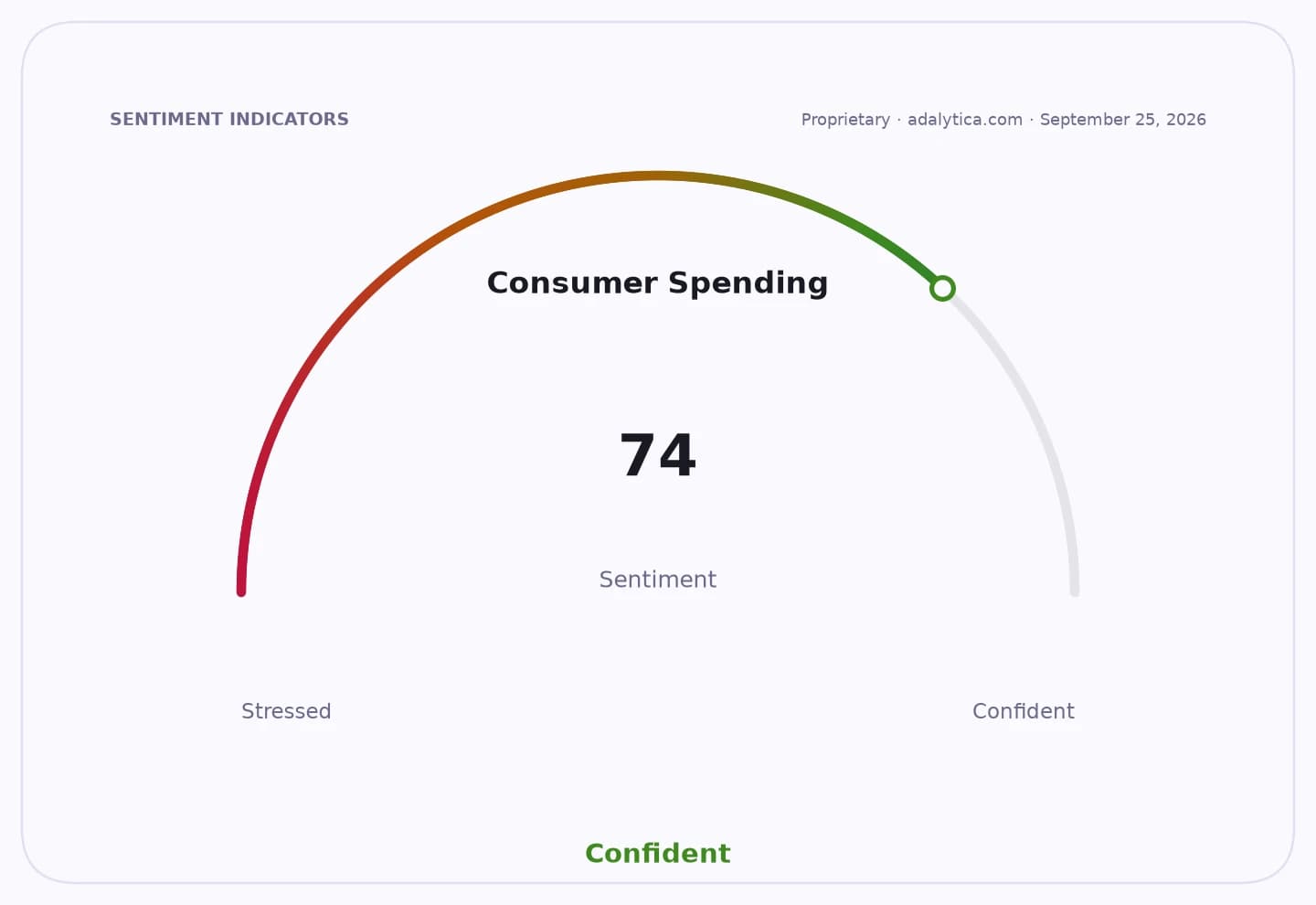
Monthly betting spend is weakening just as consumer sentiment sours, and that is an important warning sign for the casino and online wagering trade. The latest Adalytica Consumer Spending Sentiment snapshot fell to 54 from 86 the day before, while retail-goods spending sentiment improved only modestly to 43, suggesting households are becoming more selective even before a broader slowdown fully shows up in hard data.
Weak Betting Spend Warns Gaming Stocks

That matters because gambling is one of the most discretionary categories in the consumer wallet. When spending confidence cools, betting is often one of the first expenses to get trimmed, especially for lower-frequency and lower-stakes users. The macro backdrop is not helping: the 10-year Treasury yield has climbed back to about 4.64%, keeping borrowing costs elevated and reinforcing a tighter financial environment for households already under pressure.
Sentiment IndicatorsⓘProprietary · adalytica.com · July 23, 2026
This is a snapshot — live sentiment, awareness and momentum for 130+ markets update continuously in the dashboard.Open AlphaPulse

Investors are already seeing the impact in the shares of the biggest gaming names. DraftKings has been hit hard, with the stock closing at $22.83 on July 22, well below its 50-day average of $25.68 and its 200-day average of $28.00. Relative strength has slipped to 27, a sign the market has turned defensive on the name. Flutter Entertainment has also faded sharply, ending at $99.80, far beneath its 200-day average of $153.44. Penn Entertainment, by contrast, has held up better, closing at $20.93 and still above its 200-day average, but it too is giving back momentum after a recent run.
The deeper story is that betting is no longer being valued only as a pure growth category. It is being treated more like a cyclical consumer spend lever, and that changes the entire investment case. If monthly wagering outlays soften, revenue growth for sportsbooks and iGaming operators can decelerate faster than headline handle trends suggest, while promotional intensity may rise as operators fight harder for a smaller pool of active bettors.
Consumer Spending vs DKNGadalytica.com
Explore this data interactively — full history, time series and cross-market comparisons.Open AlphaPulse

That is why the real opportunity may not be in the most obvious betting names, but in the picks-and-shovels and balance-sheet winners that can survive a spending slowdown. Operators with stronger cross-sell into casino, hotel, and loyalty ecosystems, and companies with diversified revenue streams beyond sports betting, are better positioned than pure-play apps. The market still underestimates how quickly a consumer pullback can compress margins in a business built on acquisition spend and retention incentives.
The message for investors is clear: treat weaker betting spend as a leading indicator, not a one-month blip. If consumer confidence keeps wobbling and rates stay elevated, the gaming complex could see another leg of underperformance. In that environment, the best setups are the names with pricing power, diversified cash flow, and enough scale to outlast a softer wagering cycle.
| Entity | Gains | Losses |
|---|---|---|
| Value-oriented gaming operators | ▲Better relative resilience | ▼Slower handle growth |
| Pure-play sportsbooks | ▲— | ▼Higher promo pressure |
| Consumers | ▲More spending discipline | ▼Less appetite for discretionary bets |
| Defensive gaming platforms | ▲Share rotation support | ▼Less upside from betting boom |