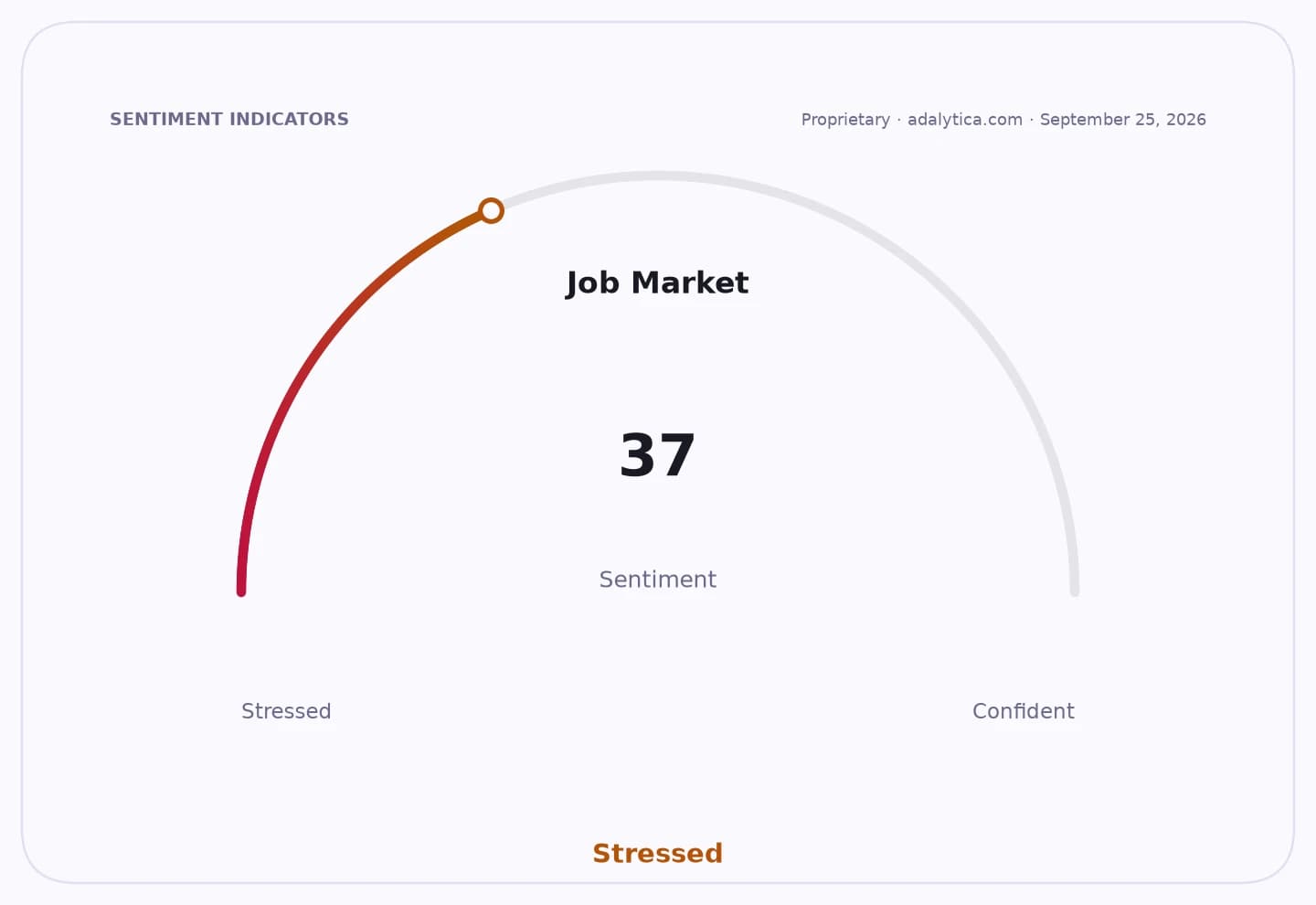
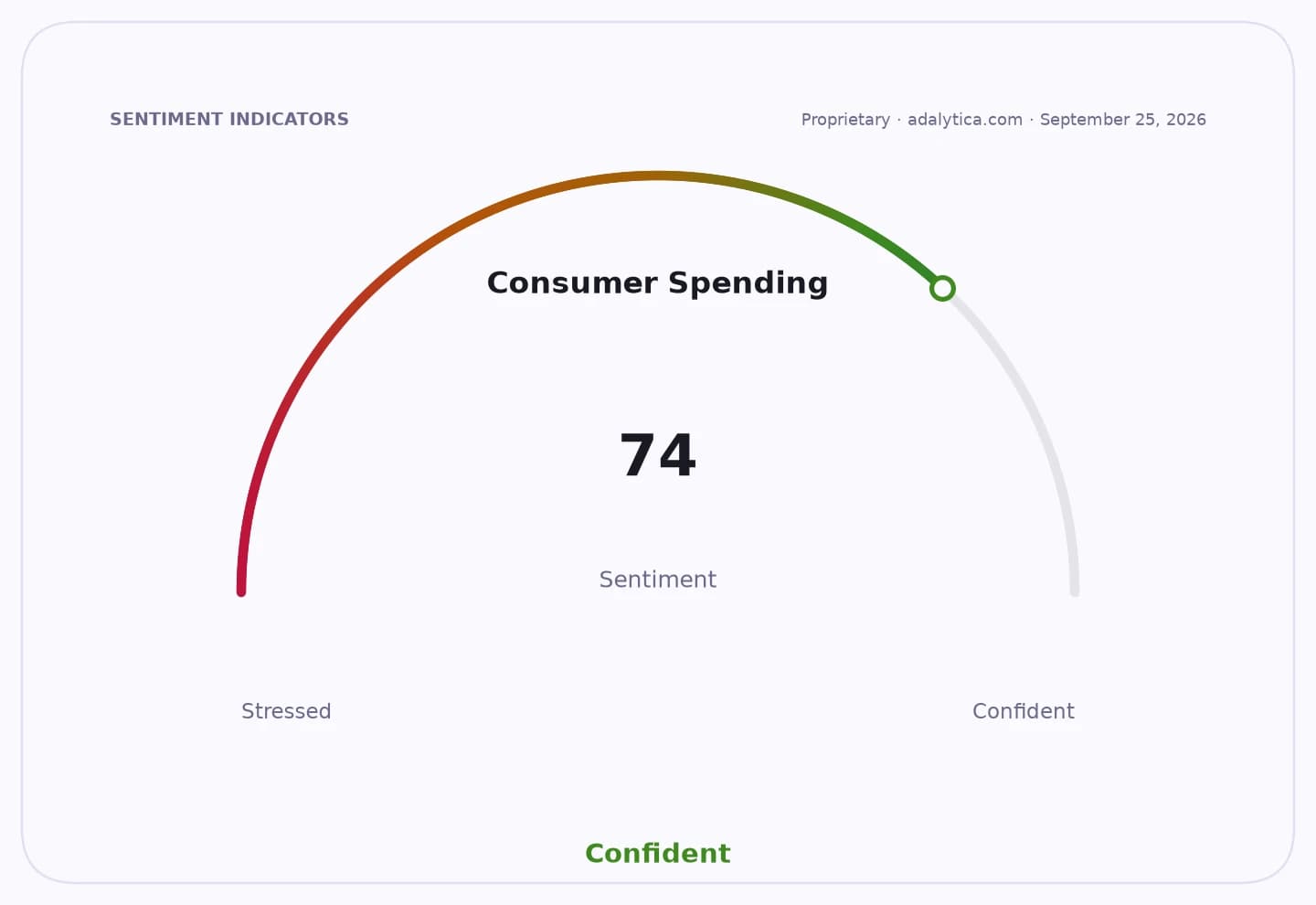
Consumer confidence in the U.S. economy is weakening again as business activity estimates and inflation expectations both turn worse, a combination that raises the risk of slower spending, stickier price pressure and a more complicated path for Federal Reserve policy.
Weak Sentiment Keeps Fed Cautious
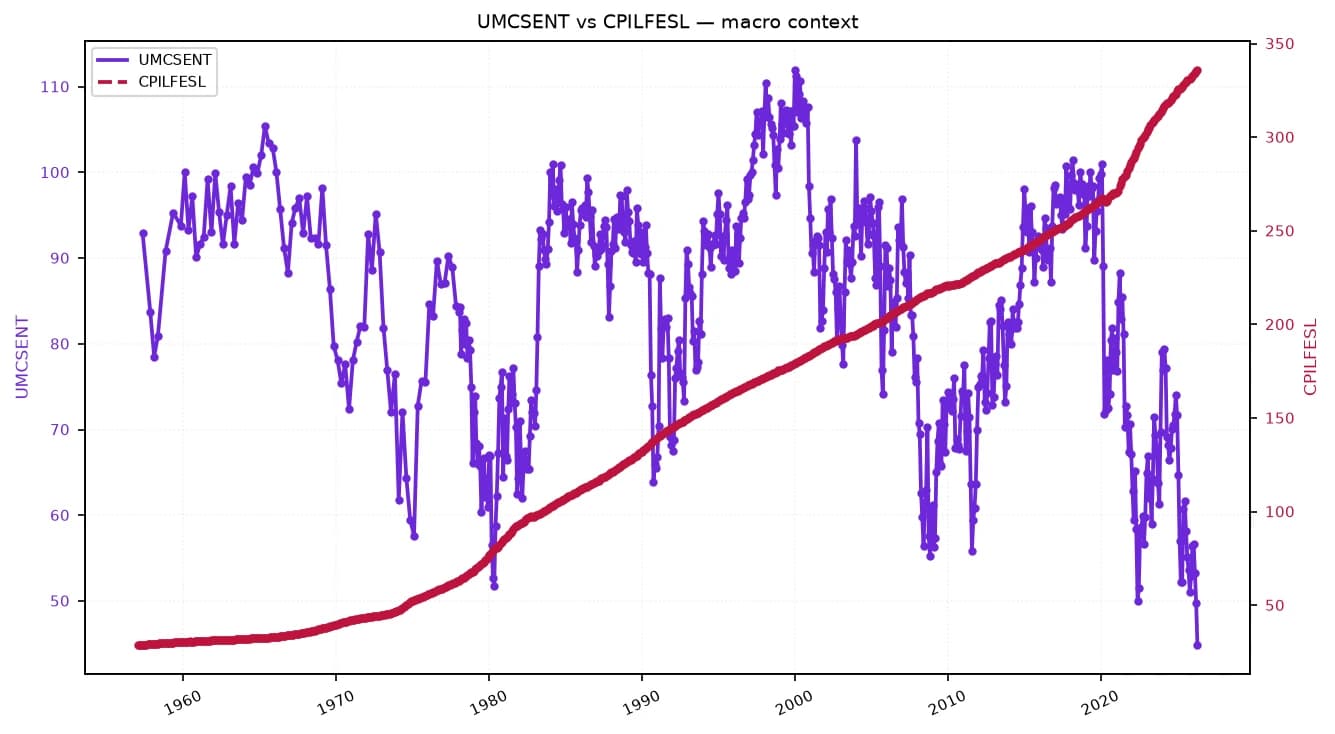
The University of Michigan’s consumer sentiment gauge fell to 44.8 in May from 49.8 in April, with the latest June forecast pointing to 43.18, near one of the weakest readings on record. At the same time, long-term inflation expectations remain elevated enough to worry policymakers, even after some easing in recent price data.
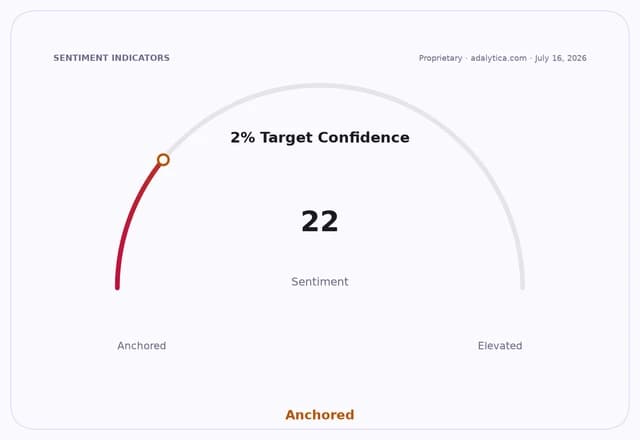
Sentiment IndicatorsⓘProprietary · adalytica.com · July 16, 2026
This is a snapshot — live sentiment, awareness and momentum for 130+ markets update continuously in the dashboard.Open AlphaPulse
That matters because households drive the bulk of U.S. growth. When sentiment slides, consumers typically become more cautious about big-ticket purchases, discretionary services and credit use, which can cool demand across retail, travel and housing-linked sectors. But when inflation expectations stay high, the Fed has less room to cut rates aggressively, leaving borrowers exposed to restrictive financing costs for longer.
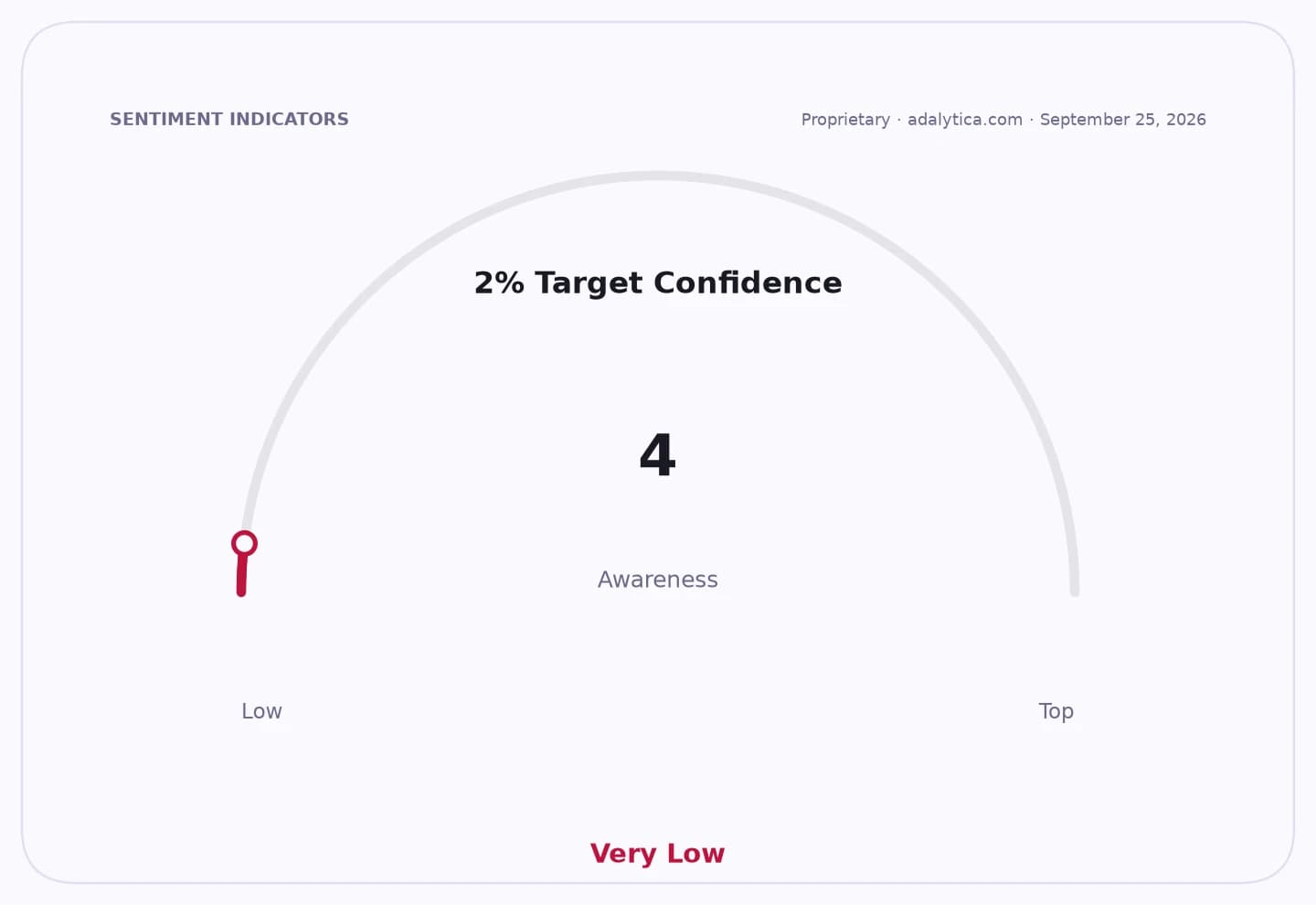
The signal is showing up in related inflation gauges as well. Confidence in the Fed’s 2% inflation target remains low at 22, while the 5-year inflation breakeven sentiment sits at 48, indicating only neutral conviction that longer-run price pressure will return to target quickly. Wage inflation sentiment is also softening, suggesting households remain uneasy about the durability of real income gains.
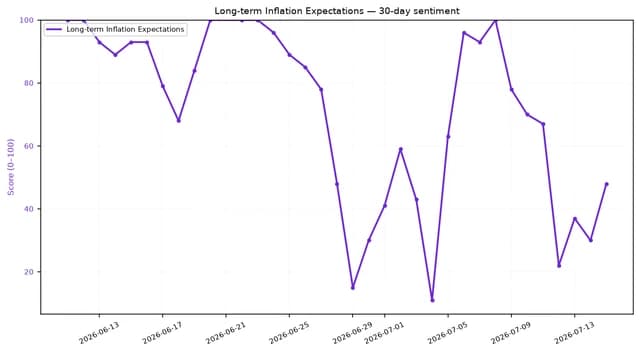
The backdrop is especially important for investors because it points to a fragile mix of slowing demand and persistent inflation psychology. That combination tends to pressure cyclical stocks, small caps and consumer discretionary names, while supporting defensive sectors and Treasury-linked assets if growth fears deepen. It also keeps volatility elevated in rate-sensitive corners of the market, where every inflation print can swing expectations for the Fed’s next move.
The latest U.S. price data had already hinted that inflation is cooling, with headline consumer inflation slowing more than expected in June. But the consumer surveys suggest the battle is not over: cheaper gasoline may be easing near-term strain, yet households still see enough uncertainty around prices, wages and borrowing costs to dampen confidence.
For investors, the next catalyst is the next round of inflation data and Fed communication. If expectations continue to worsen while actual inflation moderates only gradually, markets may be forced to price a longer period of tight policy rather than an early-cutting cycle.
| Entity | Gains | Losses |
|---|---|---|
| Fed hawks | ▲Policy caution justified | ▼Calls for near-term cuts |
| Defensives | ▲Relative demand support | ▼Cyclical momentum |
| Borrowers | ▲None | ▼Higher-for-longer rates |
| Consumers | ▲Some relief from lower gasoline | ▼Confidence and spending power |