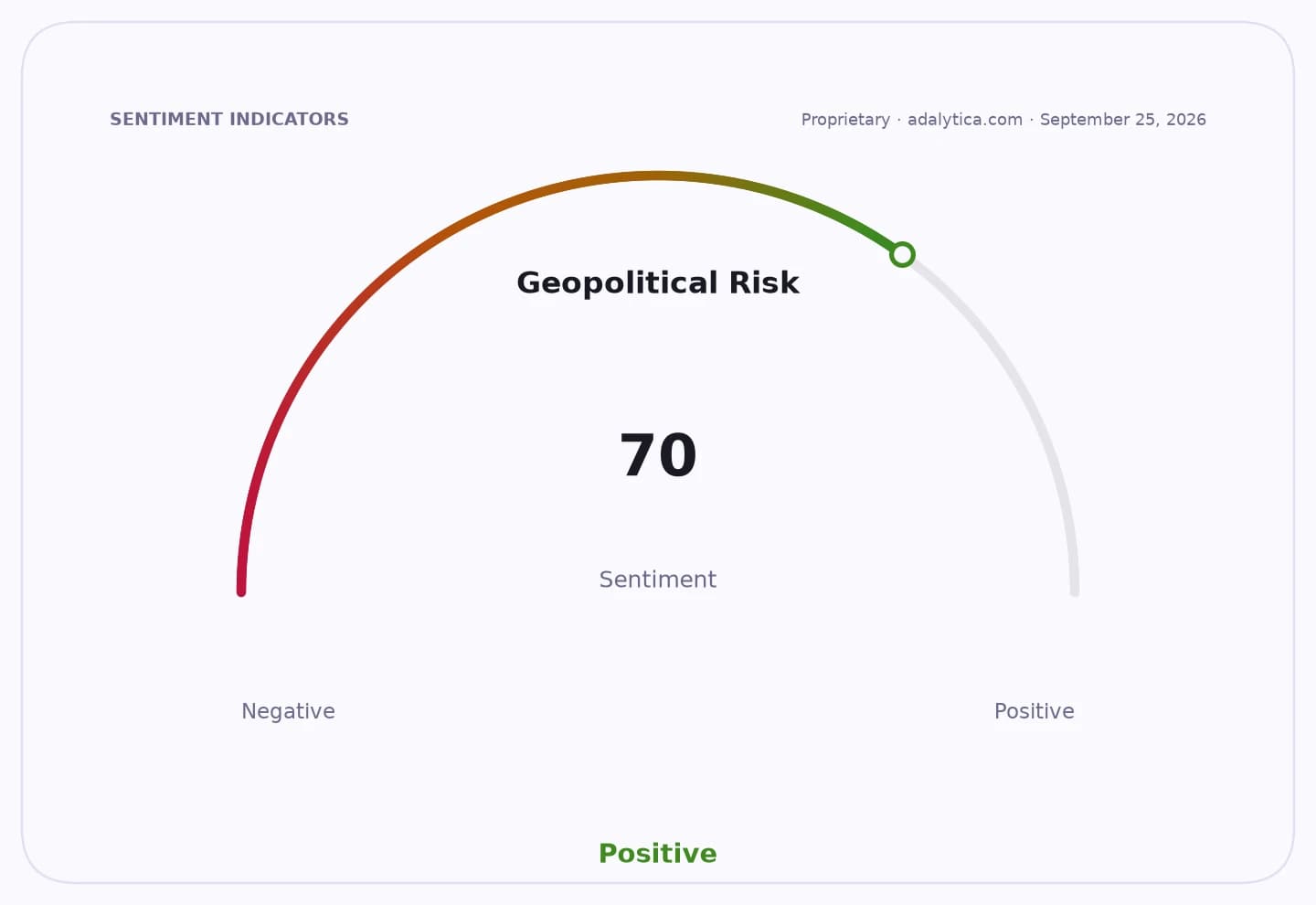
Soft wheat is now heading into a tighter, more policy-driven market after officials extended collection measures while keeping the 170% tax in place, a combination that helps protect domestic supply but also raises the odds of higher prices and more volatility for importers, grain traders and food companies.
Policy Tightens Wheat Market, Boosting Food Inflation Risk

That matters because wheat is not just another agricultural commodity. It is a staple input for bread, pasta, animal feed and a wide range of packaged foods, so even small policy shifts can ripple through grocery inflation and corporate margins. When governments intervene with tariffs or taxes this aggressively, they are usually trying to keep grain at home, stabilize local food prices or discourage exports at a moment when supply is already fragile.
Sentiment IndicatorsⓘProprietary · adalytica.com · July 22, 2026
This is a snapshot — live sentiment, awareness and momentum for 130+ markets update continuously in the dashboard.Open AlphaPulse
The timing is especially important. Global grain markets are already under strain from weather disruptions, crop damage and geopolitical risk around the Black Sea, one of the world’s most important wheat corridors. The latest move adds another layer of pressure to a market that has been reacting to supply fears across wheat, corn and soybeans. Chicago wheat futures have been firming, and the broader agricultural complex has also shown strength, with the Teucrium Wheat Fund climbing to $26.01 on July 22 from $22.70 on July 8. The Teucrium Corn Fund has also moved higher, closing at $18.28 on July 22, while the broader agricultural ETF DBA has pushed up to $28.23.
For investors, the story is less about a single crop and more about the durability of food inflation and the winners and losers inside the supply chain. Grain exporters, merchants and agribusiness firms can benefit from tighter pricing and stronger trading volumes, but flour mills, food producers and livestock operators may face another round of input-cost pressure. That is the kind of environment that can support revenue for commodity handlers, yet also squeeze processors that lack pricing power.
Food & Groceries vs WEATadalytica.com
Explore this data interactively — full history, time series and cross-market comparisons.Open AlphaPulse
The bigger message is that agricultural markets are becoming increasingly policy-sensitive. Supply shocks still matter, but governments are now amplifying them with taxes, bans and import restrictions. Kazakhstan’s partial ban on wheat imports is another example of how countries are trying to shield domestic markets while tightening global availability. When that happens at the same time as conflict and poor weather, price moves can become self-reinforcing.
For long-term investors, this is a reminder that grain markets can stay elevated longer than expected when policy and geopolitics align with poor harvests. The best way to play that trend is usually through diversified exposure rather than trying to time a single swing in wheat futures. Food inflation may eventually ease, but until supply chains normalize, agricultural producers and commodity-linked funds are likely to remain worth watching.
| Entity | Gains | Losses |
|---|---|---|
| Domestic wheat producers | ▲Higher local prices | ▼Less export flexibility |
| Importers and mills | ▲Supply security | ▼Higher input costs |
| Grain traders and exporters | ▲Volatile pricing opportunities | ▼Policy barriers |
| Consumers and food makers | ▲None | ▼More food inflation |