Wisconsin’s housing market is being squeezed from both sides: higher borrowing costs are pushing buyers away, while homeowners are hanging on to low-rate mortgages instead of listing their properties. That combination helped drive existing home sales down 8.5% in October from a year earlier even as the median price climbed 2.3% to $341,000, a reminder that affordability, not demand, is now the binding constraint.
Wisconsin Housing Sales Fall as Prices Rise

For investors, the key message is that a tight market can still be a weak one for transactions. Fewer sales mean less turnover, longer selling times and a slower path to normalization even when inventory is available. Wisconsin had 7,548 homes on the market in October, but buyers still moved cautiously and homes spent an average of 76 days listed before selling. The state had 4.3 months of supply, short of the roughly six months that Realtors consider balanced, but that hasn’t translated into meaningful relief for would-be buyers.
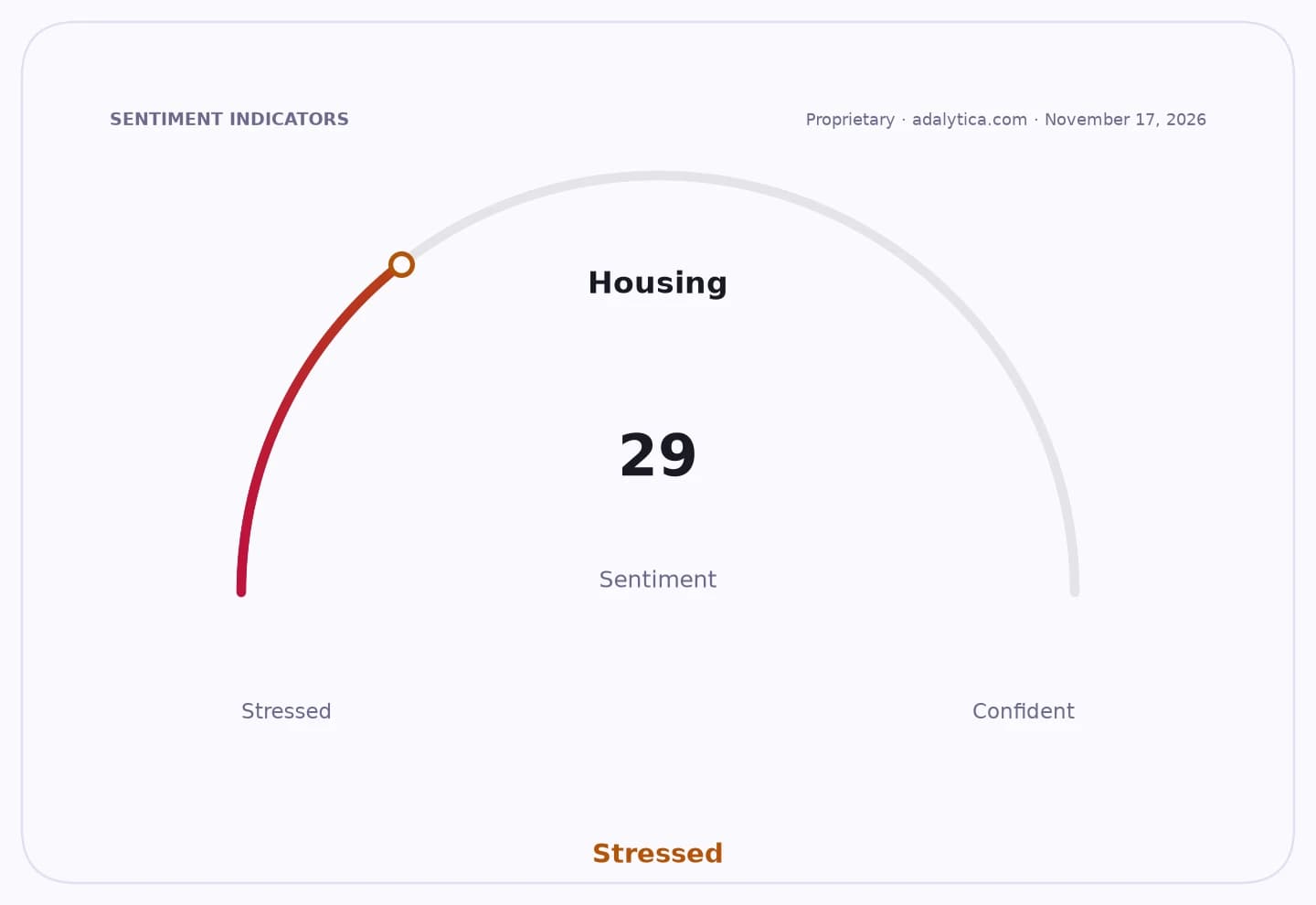
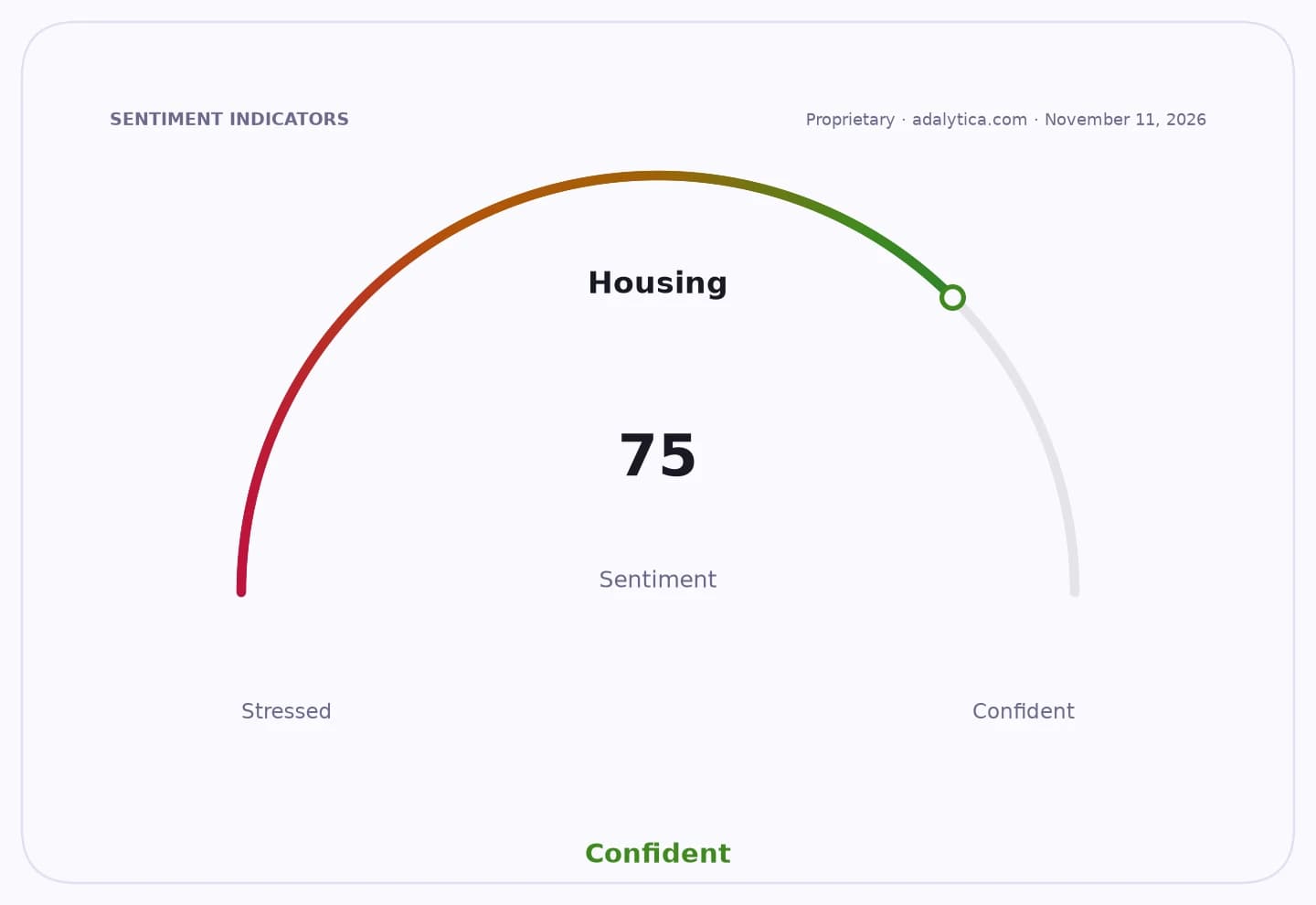
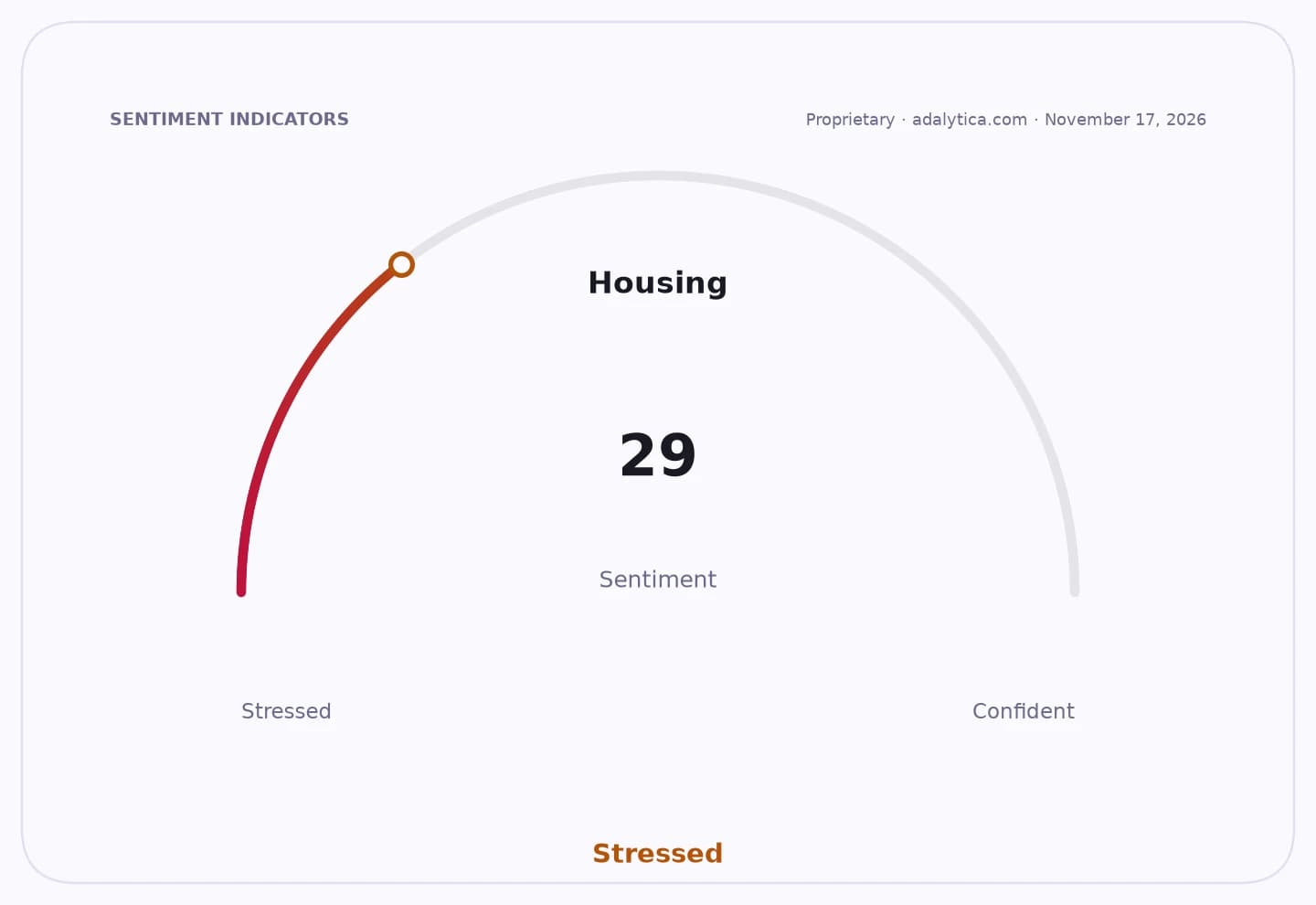
Sentiment Indicators
The pressure is coming directly from mortgage rates. The average 30-year fixed rate rose to 7.33% from 6.25% over the same period, according to the Realtors report. That jump matters because it hits both sides of the market: it makes monthly payments less affordable for first-time buyers and discourages existing owners from giving up mortgage rates locked in during 2020 and 2021, when borrowing costs were in the upper 2% to mid-3% range. In other words, the market is being trapped by its own past.
Prices are still moving higher because supply remains constrained, especially in the state’s larger metro areas. The median home price in southeast Wisconsin rose to $350,000, while south-central Wisconsin hit $386,750. Central Wisconsin remained relatively cheaper at $275,000, but even there prices continued to climb. That tells investors this is not a story of collapsing values; it is a story of stalled volume, sticky prices and persistent affordability stress.
The broader backdrop makes the Wisconsin trend more important, not less. National housing affordability has deteriorated, and the labor market is no longer giving buyers much extra cushion. Wisconsin’s unemployment rate was 4.1% in October, essentially steady and low by historical standards, but stable employment has not been enough to offset the hit from financing costs. When mortgages rise faster than wages, the market doesn’t simply pause — it grinds slower, and that can affect everything from real estate commissions to construction demand and local consumer spending tied to home purchases.
That is why the message for long-term investors is not to expect a quick rebound in housing activity just because inventory exists. As long as rates stay elevated, sales may lag even if prices remain resilient. Homebuilders, mortgage lenders and housing-related businesses can still do well over a multi-year horizon, but the near-term environment favors patience. For investors watching the housing cycle, Wisconsin is worth keeping on the watchlist: prices are still rising, but the market is telling us that affordability remains the real story.
| Entity | Gains | Losses |
|---|---|---|
| Sellers with low-rate mortgages | ▲Higher asking prices | ▼Fewer willing buyers |
| Existing homeowners | ▲Equity retention | ▼Reluctance to move |
| Buyers / first-time buyers | ▲More listings to choose from | ▼Higher monthly payments |
| Realtors / transaction businesses | ▲Steady pricing support | ▼Lower sales volume |