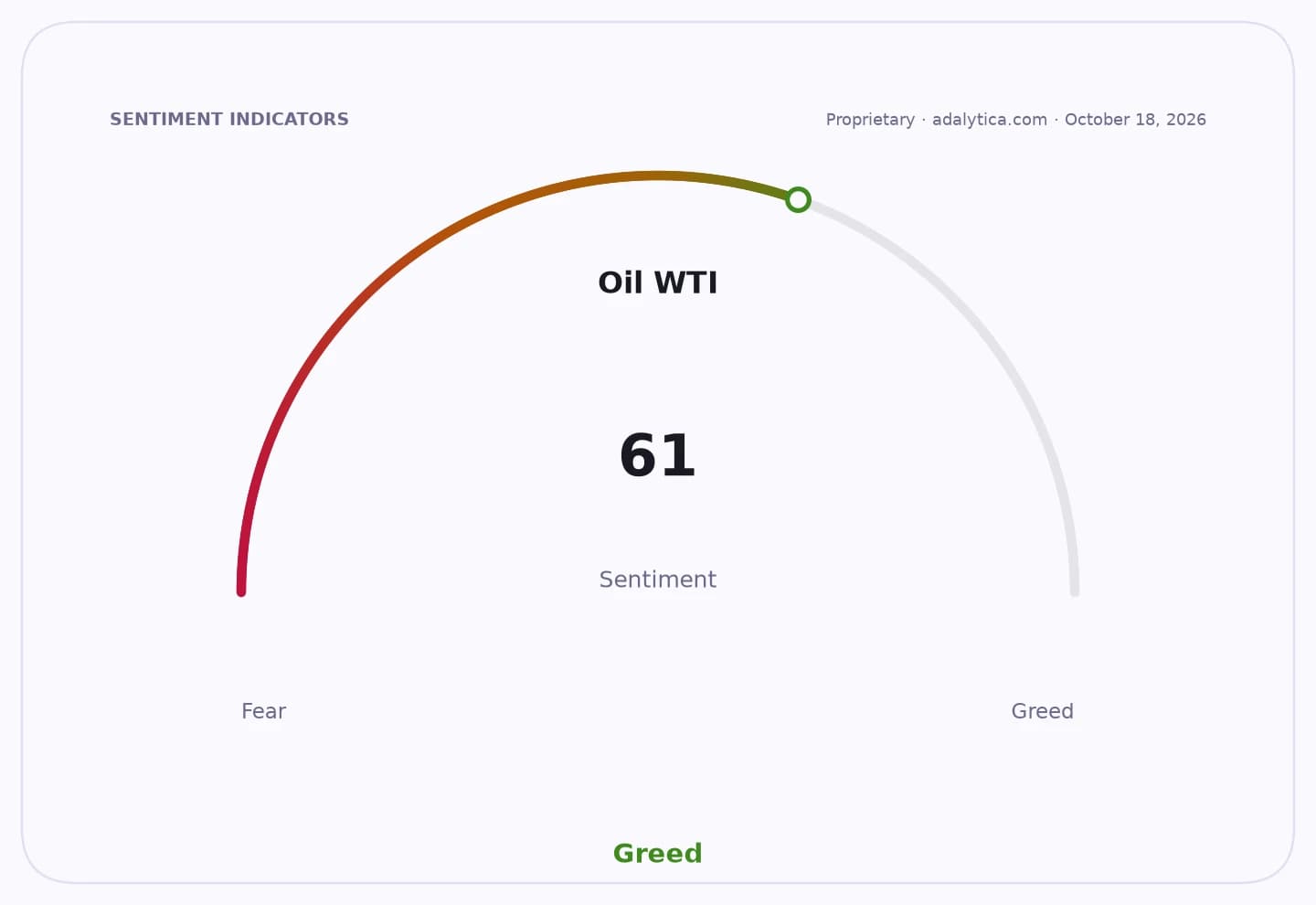
WTI crude jumped more than 3% to a six-week high after an unexpectedly large draw in U.S. inventories reinforced the view that physical oil supply is tightening faster than the market had assumed.
WTI Crude Rises After 8.6 Million Barrel Draw
The November WTI contract settled at $97.97 a barrel, up 3.03%, its highest close since Sept. 18, after the Energy Information Administration said U.S. crude stockpiles fell by 8.6 million barrels to 415.6 million barrels in the week ended Oct. 9. That was far larger than the 288,000-barrel decline expected by analysts and marked the biggest weekly drop since February.
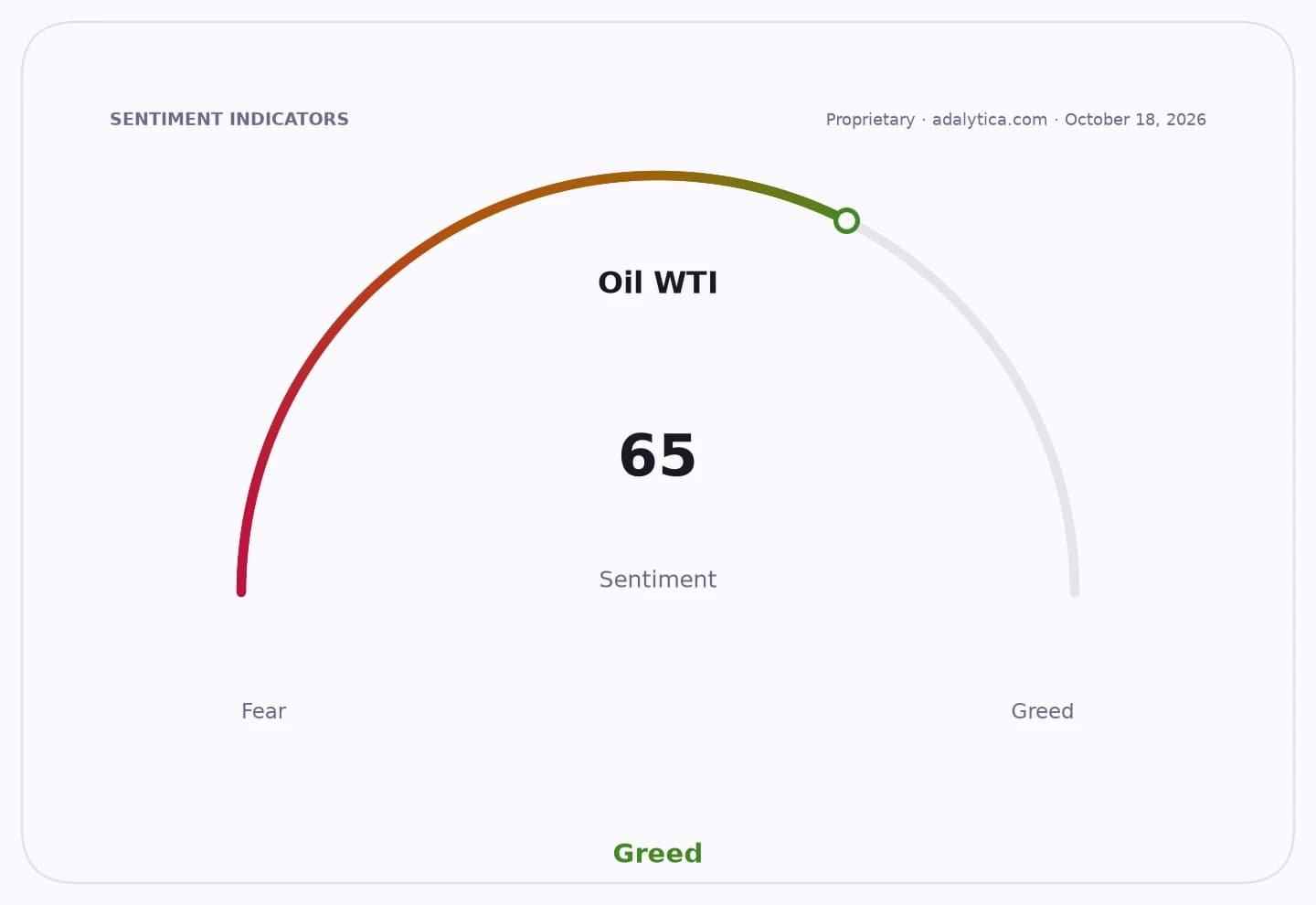
Sentiment IndicatorsⓘProprietary · adalytica.com · October 18, 2026
This is a snapshot — live sentiment, awareness and momentum for 130+ markets update continuously in the dashboard.Open AlphaPulse
The inventory shock matters because oil prices have been trading less on marginal changes in demand and more on whether supply buffers are thick enough to absorb disruptions. A draw of that size suggests refiners are running harder, imports are softer and domestic production is not offsetting the pull on stocks, all of which point to a tighter balance in the near term. WTI’s six-session advance also shows traders are willing to pay up for prompt barrels when storage falls faster than anticipated.
Brent was less responsive, slipping 0.13% to $105.92 as the market weighed a separate report that the U.S. was considering easing restrictions on some sanctioned tankers. That talk could improve shipping availability and narrow the WTI-Brent spread by making it easier to move non-sanctioned crude, though the practical impact may be limited by fleet age, insurance hurdles and safety certification issues.
The broader price action leaves energy investors balancing two forces: tightening inventories that support crude and geopolitical risk that keeps a floor under prices. Fresh attacks near the Strait of Hormuz and ongoing clashes involving Saudi Arabia and Yemen’s Houthi movement have kept the market wary of any disruption to flows from the Middle East, even as some supply routes have stabilized.
For producers, higher crude prices improve cash flow and near-term hedge values, while refiners face the opposite effect as feedstock costs rise. Consumer-facing sectors and fuel importers are more exposed if the inventory draw proves to be the start of a sustained squeeze rather than a one-off statistic. The next test is whether the U.S. drawdown persists into coming EIA reports or is offset by a rebound in production and imports.
| Entity | Gains | Losses |
|---|---|---|
| U.S. crude producers | ▲Higher realized prices | ▼Buyers face higher costs |
| Energy equities | ▲Better cash flow outlook | ▼Margin pressure fades for refiners |
| Refiners | ▲Tighter product stocks can help margins | ▼Higher crude feedstock costs |
| Brent-linked buyers | ▲Some relief if tanker rules ease | ▼Less from tighter WTI market |