WTI crude oil rebounded 2.72% to settle at $90.52 a barrel as traders moved back into the market after a sharp selloff, with fresh shipping incidents in the Gulf reviving concern that supply disruptions could tighten an already fragile balance.
WTI crude rebounds to $90.52 on Gulf shipping fears

The move matters because the rally was not driven by demand growth, but by a renewed risk premium tied to geopolitics and transportation security. That makes the price action especially relevant for energy markets: when crude is holding near major chart support and reacting to even limited supply headlines, the market is signaling that physical flows remain vulnerable and that bearish positioning can unwind quickly.
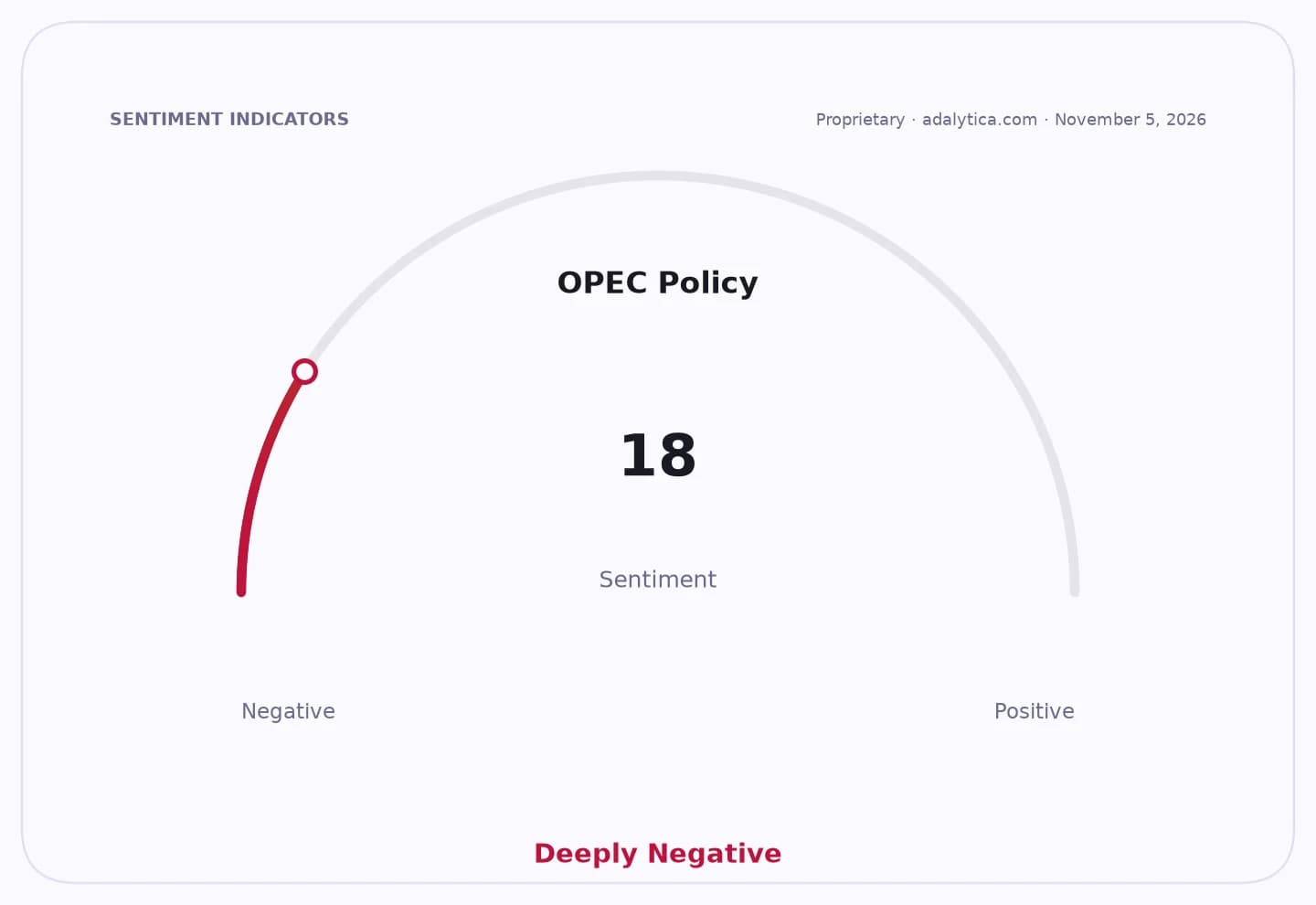
Sentiment Indicators
Thursday’s gain followed Wednesday’s more than 8% drop, when U.S. midterm results briefly raised hopes that a Democratic-controlled Congress would intensify pressure on the Trump administration to end the war with Iran. By Thursday, however, that de-escalation narrative was being challenged. Reuters reported that at least five vessels had reported incidents in the Gulf since Sunday, according to UK Maritime Trade Operations, while Iran’s foreign minister spoke with Saudi and Qatari counterparts on diplomatic efforts. The combination of diplomatic talk and shipping disruptions put volatility back at the center of pricing.
The weekly U.S. inventory report also helped stabilize sentiment. Draws in crude, gasoline and distillates for the week ended Oct. 30 suggested the domestic market is not flush with excess barrels, giving buyers additional justification to defend the $86.65-$86.93 area on the chart. That zone, described by traders as a key support band, lined up with the 200-day moving average and the 50% retracement of the July-to-October rally, reinforcing the technical case for a bounce.

From here, the market will focus on whether WTI can reclaim $91.56, the broken 38.2% retracement of the same rally. A move above that level would suggest the post-selloff rebound is gaining traction and could force further short covering. Failure there would leave the market vulnerable to another retreat toward the recent lows, particularly if shipping headlines fade and the de-escalation trade regains influence.
For investors, the message is that oil remains highly sensitive to headline risk and that geopolitical premiums can return quickly even after a sharp correction. The setup also has broader implications for energy equities and inflation-linked assets: sustained prices above the low $90s would support upstream producers and keep pressure on fuel costs, while a renewed break lower would ease margin pressure for refiners, airlines and other oil consumers.
| Entity | Gains | Losses |
|---|---|---|
| WTI bulls | ▲Rebound from key support | ▼Need to clear $91.56 |
| Oil producers | ▲Higher realized prices | ▼If prices slip back below support |
| Refiners and consumers | ▲Lower input costs if pullback resumes | ▼Higher feedstock costs on rebound |
| Shorts / bears | ▲Benefit if rally stalls | ▼Risk of covering if supply fears intensify |