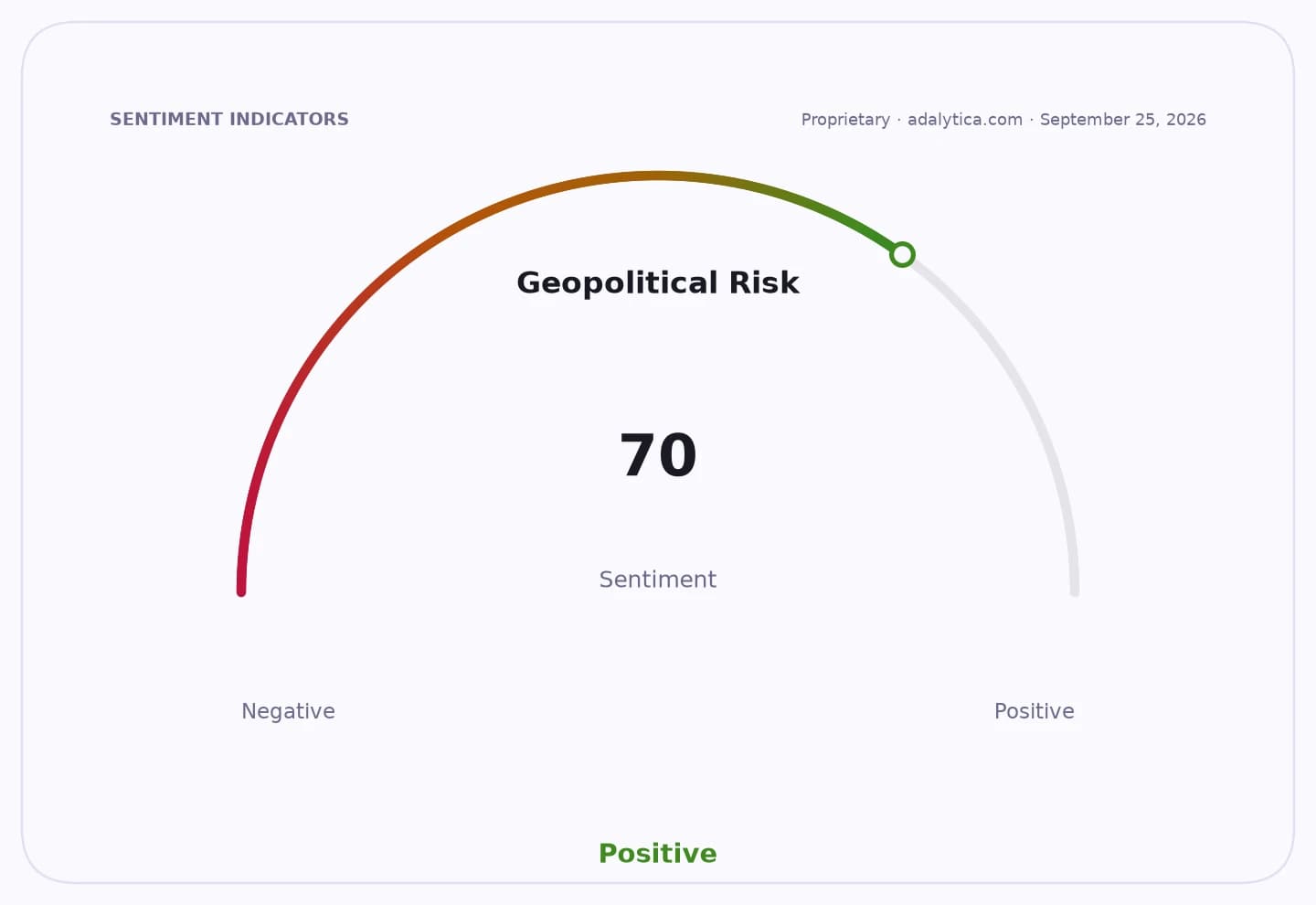
The yen’s slide to its weakest level in nearly four decades is no longer just a currency story — it is exposing the limits of Japan’s defense of ultra-loose policy as U.S. yields grind higher and capital keeps favoring the dollar.
Yen Weakness Raises Intervention Risk

At around 163 yen per dollar, the currency is trading at levels last seen in the late 1980s, a move that is feeding imported inflation, squeezing household purchasing power and complicating the Bank of Japan’s slow exit from negative rates. For investors, the key issue is not simply the speed of the yen’s fall, but the possibility that a widening U.S.-Japan rate gap and Tokyo’s reluctance to deliver a rapid policy reset are allowing one-sided positioning to deepen.
Sentiment IndicatorsⓘProprietary · adalytica.com · July 26, 2026
This is a snapshot — live sentiment, awareness and momentum for 130+ markets update continuously in the dashboard.Open AlphaPulse
That backdrop helps explain why Japan is talking more openly about intervention. Officials have signaled they are prepared to act decisively in the foreign-exchange market, but the market has repeatedly tested that line. The yen’s weakness is being driven by a “double blockade” of factors: a structural rate differential with the U.S. and persistent expectations that American policy will stay tighter for longer. The latest U.S. Treasury data underscore the point. The 10-year yield is hovering around 4.7% in the latest readings, while the two-year is near 4.4%, keeping the dollar attractive versus the yen and limiting any relief from safe-haven flows into Japanese assets.
That interest-rate gap matters economically because Japan imports a large share of its energy and food. A weaker yen raises those costs almost mechanically, which is one reason inflation has stayed sticky even as domestic demand remains uneven. It also widens pressure on the trade balance: exports may get a translation boost, but import bills rise faster when a currency is sliding this quickly. The result is a policy bind for Tokyo — support the currency and risk signaling panic, or tolerate weakness and accept more inflation pain.
Market behavior suggests investors still see the path of least resistance as higher dollar/yen levels. Adalytica’s U.S. dollar trade signals show extreme fear around the currency, but that has not translated into meaningful dollar capitulation. Conventional technical indicators on the yen also point to a stretched trend rather than a reversal: the currency proxy remains above its 50-day and 200-day moving averages, while RSI readings are elevated, consistent with a momentum-driven move that can extend until policy changes force a reset.
The impact is not confined to foreign exchange. A weaker yen is helping some Japanese exporters on paper, but it is also eroding returns for domestic savers and raising costs for companies that rely on imported inputs. Japanese equities have been uneven as a result, with technology shares benefiting at times from global demand and a softer currency, while banks and bond investors face pressure from the prospect of eventual policy normalization and still-fragile bond demand.
There is also a broader capital-allocation story. Japan’s firms and investors have been sending more money abroad, reflecting the appeal of higher overseas yields and returns. That outward flow reinforces yen weakness, creating a feedback loop that makes intervention less effective unless it is backed by tighter domestic policy or a clearer shift in U.S. rate expectations.
For investors, the immediate question is whether Japanese authorities are preparing another line in the sand around recent lows. If they step in, the move could trigger sharp but temporary short-covering. If they do not, the yen’s weakness may continue to spill into inflation, bond-market volatility and portfolio flows, keeping Japan one of the most important macro pressure points in global markets.
| Entity | Gains | Losses |
|---|---|---|
| Japanese exporters | ▲Higher foreign-currency revenues | ▼Imported input costs |
| Japanese households | ▲None | ▼Higher import prices |
| Japanese authorities | ▲Chance to curb volatility | ▼Credibility if intervention fails |
| Dollar bulls | ▲Momentum and yield support | ▼Risk of policy-driven reversal |