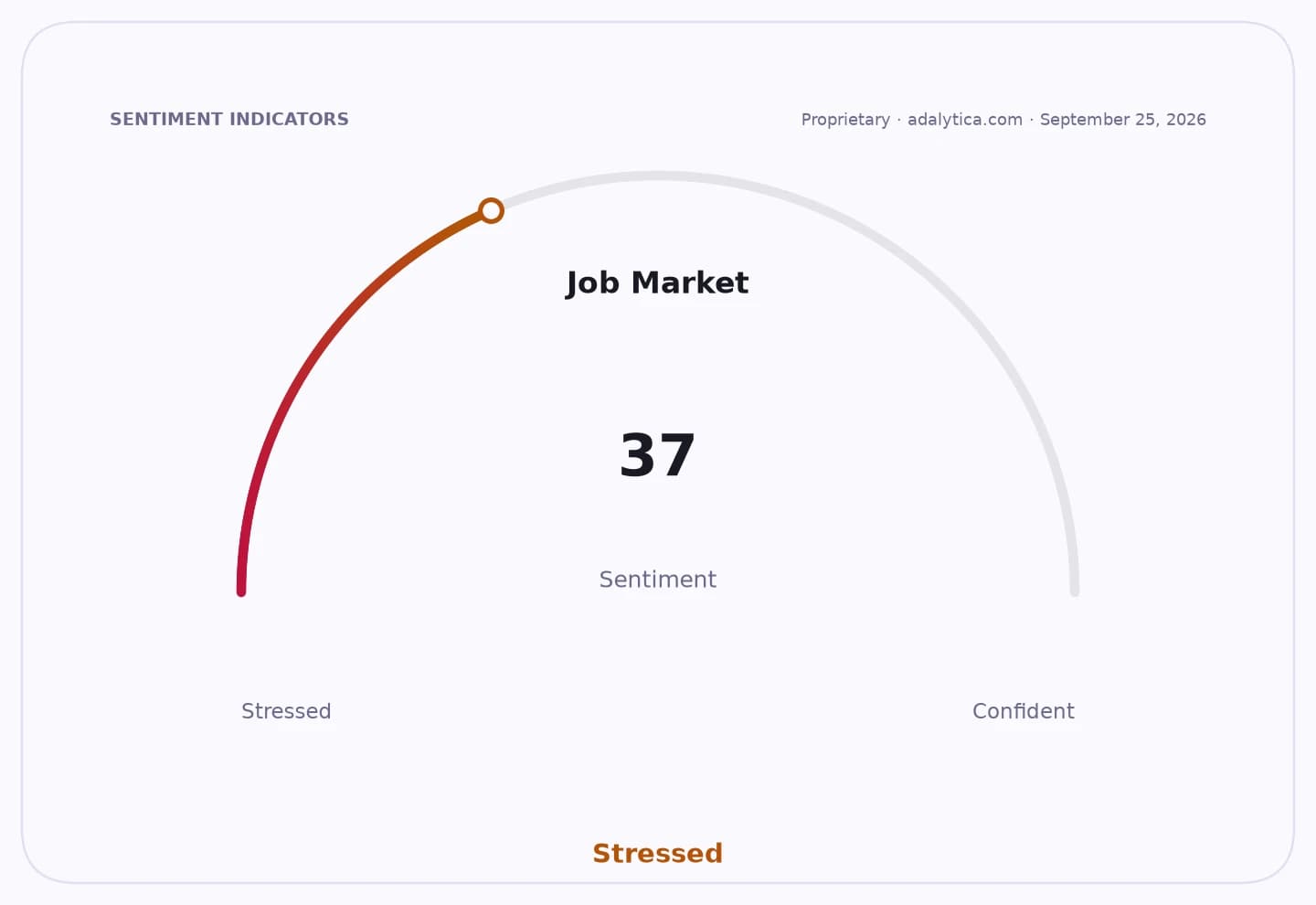
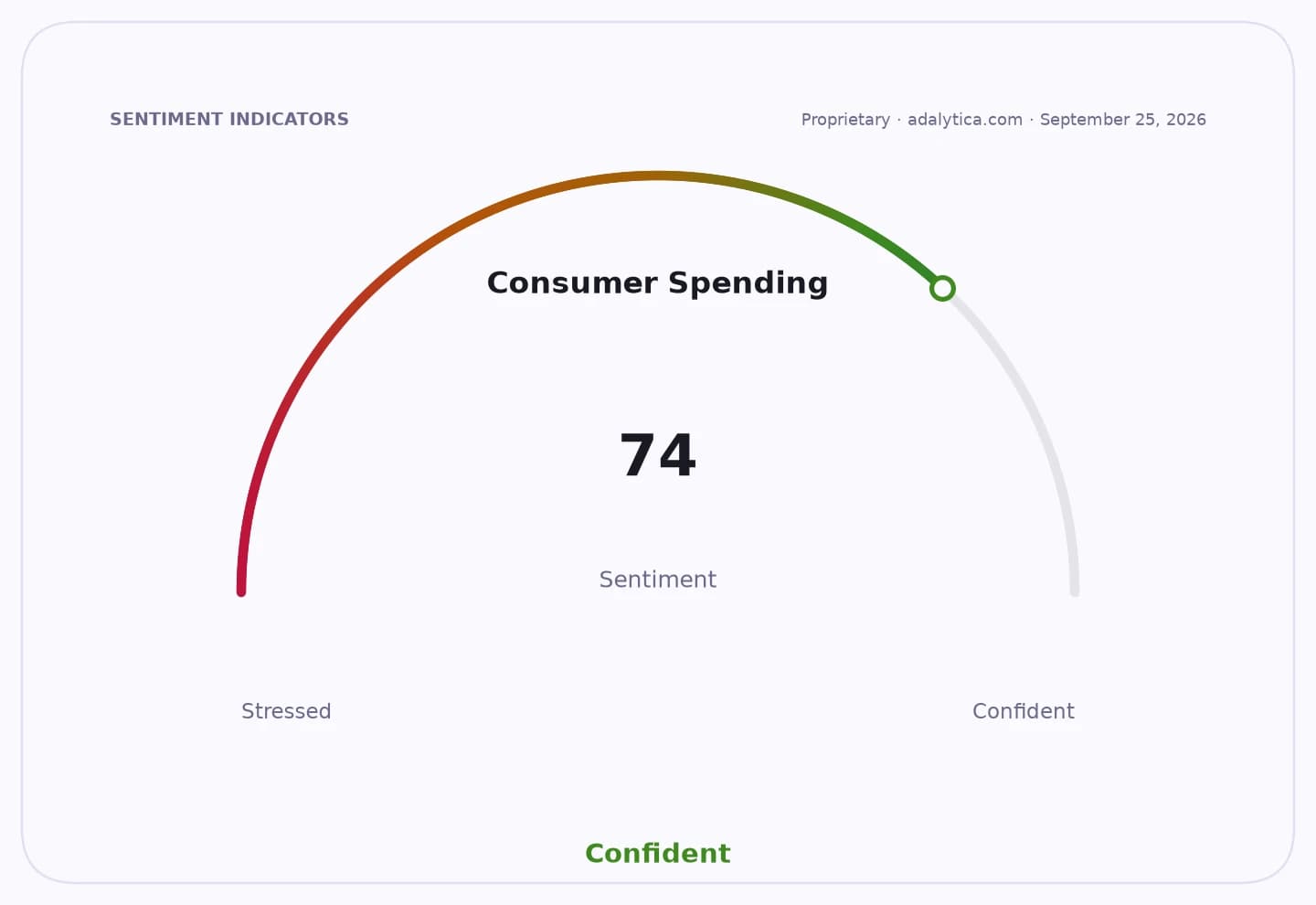
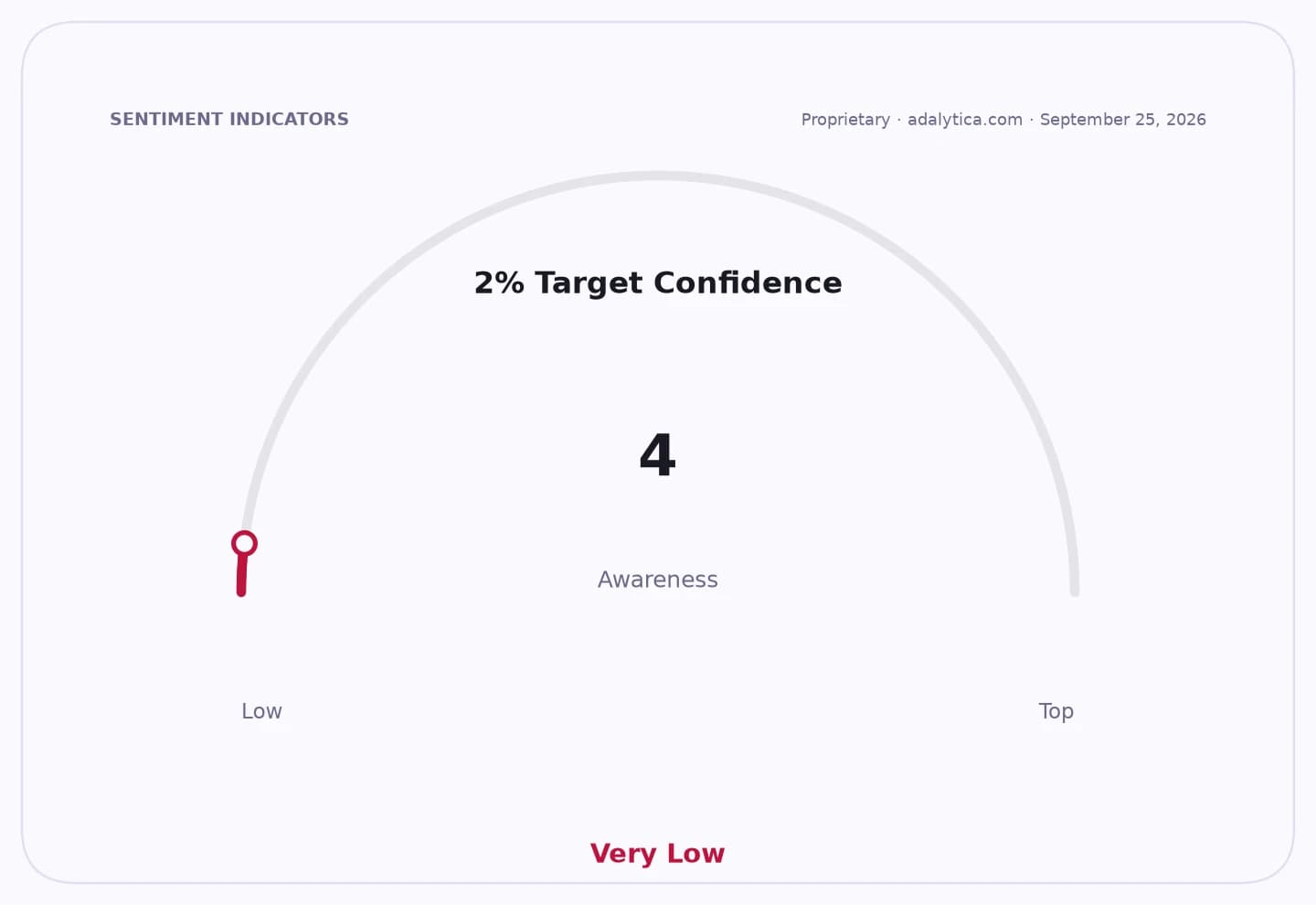
Young people may be graduating into an economy that is still creating jobs, but they are finding fewer doors open to them — a gap that could reshape hiring, wage growth and consumer spending if it persists.
Youth Hiring Weakness Masks Labor Market Strength
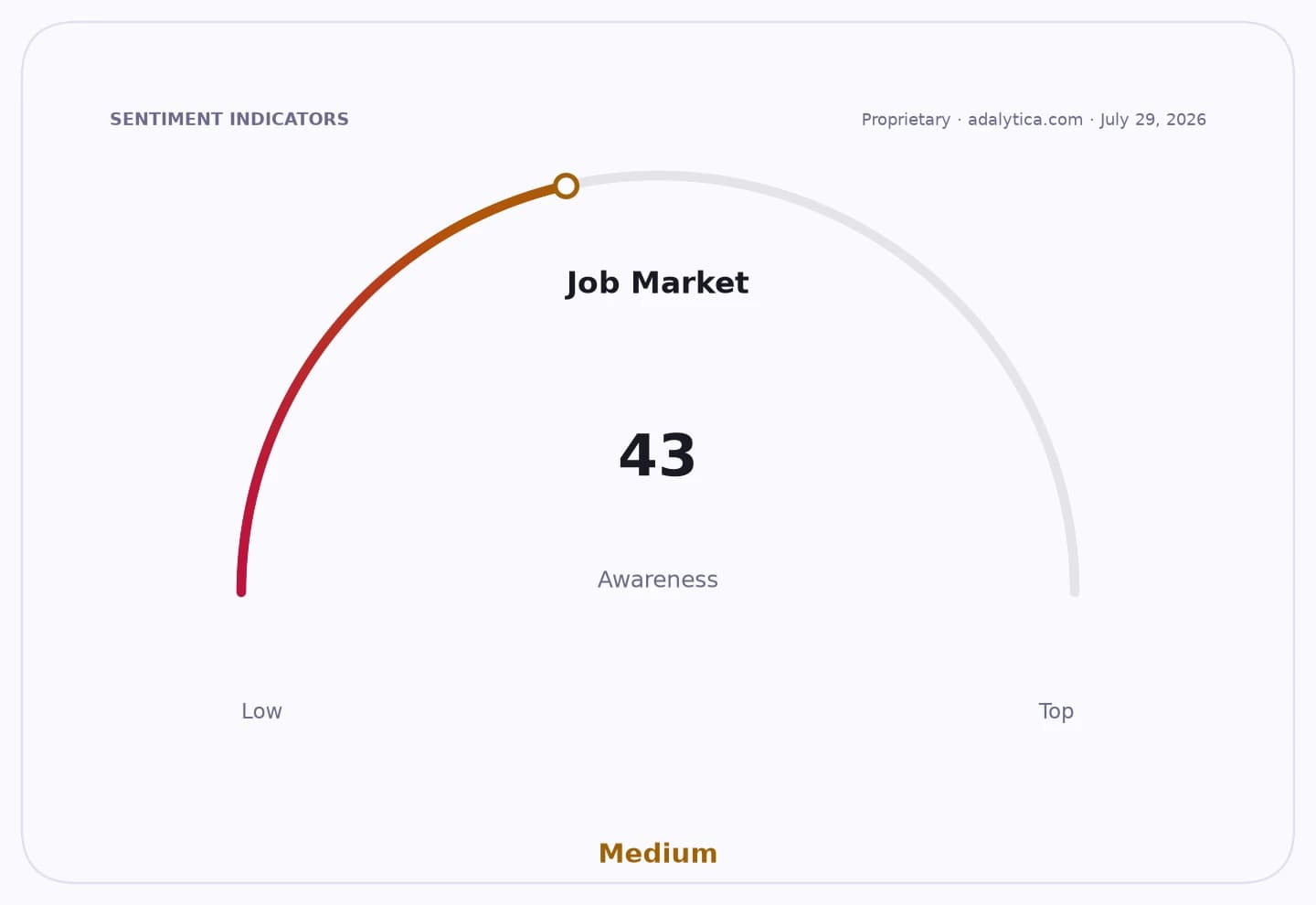
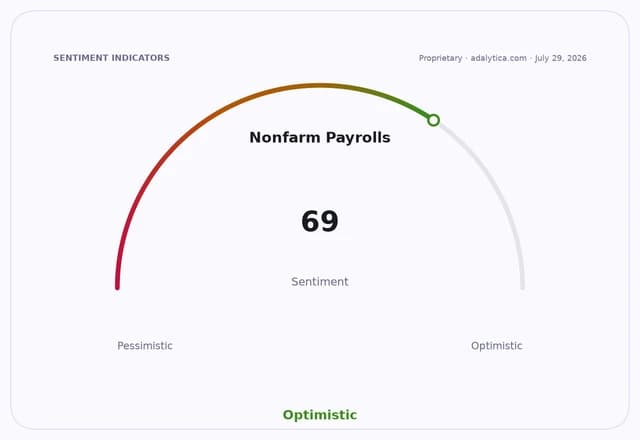
The U.S. labor market is not collapsing. Nonfarm payrolls are still expected to edge higher to about 159.2 million in July, and the unemployment rate is forecast at 4.18%, only slightly below June’s 4.2%. That is the kind of backdrop economists usually describe as steady, not recessionary. But steady national numbers can hide a more painful reality for new entrants, especially degree holders who are sending out hundreds of résumés and getting little response.
Sentiment IndicatorsⓘProprietary · adalytica.com · July 29, 2026
This is a snapshot — live sentiment, awareness and momentum for 130+ markets update continuously in the dashboard.Open AlphaPulse
That matters because youth unemployment is often the first place labor-market weakness shows up. When employers slow hiring, they usually protect experienced workers first and trim entry-level recruiting later. For recent graduates, that can mean longer job searches, underemployment and lower starting salaries. Over time, those lost months can slow household formation, delay spending on homes, cars and discretionary goods, and weaken the early-career earnings growth that fuels consumption for years.
Investors should care because a labor market that looks healthy on the surface but remains hostile to young workers is not equally good for every part of the economy. It can support incumbent employers with bargaining power and lower turnover costs, but it is less friendly to sectors that depend on first-job income growth, including retail, housing, travel and financial services. A weak first rung on the career ladder also matters for banks and asset managers because it can affect credit quality, savings rates and long-term customer acquisition.
The evidence in the broader market still points to resilience rather than distress. U.S. employment is forecast to keep rising, and the S&P 500 and financials ETFs have held well above their 200-day moving averages, suggesting investors are not pricing a broad labor downturn. But the Russell 2000 has been more volatile, a reminder that smaller companies — often the biggest users of entry-level labor — tend to feel soft hiring conditions sooner than the large-cap giants that dominate the indexes.
There is also a policy angle. Governments can launch youth hubs, training programs and support services, but those can only cushion the problem, not solve it, if private employers remain cautious. The real fix is stronger demand for junior talent, and that usually comes when companies feel confident enough to invest in growth. Until then, the market may keep rewarding firms with pricing power, automation, and lower dependence on broad hiring.
For long-term investors, the message is simple: this is less a warning sign of an imminent recession than a sign that the labor market is becoming more uneven. That favors diversification, patience and businesses that can grow even when entry-level hiring is soft. Young workers may be facing a tough job market now, but the companies best positioned to automate, train and retain talent could turn that squeeze into a lasting advantage.
| Entity | Gains | Losses |
|---|---|---|
| Established employers | ▲More applicant supply | ▼Less bargaining pressure |
| Recent graduates | ▲Resume volume only | ▼Slower job starts |
| Consumer-focused companies | ▲Stable overall payrolls | ▼Weaker youth spending |
| Large-cap equities | ▲Labor resilience narrative | ▼Little immediate damage |