Zcash’s roughly 3,000% rally has turned a privacy token that spent years in Bitcoin’s shadow into the latest battleground for crypto billionaires, with Cameron and Tyler Winklevoss and Barry Silbert now racing to control the mining and investment rails around the coin.
Zcash rallies as Winklevoss, Silbert expand mining

The surge matters because it is drawing real capital, not just speculation. A rally of that scale can reshape who gets paid in a network, which companies can raise money around it and whether traditional investors can access the asset through regulated products. In Zcash’s case, the move has already triggered a scramble to expand mining capacity, file for exchange-traded funds and position early around a narrative that privacy coins may be entering a new cycle.
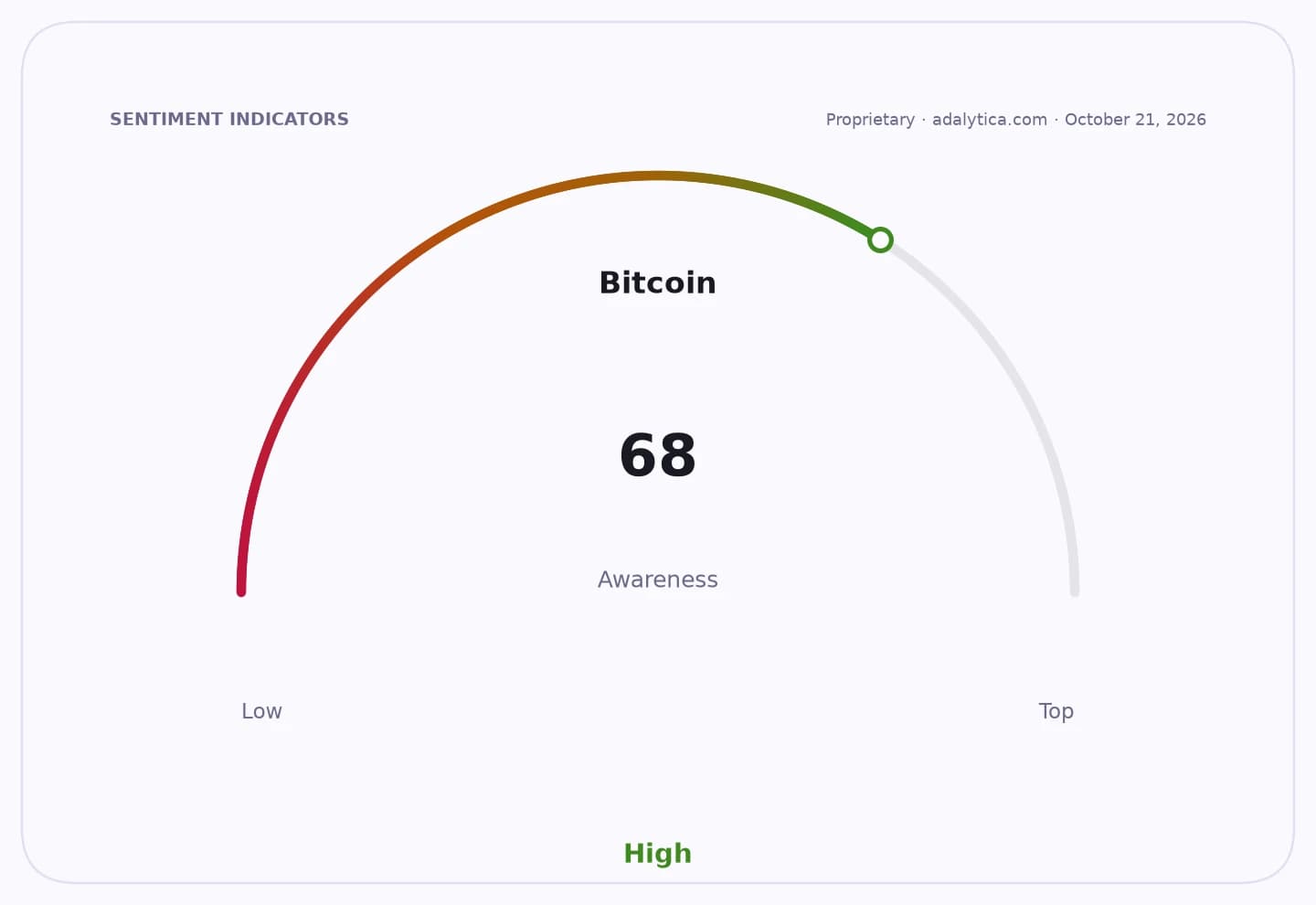
Sentiment Indicators

For the Winklevoss brothers, the playbook looks familiar: back an early crypto asset, build companies around it and try to capture both the token upside and the surrounding financial infrastructure. Barry Silbert, whose Digital Currency Group has long backed digital-asset businesses, is following a similar path through Fortitude Mining. Their firms are now among the most visible players in Zcash mining, where scale matters because larger compute power raises the odds of earning newly issued coins, even if it does not determine the market price.
Cypherpunk Technologies, backed by the Winklevosses, and Fortitude Mining, backed by Silbert, are each planning to spend tens of millions of dollars to increase hash power. Fortitude is targeting 20% of mining capacity after its latest deployments, while Cypherpunk already controls about 20% of the network’s total compute. That concentration is a double-edged sword for investors: it could make the token more liquid and more visible, but it also raises questions about how decentralized the network remains if a few groups come to dominate mining economics.
The ETF angle could broaden the trade beyond crypto-native buyers. The Winklevosses have filed for a Zcash ETF, signaling that the competition is not just over mining rewards but over access to mainstream capital. If approved, such a fund could offer traditional investors a cleaner route into a token that is now being marketed as a privacy-enhanced version of Bitcoin.
The price move has been fuelled by a privacy thesis that is gaining traction in a world where blockchain analysis is becoming more sophisticated and personal security risks are rising. Zcash allows users to obscure transaction details when they choose to use its privacy features, which has made it more attractive as concerns grow about financial surveillance and the exposure of crypto holdings. The token also received a boost after a U.S. court ruling in March 2025 reduced some of the legal uncertainty around privacy-focused cryptocurrencies, giving advocates more room to pitch it to the market.
That said, the bull case is still paired with obvious risks. Zcash was recently found to have a serious vulnerability that had existed for years and, if exploited, could in theory have allowed unlimited token creation. Privacy coins also remain vulnerable to tougher regulation because authorities worry they can be used to obscure illicit activity. A crackdown in major markets could quickly damp liquidity and reduce the appeal of any ETF wrapper.
The technical picture shows how stretched the trade has become. ZEC-USD closed at $1,265.66 on Oct. 31, well above its 200-day moving average of $733.32, while its 50-day average stood at $1,309.42, suggesting the rally has paused after a sharp run. RSI readings around 59.7 are cooler than the near-80 levels seen during the surge, but still leave the token above overheated selloff territory. Bitcoin itself is weaker by comparison, with BTC-USD at $77,195.30 and the Adalytica Bitcoin Fear & Greed Index pinned at extreme fear even as awareness remains at extreme greed, underscoring a market where attention is high but risk appetite is fragile.
For investors, the key question is whether Zcash becomes a durable privacy trade or just another momentum rotation in crypto. The presence of billionaires, miners and ETF filings gives the rally more structure than a typical meme-driven spike. But the combination of regulatory risk, technical concerns and the history of fast-moving crypto capital means the burden is still on Zcash to prove that this is an institutionalizable asset, not just the latest object of speculative rotation.
| Entity | Gains | Losses |
|---|---|---|
| Winklevoss-backed Cypherpunk | ▲Mining share, ETF optionality | ▼Higher capital risk |
| Silbert-backed Fortitude Mining | ▲Hashrate expansion, token exposure | ▼Margin pressure if rally fades |
| Zcash holders | ▲Price appreciation, liquidity | ▼Volatility and policy risk |
| Regulators and short sellers | ▲Tighter oversight opportunity | ▼Less room if privacy trade broadens |