Zimbabwe’s mining industry has agreed a new minimum monthly wage of US$418 from July 16, a move that lifts the floor for some of the country’s most exposed workers but also adds to cost pressure in a sector that remains critical to export earnings and foreign-currency generation.
Zimbabwe Mining Wage Hike Raises Cost Pressure

The increase matters because mining is one of Zimbabwe’s few hard-currency engines, and wage policy there quickly feeds into broader debates over inflation, competitiveness and labour stability. A higher pay floor can help ease worker dissatisfaction and reduce the risk of strikes, but it also raises operating costs at a time when miners are already managing volatile commodity prices, energy constraints and a fragile domestic economy.
Sentiment IndicatorsⓘProprietary · adalytica.com · July 18, 2026
This is a snapshot — live sentiment, awareness and momentum for 130+ markets update continuously in the dashboard.Open AlphaPulse
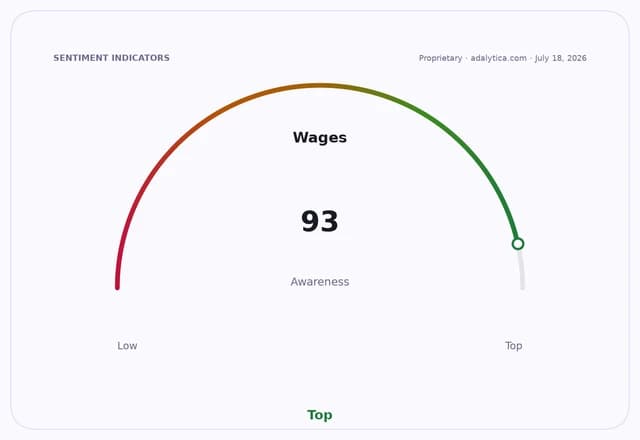
The new schedule effectively sets a benchmark for the lowest-paid mine workers at a level that is sharply higher than in many local industries, underscoring how employers are trying to keep labour peace in a sector where absenteeism and industrial action can have immediate production consequences. The agreement follows wider regional pressure for wage resets as unions push for compensation that better reflects living costs, while employers argue that abrupt increases can erode margins and delay investment.
For investors, the key issue is not the headline figure alone but whether the wage rise remains manageable relative to mining revenues. In dollar terms, US$418 a month is not excessive by global standards, yet for operators with high labour intensity, thin buffers and substantial local operating expenses, it can still squeeze profitability if output or commodity prices soften. That leaves miners with limited choices: absorb the higher payroll cost, pass it through where pricing power exists, or seek productivity gains to protect margins.
Wages — 30-day sentimentadalytica.com
Explore this data interactively — full history, time series and cross-market comparisons.Open AlphaPulse
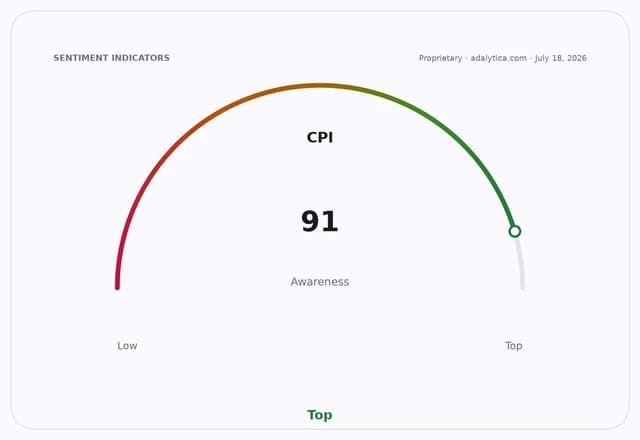
The policy also fits into a broader inflation and labour-cost backdrop. U.S. consumer-price data in the context shows how wage and price pressures remain central to market thinking globally, even as Zimbabwe’s own labour market is shaped more by dollarisation, exchange-rate instability and the need to retain workers than by traditional monetary-policy tools. In that setting, minimum-wage decisions become both an economic signal and a political one.
The immediate test will be whether the higher floor improves retention and industrial relations without prompting cutbacks in hiring or investment. If commodity earnings stay firm, the mining sector can probably absorb the change. If not, the wage hike could deepen the divide between better-capitalised producers and smaller operators already under strain.
| Entity | Gains | Losses |
|---|---|---|
| Mine workers | ▲Higher base pay | ▼None directly |
| Large miners | ▲Better labour stability | ▼Higher payroll costs |
| Small operators | ▲Some worker retention | ▼Margin pressure |
| Zimbabwe economy | ▲Fewer labour tensions | ▼Potential cost passthrough |